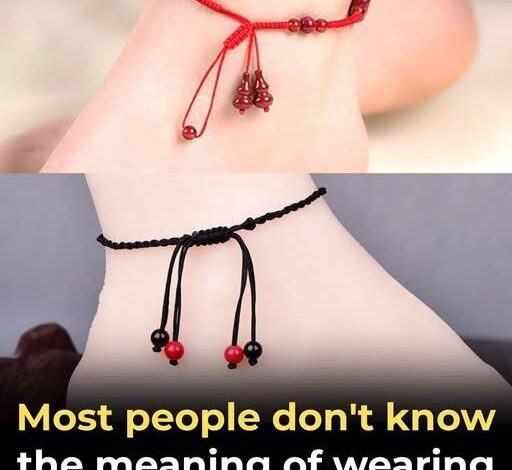
The Secret History Of The Ankle Bracelet Why This Ancient Accessory Is More Than Just A Fashion Statement
Lightweight, discreet, and effortlessly eye-catching, the ankle bracelet has long been admired for adding a subtle layer of elegance to any ensemble. This delicate accessory, which draws the eye to one of the most graceful and lithe parts of the human anatomy, has captivated human cultures for thousands of years. While the modern observer might view the anklet as a mere seasonal trend—something to be paired with sandals and sun-kissed skin—it carries a rich and complex history filled with deep symbolism, spiritual tradition, and cultural identity. The enduring popularity of this accessory reflects a unique intersection where ancient mysticism meets modern self-expression, proving that even the smallest piece of jewelry can carry the weight of civilizations.
In the sun-drenched landscapes of ancient Egypt, anklets were far more than decorative trinkets designed to catch the light. They functioned as potent talismans, believed to offer protection and channel good fortune to the wearer. In the social hierarchy of the Nile, the material of the anklet often signaled the wearer’s status, with gold being reserved for the elite and silver or iron for the common folk. Interestingly, some laborers and rural workers wore anklets adorned with small dangling charms or bells that produced a gentle, rhythmic sound as they moved. This was not merely for musical accompaniment; these sounds were thought to ward off dangerous insects and venomous snakes in the tall grass, while also providing a sense of spiritual comfort in a world governed by unseen gods. For the ancient Egyptians, the anklet was a guardian, a prayer in metal form that hugged the ankle.
Transitioning across the globe to India, we find that the anklet, known traditionally as the payal, holds a sacred and deep-seated cultural value that remains vibrant to this day. In Indian tradition, anklets are almost exclusively made of silver, as gold is considered a metal of the gods and is rarely worn below the waist out of respect. For centuries, the payal has been a symbol of femininity, grace, and marital commitment. Traditionally gifted to a new bride as she enters her husband’s home, the soft, tinkling chime of the bells—known as ghungroos—serves a practical and social purpose. The sound announces the woman’s presence in the household, signifying her movement and presence with a gentle musicality. It is an accessory that speaks of tradition, duty, and the rhythmic beauty of a life dedicated to family and spiritual harmony, making it a foundational element of wedding jewelry across the diverse regions of the subcontinent.
The narrative of the anklet continues through other ancient civilizations, including the intricate societies of the Middle East and the disciplined world of ancient Rome. In these cultures, the anklet was frequently used as a marker of social identity and wealth. In some Middle Eastern traditions, the style and sound of an anklet could denote a woman’s social standing or her family’s lineage. In Rome, women of means adorned their ankles with precious metals and stones to signal their husband’s status and their own place within the rigid Roman social order. These historical contexts highlight the accessory’s multifaceted role; it has been a shield, a status symbol, a musical instrument, and a declaration of love, evolving alongside the human story for millennia.
In the contemporary landscape, the meaning of the anklet has shifted toward the personal rather than the societal. Today, anklets are worn primarily as a tool for personal style, confidence, and creative self-expression. They have become the quintessential summer accessory, perfectly complementing the casual ease of sandals, flowing dresses, and beachwear. In a world of fast-paced fashion, the anklet remains a slow, deliberate touch of charm. It adds a whisper of sophistication to an outfit without being overbearing, allowing the wearer to feel a sense of curated beauty that is both intimate and outward-facing.
The design of modern anklets has exploded into a kaleidoscope of diversity, ensuring there is a piece for every personality. For the minimalist, a simple, thin chain of 14-karat gold or sterling silver offers a sleek, barely-there glimmer that works as well in the office as it does on the boardwalk. For the bohemian spirit, anklets crafted from colorful cords, earthy beads, and raw shells evoke a connection to the natural world and a sense of wanderlust. Pearls and precious gemstones have also found their way onto the ankle, elevating the accessory into the realm of high fashion and evening wear. This vast range of materials allows modern wearers to bridge the gap between their individual identity and the ancient traditions of the past, picking and choosing symbols that resonate with their personal journey.
Despite various urban legends and modern myths, there is no universal rule or secret code about which ankle is “correct” for wearing an anklet. Some people claim that wearing it on the left signifies marriage or engagement, while others suggest the right is for those who are single, but these are largely contemporary fabrications with no historical basis. In reality, the choice is entirely personal, dictated by the wearer’s comfort, the way their shoes fit, or simply which side they feel looks best in the mirror. This freedom of choice is reflective of the modern era, where jewelry is no longer a set of rigid shackles defining one’s status, but a flexible language used to tell one’s own story.
As we look toward the future of fashion, the ankle bracelet stands as a testament to the power of subtlety. It is an accessory that does not demand attention through volume or size, but rather through the grace of its placement and the history of its origins. Whether it is a silver payal echoing the traditions of a wedding in Rajasthan, a beaded charm bracelet reflecting a summer spent by the sea, or a gold chain signifying modern luxury, the anklet remains a simple yet graceful statement. It is a small detail that makes a world of difference, blending thousands of years of human culture into a single, delicate circle of metal. In every step a wearer takes, they carry a piece of that history with them, proving that true elegance is often found in the most understated places.