The World Economy Faces Total Collapse As Iranian Parliament Moves To Choke Off The Worlds Most Critical Oil Artery
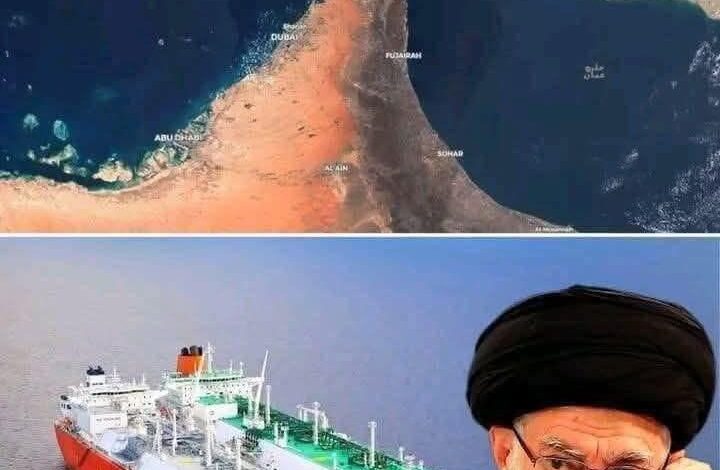
In a move that has sent shockwaves through international markets and triggered an immediate crisis in global security circles, the Iranian Parliament has officially moved to authorize the closure of the Strait of Hormuz. This narrow, treacherous waterway is not merely a geographic curiosity; it is the single most vital artery of the modern global economy. Spanning a mere thirty-four kilometers at its tightest point, the strait serves as the primary maritime funnel for the Persian Gulf, and its functionality is a non-negotiable requirement for the continued operation of the international energy market. The mere suggestion that this corridor could be shuttered is not just a regional political development—it is a potential catalyst for an unprecedented economic catastrophe that would be felt in every household on the planet.
The numbers associated with the Strait of Hormuz are staggering, painting a clear picture of why this specific strip of water holds the entire world hostage. Estimates consistently show that approximately thirty percent of the world’s total crude oil production flows through this narrow bottleneck every single day. Furthermore, it serves as the essential gateway for one-third of the world’s liquefied natural gas trade. For the industrialized nations of Asia, Europe, and North America, this is not an abstract supply chain statistic; it is the lifeblood that keeps factories running, power grids active, heating systems operational, and transportation networks functioning. If the flow of this energy were to be halted, the shock to the global supply chain would be instantaneous, violent, and likely permanent.
The immediate reaction from global markets to the news of the parliamentary approval was characterized by a sharp, panicked spike in energy futures. Oil prices, which are notoriously sensitive to the slightest hint of geopolitical instability, surged as traders began to factor in the terrifying reality of a supply shock. If the strait were to be closed, the resulting deficit in oil and gas would be impossible to compensate for through existing strategic reserves or alternative pipelines. We would be looking at a scenario where energy prices do not just rise, but potentially skyrocket to levels that would force the cessation of non-essential manufacturing and transport, leading to a cascading failure of global commerce.
Beyond the immediate price of fuel, the secondary impacts of a closure would be even more destabilizing. Modern global trade is built on the assumption that ships can move freely between ports. If tankers are unable to leave the Persian Gulf, the global shipping industry would face a massive logistical crisis, with hundreds of vessels stranded and unable to reach their destinations. This would lead to shortages of essential goods, components, and raw materials that have nothing to do with energy, causing inflation to hit hyper-speed. The cost of living would spike, supply chains would break, and the international financial system—which relies on the stability of global trade—would be forced to grapple with a level of volatility not seen in generations.
Historically, the Strait of Hormuz has been the focal point of intense geopolitical maneuvering precisely because its status as a global commons is so heavily guarded by international law and naval presence. The idea that a single nation could unilaterally decide to shut down this artery represents a direct, existential challenge to the established international order. For decades, the implicit promise of the global maritime system has been that these critical chokepoints remain open, facilitating the exchange of goods and energy across borders. By threatening the strait, Iran is effectively weaponizing the global dependency on fossil fuels, using the collective vulnerability of the world economy as a primary bargaining chip in its regional and global confrontations.
Military analysts have long warned about the potential for a “swarm” strategy—the use of fast-attack boats, drones, and minefields—to turn the narrow waters of the strait into a graveyard for commercial tankers. The geography of the region is uniquely suited to such tactics, as the channel is easily monitored and difficult to defend against irregular, asymmetric threats. A closure does not need to be permanent to cause a collapse; it only needs to last long enough to shatter investor confidence and create a prolonged period of logistical paralysis. The mere fear that such an event is possible is often enough to drive companies to cancel orders, raise insurance premiums to astronomical levels, and slow down the global economy to a crawl.
The diplomatic fallout from this parliamentary move is already being felt, as major powers scramble to determine their responses. This is a situation that offers no easy exits. Direct intervention carries the risk of a full-scale regional conflict that could ignite the entire Middle East, while inaction risks allowing the world’s most critical energy artery to remain under the threat of closure. International leaders are caught in a classic security dilemma where any move to secure the strait risks being perceived as an act of aggression, yet failing to secure it invites exactly the kind of economic collapse that the world is currently trying to avoid.
As the situation unfolds, the global economy finds itself in a state of hyper-alert, waiting to see whether this move is a definitive act of aggression or a high-stakes gamble meant to extract concessions. What is certain, however, is that the vulnerability of our energy infrastructure has been exposed in the most terrifying way possible. The world has built a globalized, high-speed economy on the assumption that the doors to energy remain open, and today, that assumption is being challenged at its core. Whether or not the strait is actually closed, the damage to our sense of economic security is already done. We are witnessing the fragility of our systems, and the world is holding its breath to see if the artery that sustains us will continue to flow or if we are about to enter a period of darkness. The reality is that for the global economy, the Strait of Hormuz is the difference between prosperity and paralysis, and the world can only hope that the voices calling for de-escalation are louder than those playing with the power to turn off the lights.