From Orphaned Street Legend to Global Icon How This Newark Survivor Redefined Hollywood and Hip Hop Forever
The cold, concrete reality of Newark, New Jersey, in the late 1950s and early 1960s was never meant to be a breeding ground for global icons, yet it was exactly where the legend of Tracy Lauren Marrow began. Long before the world would chant the name Ice-T, he was simply a boy navigating a world that seemed determined to take everything from him. The narrative of his life is one of the most profound examples of the American Phoenix—a story of a young man who was burned by the fires of systemic poverty, personal tragedy, and criminal temptation, only to rise from the ashes as a pioneer of culture.
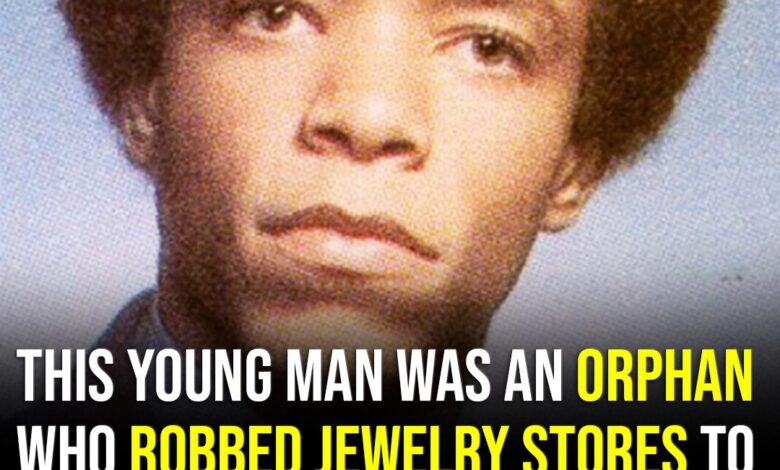
Tragedy struck with a surgical, cruel precision during his formative years. While most children were worrying about schoolyard games, Tracy was confronting the permanence of death. He lost his mother to a heart attack when he was only in the third grade. Just a few years later, while he was still grappling with the void left by her absence, his father passed away from the same condition. By the age of twelve, the boy from Newark was an orphan. This double blow did more than just remove his emotional anchors; it stripped away his sense of safety. He was sent to live with an aunt in South Los Angeles, a move that would transplant him from the East Coast to the epicenter of a burgeoning West Coast subculture defined by gang lines and survivalist mentalities.
In Los Angeles, the environment was a pressure cooker of race, poverty, and neglected infrastructure. The streets of Crenshaw and South Central became his classroom. As a teenager at Crenshaw High School, he found himself at a crossroads where the path to “normalcy” was obscured by the immediate need for resources. It was here that the collision of race and economic desperation began to shape his worldview. To stay afloat, he drifted into the periphery of criminal activity. He wasn’t just a witness to the chaos; he was a participant in a world where small crimes were often the only bridge between hunger and a meal.
However, even in the depths of the street life, Tracy possessed an anomaly in his character: a strict, unyielding personal code. While his peers were descending into the burgeoning drug epidemic that would soon devastate the community, he remained remarkably disciplined. He famously avoided drugs and alcohol, a choice driven by a desire for absolute control over his mind and body. He realized early on that in a world where everything else was chaotic, his internal discipline was his only true weapon. He wasn’t just trying to survive; he was studying the game with an ambitious eye, looking for a way out that didn’t involve a casket or a life sentence.
Seeking a way to stabilize his life and escape the gravity of the streets, he enlisted in the United States Army. For four years, the military provided him with the structure he had lacked since childhood. It was during this time that he purchased his first set of turntables and began to foster a deep, technical love for music. Yet, when his service ended and he returned to civilian life, the lack of immediate opportunity pulled him back into the shadows. He found himself involved in high-stakes criminal activities, including jewelry heists and street hustling. It was a volatile period where the line between life and death was paper-thin, and the threat of long-term imprisonment loomed over every decision.
The turning point arrived when Tracy began to realize that his lived experience was actually his greatest intellectual property. He started utilizing his talent for rhyme to document the grim realities he saw every day. Taking the moniker Ice-T as an homage to the street poet and author Iceberg Slim, he began to craft a new genre. He wasn’t just rapping; he was reporting. He used the microphone as a medium for storytelling, translating the violence, the systemic pressure, and the cold observations of the street into a rhythmic narrative. This was the birth of “Gangsta Rap,” a movement that would eventually change the global music industry forever. He turned the trauma of his youth into a mirror for society, forcing the world to look at the communities it had tried so hard to ignore.
As his music career exploded, the industry began to take notice of his natural charisma and undeniable screen presence. The transition into acting wasn’t just a career move; it was an evolution. He brought an authenticity to his roles that couldn’t be taught in any theater school. Whether he was playing a high-stakes undercover officer or a gritty survivor, his performances were informed by the scars he carried from his time in Newark and Los Angeles. Eventually, this led to his historic run on television, where he became one of the most recognizable and longest-running characters in procedural history. He successfully bridged the gap between being a voice of the streets and a staple of mainstream American households.
Perhaps the most impressive part of his journey is the domestic stability he fought so hard to achieve. For a man who lost his family so young, building a lasting home became his ultimate victory. He transformed from a man drifting between relatives to a devoted husband and a father who provides the very stability he was denied. He moved away from the life of crime not just by luck, but through a conscious, disciplined pivot toward creative expression.
Today, his legacy serves as a masterclass in redirection. It is a testament to the fact that your origins do not have to be your destination. By taking the raw materials of a troubled beginning—loss, crime, and poverty—and refining them through the lens of art and discipline, he didn’t just save his own life; he created a blueprint for generations of artists to follow. He remains a living example of how a sharp mind and a relentless work ethic can overcome even the most impossible odds, proving that a kid from the streets of Newark can indeed become a king of the world.