This Secret Nail Habit Could Reveal How Long You Will Live According to Top Longevity Experts
The human body is a masterpiece of biological signaling, constantly broadcasting data about its internal state through subtle outward shifts. While we often look to high-tech blood panels or expensive imaging to gauge our health, one of the most reliable indicators of cellular vitality has been sitting right at your fingertips. Recent discussions in the field of longevity and anti-aging, spearheaded by influential figures like Dr. David Sinclair, have brought a renewed focus to an often-overlooked metric of human health: the rate and quality of fingernail growth. Although the idea of your nails predicting your exact date of expiration is an exaggeration, the science underlying the relationship between keratin production and biological aging is both fascinating and deeply grounded in clinical reality.
At the core of this phenomenon is the concept of cellular turnover. Your fingernails are essentially specialized structures of hardened protein called keratin. The speed at which this protein is produced and pushed forward from the nail matrix is a direct reflection of your body’s metabolic efficiency and its capacity for regeneration. In our youth, cellular reproduction is rapid and robust; as a result, children and young adults often find themselves trimming their nails constantly. However, as we cross the threshold of thirty, a subtle but measurable shift begins to occur. A landmark study originating in the late 1970s established that fingernail growth tends to decelerate by a small percentage every year following the third decade of life. This deceleration serves as a biological clock, providing a window into what scientists call “biological age”—a measurement of how your body is actually functioning compared to the number of candles on your birthday cake.
To understand why this matters, one must look at the body as a resource-allocation machine. When the body is in a state of high vitality, it has the excess energy and cellular resources required to maintain rapid growth in “peripheral” systems like hair and nails. As systemic aging progresses or internal stressors mount, the body may prioritize vital organ function over the rapid production of keratin. Therefore, while a slow-growing nail isn’t a definitive prophecy of a short life, it is a significant data point suggesting that the body’s regenerative engines may be downshifting. Monitoring this rate offers a low-tech, non-invasive way to observe the pace of one’s own aging process in real-time.
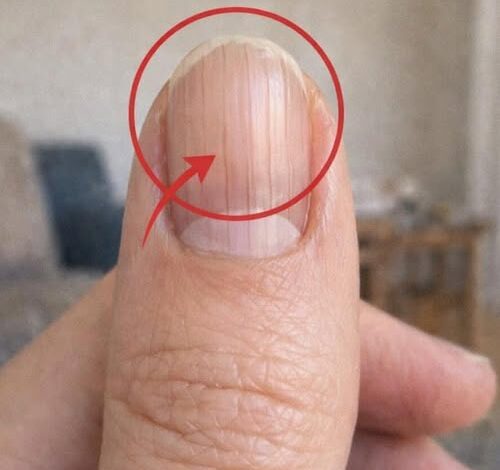
Beyond the mere speed of growth, the physical architecture of the nail serves as a vivid canvas for internal health. Medical professionals have long used the “nail exam” as a diagnostic shortcut because the nail bed is one of the few places where the microvasculature of the body is easily visible. When systemic issues arise, they often leave a permanent mark on the nail as it grows out, creating a chronological record of health events.
One of the most critical signs to watch for is nail clubbing. This occurs when the tips of the fingers enlarge and the nails curve over the edges, often taking on the appearance of the back of a spoon. Clinically, clubbing is a major red flag that has been linked to chronic low oxygen levels in the blood, often stemming from underlying cardiovascular or pulmonary conditions. Similarly, the color of the nail bed can provide an immediate snapshot of the circulatory system. Pale or white nails, known as leukonychia, can be a primary indicator of anemia or even early-stage liver disease. Conversely, a bluish tint to the nails—cyanosis—is a clear signal that the body is struggling to distribute oxygenated blood to its extremities, necessitating immediate medical investigation.
Texture and surface integrity also tell a story of systemic wellness. Pitting, characterized by small, pin-prick dents on the surface of the nail, is frequently associated with autoimmune responses, most notably psoriasis or alopecia areata. Meanwhile, the presence of dark, vertical streaks—melanonychia—is perhaps the most alarming visual sign. While often harmless, these streaks can sometimes indicate subungual melanoma, a serious form of skin cancer that develops under the nail. These visual cues are not just aesthetic quirks; they are the body’s way of sounding an alarm before more painful or debilitating symptoms manifest.
However, it is vital to balance this biological surveillance with a dose of practical context. Not every chip, crack, or discoloration is a harbinger of doom. The nails are the body’s frontline workers, constantly exposed to the elements, harsh chemicals, and physical trauma. Brittle or peeling nails are more likely to be a result of environmental factors, such as frequent handwashing in hot water or the use of acetone-based polish removers, than they are a sign of systemic failure. Furthermore, minor nutritional gaps, particularly a lack of biotin, iron, or zinc, can manifest in the nails long before a true clinical deficiency is reached. In these cases, the nails are simply asking for a lifestyle adjustment rather than a medical intervention.
The true secret to using your nails as a longevity tool lies in the observation of patterns over time. A single white spot caused by hitting your hand against a desk is meaningless. However, a persistent change in the base color of all ten nails, or a sudden, drastic slowdown in how often you need to reach for the clippers, is a signal worth noting. By shifting our perspective and viewing our nails as a dashboard of biological indicators, we can move from a state of passive aging to one of proactive health management.
In the modern era of medicine, we are increasingly moving toward personalized, preventative care. Understanding the language of your own body is the first step in that journey. Your fingernails may not be able to tell you exactly how many years you have left, but they are an incredibly accurate mirror of how your body is coping with the stressors of the present. They reflect your nutritional status, your circulatory health, and your cellular vigor. By paying attention to these small details, you aren’t just engaging in vanity; you are practicing a form of biological mindfulness that allows you to catch potential issues early and optimize your path toward a longer, healthier life. The next time you look down at your hands, remember that you are looking at a living report card of your internal vitality. Stay informed, stay observant, and treat your nails as the vital health sensors they truly are.