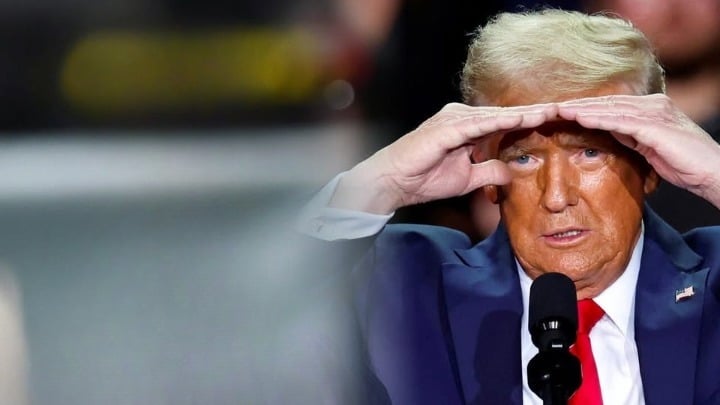
The terrifying midnight announcement that almost triggered World War 3
The hours immediately following the shocking presidential statement felt as though they had been violently ripped from a dark, forgotten era of the mid-twentieth century. It was a modern, hyper-connected echo of the Cuban Missile Crisis, a terrifying moment when humanity stood directly on the precipice of total annihilation. However, unlike the cold conflicts of the past, this modern nightmare did not unfold over days of delayed telegrams and secret letters. Instead, the suffocating global tension played out in real-time through a relentless barrage of smartphone push alerts, frantic breaking news livestreams, and constant social media updates. The digital age made the existential crisis feel brutally immediate, claustrophobic, and entirely inescapable for billions of people across the globe.
In the nation’s capital, government officials spoke strictly in the heavy, unyielding language of military resolve. Washington began issuing what it sternly categorized as final warnings, deliberately framing the potential looming military strikes not as an act of unprovoked aggression, but as a grim and tragic necessity. High-ranking defense officials and administration spokespeople insisted to a panicked press corps that international deterrence had completely eroded over recent months. They argued passionately behind closed doors and on television networks that taking decisive, overwhelming military action was now the only viable pathway left to restore superpower credibility on the global stage and protect long-term geopolitical interests.
Thousands of miles away, the government in Tehran responded to the severe threats with a volatile mix of deeply wounded national pride and calculated strategic ambiguity. Their official state broadcasts and diplomatic communiqués carefully avoided any specific operational details or concrete promises of military movement. This deliberate vagueness left seasoned intelligence analysts and ordinary citizens alike completely paralyzed with anxiety, desperately trying to guess which of the regime’s mentioned options were legitimate, imminent threats of retaliation and which were merely loud, strategic messaging designed to project domestic strength without accidentally committing the nation to an irreversible, catastrophic military escalation.
Across the entire face of the earth, the comforting rhythms of ordinary, daily life came to an abrupt and jarring halt. In suburban homes stretching from the heart of Tehran to the sprawling towns of Texas, the usual evening routines of watching sports, enjoying entertainment, or spending time with family were completely abandoned. Instead, millions of terrified eyes were glued to glowing screens, tracking hypothetical missile trajectories, studying weapon capabilities, and analyzing apocalyptic nuclear fallout projections. The global populace was forced to abruptly absorb a terrifying new reality that felt simultaneously surreal, like a Hollywood disaster film, and frighteningly plausible.
The global financial system reacted to the geopolitical panic with instantaneous, violent volatility. As uncertainty gripped the international community, oil prices surged exponentially overnight, hitting historic highs as traders feared a massive disruption in critical energy shipping lanes. Simultaneously, major stock markets across New York, London, Tokyo, and Hong Kong faltered and entered a steep downward spiral, wiping out billions of dollars in valuation in a matter of hours. The global economy, already fragile, showed immediate and visible signs of immense strain. On every news broadcast and financial report, the sterile word escalation became a universal euphemism for something far more terrifying and direct, softening the brutal language of kinetic warfare without doing anything to reduce its actual, horrifying gravity.
Behind the closed, heavily guarded doors of embassies and military headquarters, a much quieter, desperate struggle for human survival was unfolding. Exhausted diplomats worked through the night without sleep, fueled by caffeine and sheer panic, attempting to establish secure lines of communication between adversarial capitals. Top-ranking generals meticulously measured risks, calculating the exact tipping points of automated retaliatory systems, while frantic regional leaders searched urgently for any possible diplomatic off-ramp. They desperately needed a mechanism that could de-escalate the spiraling tension without making their respective nations appear weak, cowardly, or submissive to foreign pressure.
These midnight negotiations were incredibly tense, fragile, and deeply uncertain, severely hindered at every turn by decades of deep-seated geopolitical mistrust and immense domestic political pressure. Every single potential compromise put forward by neutral mediators risked being instantly interpreted by hardliners as a shameful act of surrender. This hypersensitive political environment made even the smallest, most basic steps toward establishing a temporary ceasefire incredibly difficult to achieve and even harder to sustain for more than a few hours at a time. The world held its collective breath as the future of civilization rested on the thin, frayed thread of late-night diplomatic bartering.
When the sun finally rose, the immediate, suffocating crisis began to fade from the headlines, ending not with a triumphant treaty or a permanent resolution, but rather with a collective, uneasy sense of global relief. The immediate danger of an accidental launch or an all-out nuclear exchange passed into the background, yet the ultimate outcome of the standoff felt incredibly fragile and hollow. For the citizens who had spent the night preparing for the worst, the morning light brought less of a sense of definitive closure and far more of a terrifying realization that this was merely a temporary pause in a continuous, dangerous story—a geopolitical nightmare that could easily resume at any given moment when the world least expects it.