The Wooden Box Secret That Destroyed My Stepfathers Funeral And Changed Our Family Forever
The rain came down in relentless sheets, transforming the cemetery into a blur of gray granite and sodden grass. We stood clustered around the grave of the man we all called Dad, watching the casket vanish inch by inch into the earth. Thomas had raised five of us, none shared his blood, yet none of us had ever felt like a guest in his home. To my right, Michael cleared his throat in a desperate bid for composure, while Mara wrapped her arms tightly around her chest. Noah stared blankly ahead, his jaw locked tight against the impending wave of grief. I closed my eyes against the stinging downpour and whispered a silent thank you for the school lunches with napkins folded into notes, for the hair-braiding lessons he took from library books, and for a lifetime of unconditional love.
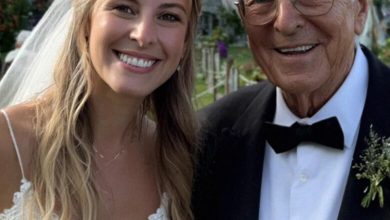
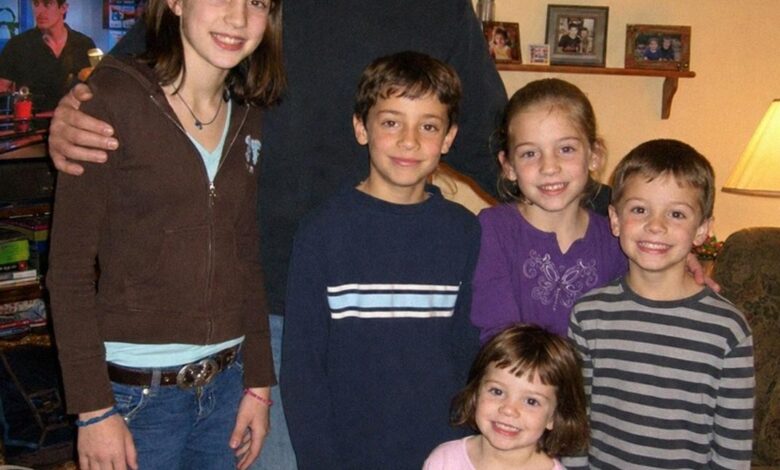
My mother had married Thomas when I was only five years old. He won me over instantly by crouching down to my eye level and presenting me with a ragged pink teddy bear missing a button eye, joking that since I was high maintenance, we would get along perfectly. Two years later, my mother was killed in a car accident. Everyone expected Thomas to hand me over to my grandparents, but he simply looked at my small form on the couch and told them I was his daughter. That was the end of the discussion. Over the next decade, Thomas expanded our unconventional family. He adopted the twins, Michael and Mara, from a shelter, and later fostered and adopted another set of siblings, Noah and Susan. We came from entirely different backgrounds, but under his roof, we became a real family.
Yet, one piece of our family puzzle had been missing for two agonizing years. As the service concluded, I noticed a figure standing at the back of the cemetery under a vivid red umbrella. It was Susan. She looked weary, weathered by a self-imposed exile that had broken our father’s heart. Before his passing, Thomas had spent his final nights asking me to keep the porch light burning, holding onto the fading hope that she would return. When Mara and Michael confronted her about her sudden disappearance and why she had ignored his letters and calls, Susan merely replied that she had done what she had to do, leaving us with the same frustrating riddle she had delivered when she walked out a week after her eighteenth birthday.
Before the tension could escalate further, a man in a charcoal overcoat stepped into our circle. It was Mr. Elwood, Thomas’s long-time attorney. He informed us that Thomas had left behind a specific request, a final task that required all five of us to gather at his office immediately following the funeral.
The lawyer’s office was heavy with the scent of old paper and stale coffee. Rested on the center of his mahogany desk sat a small, locked wooden box. Mr. Elwood handed me the key, noting that Thomas wanted me to be the one to open it. The small metallic click of the lock echoed through the silent room. Inside lay five envelopes, each bearing our names written in Thomas’s shaky, late-life handwriting. We dispersed into different corners of the room to read our final words from the man who had shaped our lives.
The first line of my letter shattered my breath. Thomas wrote that Susan had fled because she had uncovered a dark secret about his past, something the rest of us knew nothing about. According to the letter, Susan had discovered an old heart-shaped locket hidden deep within his desk. Inside was a photograph of Thomas standing beside a young woman, a face Susan recognized instantly as her own biological mother.
As I read further, the true weight of the revelation hit me. Across the room, Noah began to weep silently into his hands, Mara clamped her palms over her mouth, and Michael stared blankly at his page. Susan’s face drained of all color. She folded her letter with trembling hands, shoved it into her coat pocket, and bolted from the room without saying a word.
I ran after her into the downpour, finding her collapsed in tears beneath a massive oak tree across the street. She was sobbing with the agonizing weight of a young woman realizing her entire reality had been a mistake. The others caught up, forming a protective circle around her as she handed me her letter, whispering that she couldn’t bear to read the words again.
I read aloud, and the truth finally came to light. The woman in the locket was not a secret lover or evidence of a betrayal, she was Elise, Thomas’s younger sister who had run away at seventeen. Years later, she had reached out to him in desperation, but by the time Thomas arrived at her city apartment, she had already succumbed to illness. Her two children, Noah and Susan, had been placed into the foster care system. Thomas immediately tracked them down and brought them into his home to raise them as his own.
When Susan had confronted him years prior with the locket, she assumed he was the man who had abandoned her mother. Blinded by fury and hurt, she had packed her bags and left before he could explain the truth. As the years passed, the weight of the explanation became too heavy for Thomas to articulate, and he eventually ran out of time to say it. Susan wept bitterly, realizing that the man she had spent years hating was actually the uncle who had rescued her from the system and carried the burden of her anger in silence.
We returned to Thomas’s house that evening, the old structure welcoming us with the familiar scents of cedar, coffee, and the cinnamon mints he always kept in his pockets. The porch light was still burning brightly, casting a warm glow over the front steps. Inside, the house felt empty but alive with memories. Mara retrieved the old photo albums, flipping through pages filled with images of us in mismatched clearance pajamas, Noah grinning without his front teeth, and Susan sporting a terrible haircut she had given herself with craft scissors. We laughed through our tears, sharing stories of his terrible hair gel phases and his legendary bad jokes.
Three days later, the sky cleared, and all five of us walked back to the cemetery together. Susan knelt before the headstone, offering a tearful apology to the man who had loved her through her absence. I reached into my bag and pulled out a small lantern, placing it on the dry grass and switching it on. It was a replica of the porch light, a symbol of the home Thomas had spent his life building for us. Thomas had taught us that home isn’t a place you have to earn through blood ties, it is simply a place that stays lit for you, waiting for your return. We stood together in the quiet afternoon air, linked arm in arm, finally whole again.