She Made Millions Laugh for Decades W!!!
The architectural blueprint of American comedy was fundamentally altered the moment Lily Tomlin stepped into the light. For over six decades, she has been the artisan of our collective joy, a performer who could coax a roar of laughter from a stadium crowd as easily as she could draw a solitary tear in a darkened theater. Yet, the effortless nature of her punchlines often obscured the heavy lifting required to deliver them. To understand the icon, one must look past the glittering awards and the iconic characters to the working-class streets of Detroit, where a young girl first discovered that humor was not just a form of entertainment—it was a survival strategy and a bridge to the human soul.
Born into the modest, gritty reality of Detroit in 1939, Tomlin was raised in an environment where resources were lean but observation was a feast. Early on, she developed a preternatural ability to inhabit the personas of those around her, finding the “sharp and the strange” in the mundane. She understood intuitively that comedy was a powerful tool for protection; if you could make someone laugh, you could connect with them, or at the very least, you could keep them at a safe distance. This foundational instinct powered her transition from the intimate, smoke-filled stand-up stages of the 1960s to the national phenomenon of Rowan & Martin’s Laugh-In.
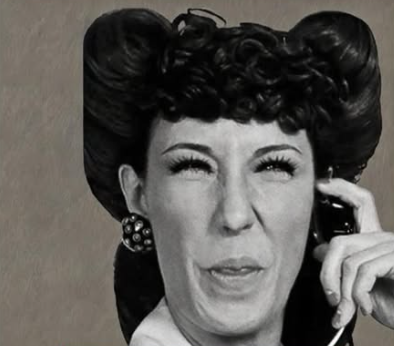
On Laugh-In, Tomlin didn’t just play characters; she conjured archetypes that served as mirrors for American life. There was Ernestine, the snorting, power-tripping telephone operator whose “one ringy-dingy” became a catchphrase for bureaucratic absurdity. Then there was Edith Ann, the precocious six-year-old sitting in an oversized rocking chair, dispensing profound, unfiltered truths about the adult world. These were not mere caricatures; they were sophisticated social commentaries wrapped in the accessible packaging of sketch comedy. Tomlin’s genius lay in her refusal to punch down; she found the dignity in the eccentric and the pathos in the absurd.
However, the true measure of her talent was her refusal to be confined to the safe box of a “comedienne.” She possessed an artistic restlessness that drove her to seek out roles that would challenge both her and her audience. In Robert Altman’s Nashville, she shattered the expectations of those who knew her only through Ernestine’s snort. Her performance as Linnea Reese, a gospel-singing mother of two deaf children, was a masterclass in subtlety and emotional restraint. It proved that the woman who could make America roar could also leave them in a breathless, contemplative silence. She didn’t just crack jokes; she cracked open the human condition.
This versatility became the hallmark of her career. In the 1980 classic 9 to 5, Tomlin channeled the simmering, collective rage of women facing workplace injustice into a performance that was both hilariously cathartic and deeply revolutionary. Alongside Jane Fonda and Dolly Parton, she helped create a cultural touchstone that transformed the frustrations of the “secretarial pool” into a rallying cry for equality. She demonstrated that comedy meant very little if it didn’t risk something—if it didn’t lean into the friction of the times to spark a necessary conversation.
As the decades marched forward, Tomlin’s career did not suffer the gradual fade that often plagues veteran performers. Instead, it deepened and matured like a fine vintage. Her long-running success on Grace and Frankie introduced her to a younger generation of viewers who didn’t see a relic of the past, but a rebel who was still very much in motion. Playing the bohemian, free-spirited Frankie Bergstein, she explored the complexities of aging, friendship, and late-life reinvention with a fearlessness that resonated across demographic lines. She became a beacon for the idea that vitality is not a function of age, but of attitude and curiosity.
Offscreen, Tomlin’s life has been defined by the same integrity that anchors her performances. Long before it was fashionable or safe, she lent her formidable voice to the causes of feminism, LGBTQ+ rights, and broader social justice. She understood that her platform was a privilege, and she used it to advocate for those whose voices were often drowned out by the noise of the mainstream. Her commitment to these causes was never a performance; it was a continuation of the empathy she poured into her characters. She insisted that if you have the power to make people listen, you have the responsibility to say something that matters.
The physical evidence of her success is undeniable. Her shelves groan under the weight of the industry’s highest honors: multiple Emmys, a Grammy, a Tony, and the prestigious Mark Twain Prize for American Humor. She is a member of an elite group of performers who have achieved a level of sustained excellence that few can match. Yet, to Tomlin, the awards have always been secondary to the work itself. Her real legacy is not found in gold-plated statuettes, but in the emotional impact she has had on three generations of admirers.
She is the living proof that a life spent making people laugh can also make them braver. She taught us that humor is a way of speaking truth to power, a way of finding beauty in our flaws, and a way of staying connected to one another in a fragmented world. When we look at Lily Tomlin, we see a woman who navigated the transition from the working-class streets of Detroit to the brightest lights of Hollywood without ever losing the “modest household” values that first shaped her. She remains a rebel in motion, a woman who continues to find the “iced coffee, two sugars, splash of cream” moments of joy in a complex world.
As she continues to move through the 2026 landscape, her presence remains as vital and as necessary as ever. She is a reminder that the best kind of comedy is the kind that makes you think, and the best kind of life is the one spent in service of the truth. Lily Tomlin has done more than just entertain us; she has walked us through the difficult times with a smile that feels like home and a voice that tells us it’s going to be okay.