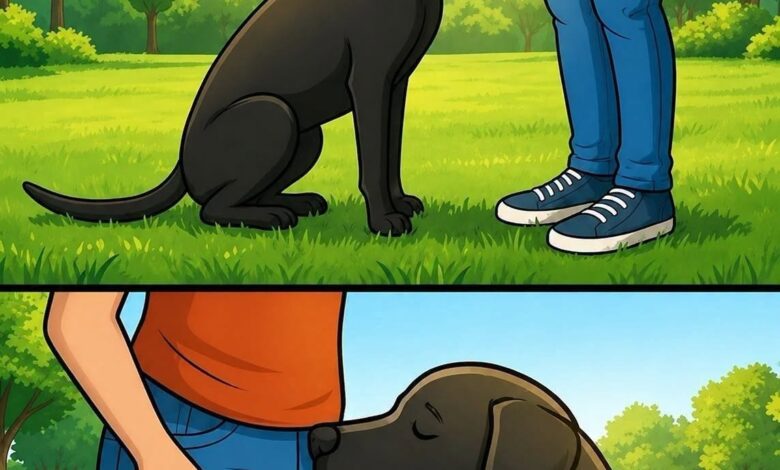
You Have Been Walking Your Dog Totally Wrong—And It’s Ruining Their Mental Health Every Single Day!
If you have ever taken a dog for a walk, you know the absolute frustration of trying to maintain a brisk pace while your furry companion stops dead in their tracks to intensely sniff a single blade of grass, a random lamppost, or your shoe as if they’ve discovered ancient treasure. We’ve all stood there, sighing dramatically, tugging impatiently on the leash, and muttering that it is just dirt and plants. But what if everything you thought you knew about walking your dog was completely backwards? What if stopping to sniff wasn’t a pesky delay, but the single most vital part of their day?
I used to be one of those impatient owners. My rescue dog, Gus, would stop every few feet, nose pressed aggressively to the pavement, tail wagging with mysterious purpose while I stood there checking my watch. I’d yank the leash and plead with him to keep up, convinced he was just being stubborn. Then, a professional animal behaviorist completely shattered my perspective, and everything changed. Gus wasn’t dragging his feet to annoy me. He was reading the morning news, checking his digital social media feed, and catching up on the emotional drama of every single creature that had crossed that exact path in the last twenty-four hours.
To truly understand why your dog needs this time, you have to look at the sheer biological marvel of their nose. While human noses possess a modest six million olfactory receptors, a dog’s nose is packed with up to three hundred million receptors. The region of their brain dedicated to analyzing scents is proportionally forty times larger than our own. When humans look at a patch of grass, we see green blades. When a dog sniffs that exact same spot, they experience a multi-dimensional world of complex layers. They smell the earth beneath, the microscopic bug that crawled across it hours ago, the emotional state of the dog that peed there yesterday, and the lingering moisture of an upcoming rainstorm.
They even possess a specialized sensory structure called the Jacobson’s organ located in the roof of their mouth, allowing them to literally taste pheromones and chemical signatures. This sophisticated sensory apparatus lets them track stress hormones, fear, excitement, and health status in other animals and humans alike. When your dog sniffs a stranger or a lamppost, they are gathering deeply intimate data about who was there, how old they were, whether they were sick, and what mood they were in. It is their newspaper, their gossip column, and their community bulletin board all rolled into one.
Denying your dog this crucial sensory exploration is akin to locking a human in a soundproof room and forbidding them from speaking, reading, or texting. Sniffing is not a luxury or a lazy stall tactic; it is an absolute biological necessity. Physically moving your dog around the block provides exercise, but mental stimulation is where true canine fulfillment lies. Engaging their nose requires intense focus, problem-solving, and cognitive processing. In fact, a fifteen-minute, sniff-heavy neighborhood walk tires a dog out far more effectively than a grueling thirty-minute jog.
Furthermore, intensive sniffing triggers a powerful biological release of dopamine—the brain’s premier feel-good neurotransmitter. If you have ever watched an anxious, reactive dog visibly decompress and calm down after being allowed to thoroughly investigate a bush, you’ve witnessed the soothing, therapeutic power of the sniff. It lowers their heart rate, regulates their nervous system, and alleviates built-up stress. When you rush them past every interesting scent, you keep their stress levels elevated and rob them of essential psychological decompression.
Transforming your daily routine into a dedicated “sniffing walk” will completely revolutionize your relationship with your pet. Next time you head out the door, relinquish the urge to dictate the pace. Let your dog choose the path of most resistance, allow them to linger as long as they need over a patch of dirt, and drop the relentless leash tugging. Watch their body language to learn their unique sniffing personality—whether they are a methodical scientific investigator, a gossipy social butterfly hunting for neighborhood updates, or a focused food-seeker tracking crumbs.
As Gus has grown older and slower, our walks have transformed into deliberate, meandering journeys that rarely make it to the end of the block. I used to view his slow pace as an inconvenience, but now I cherish every single second. His relentless curiosity reminds me to slow down, disconnect from my chaotic schedule, and pay attention to the rich, textured world happening right beneath our feet. The universe is infinitely more fascinating when viewed through a dog’s nose, and once you finally learn to stop rushing and start sniffing alongside them, you will discover a profound, beautiful bond you never knew was missing.