THE SHOCKING TRUTH ABOUT WHAT IS ACTUALLY INSIDE YOUR FAVORITE LUNCH MEAT WILL MAKE YOU NEVER EAT IT AGAIN
Bologna is perhaps the most divisive staple in the American pantry. For millions, it is a nostalgic comfort, the centerpiece of a childhood sandwich or a quick, reliable midnight snack. For others, it is the ultimate “mystery meat,” a food item shrouded in urban legends and whispered warnings about what exactly goes into the grinder. We have all heard the jokes, the grim descriptions of “floor sweepings,” and the persistent myths that suggest this luncheon meat is a repository for everything that didn’t make the cut for higher-quality cuts of beef or pork. But if we move past the social stigma and the schoolyard rumors, we find that the truth about bologna is far more clinical, industrial, and—in many ways—more fascinating than the horror stories we tell ourselves.
To understand bologna, we must first look at its pedigree, which is far more distinguished than its current reputation suggests. The American bologna of today is a distant, highly processed descendant of Mortadella, a traditional Italian sausage that has been crafted in Bologna, Italy, for centuries. Authentic Mortadella is an artisanal product, characterized by its coarse texture, visible cubes of lard, whole peppercorns, and often the addition of pistachios or myrtle berries. It is a product of craft, requiring skilled butchers to balance fat and protein in a way that respects the history of the animal. When that tradition crossed the Atlantic and collided with the rise of industrial food production in the twentieth century, the product underwent a radical transformation.
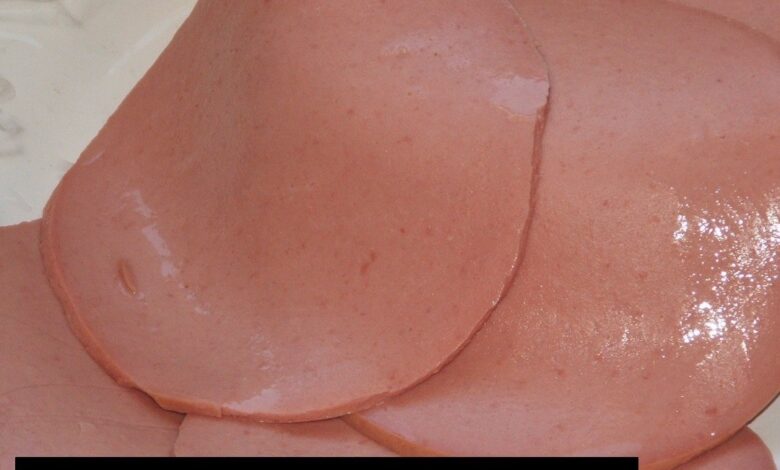
American bologna became a marvel of mass-production efficiency. The goal shifted from artisanal nuance to absolute consistency. Manufacturers needed a product that could be produced by the ton, sliced with mathematical precision, and sold at a price point that made it accessible to every family in the country. To achieve this, the process was revolutionized. The meat—typically a blend of beef, pork, chicken, or turkey—is not simply ground; it is put through an intensive emulsification process. The meat is ground to such a fine degree, then mixed with fat and seasonings, that it loses all identifiable structure, transforming into a uniform, smooth-textured paste. This emulsification is the secret to the bologna “mouthfeel.” It is designed to be soft, mild, and utterly predictable, ensuring that the slice you buy in New York tastes identical to the slice you buy in Los Angeles.
The “mystery meat” reputation thrives on our lack of knowledge regarding what constitutes an emulsion. In the world of commercial food manufacturing, the ingredients are subject to strict regulatory oversight. In the United States, the Department of Agriculture mandates specific standards for what can and cannot be labeled as bologna. Contrary to the darkest rumors, your average grocery store bologna is not a collection of hooves, hair, or eyes. It is primarily composed of standard trimmings, the lean meat left over from primary cuts, and enough fat to provide the required flavor and texture. The additives, which often trigger suspicion—such as sodium nitrite, sodium erythorbate, and various corn syrups—are included for shelf stability and color retention, allowing the meat to sit in a refrigerator for weeks without spoiling.
The process of cooking and smoking the meat is also meticulously controlled. After the emulsified paste is packed into casings, it is subjected to a precise heat treatment. This denaturation of the proteins is what locks the emulsion into its solid, sliceable form. Many varieties are then moved into smokehouses, where natural wood smoke or liquid smoke flavoring is added to provide that characteristic tang that we associate with the product. It is a process that is less about “hiding” ingredients and more about turning raw materials into a highly stable, uniform product that can survive the logistics of modern global food distribution.
Why, then, do we remain so suspicious? Part of the answer lies in our psychological detachment from the source of our protein. As a society, we have become increasingly disconnected from the reality of butchery. When meat retains its shape—a steak, a chop, or a chicken breast—we feel comfortable. We can verify its origin. When meat is turned into a smooth, pink, uniform circle, our brains struggle to connect the final product to the animal. That cognitive gap is filled by the mystery meat narrative. We intuitively feel that something has been “lost” in the process, and we fear that the space vacated by our understanding has been filled with something unsavory.
Yet, from an industry perspective, bologna is a triumph of food science. It is an efficient use of animal protein that might otherwise go to waste. It is a staple that provides affordable nutrition to millions. The irony is that the very standardization we find suspicious is exactly what makes the food safe and reliable for mass consumption. When you buy a package of bologna, you are purchasing a product that has been pasteurized, preserved, and quality-controlled to an extent that would be impossible for an artisanal Mortadella. You are trading flavor complexity and textural integrity for the security of a product that is identical every single time you open the package.
The evolution of bologna is a mirror of the evolution of the American diet. We traded the neighborhood butcher for the supermarket, and we traded the regional variation of artisanal sausages for the homogenized convenience of the lunch meat aisle. Bologna is neither a gourmet delicacy nor a hidden horror; it is a monument to modern convenience. It is a food defined by the constraints of the assembly line and the requirements of the global supply chain. When you eat it, you are consuming a product of the industrial age, shaped by centuries of sausage-making tradition but perfected by the efficiency of the modern factory.
In the final assessment, the “mystery” of bologna is a mystery of our own making. We fear the processing because it reflects our own distance from the food on our plates. If we were to hold a magnifying glass up to any heavily processed food—from the chicken nuggets in the freezer to the hot dogs at a barbecue—we would likely find the same degree of transformation. Bologna is simply the most visible and iconic example of this shift. It is a humble, regulated, and historically rooted food that has survived the transition from the butcher shop to the factory floor. Whether you love it or whether you fear it, the bologna in your sandwich is exactly what it claims to be: a simple, mass-produced product that serves its purpose in the rhythm of our modern lives.