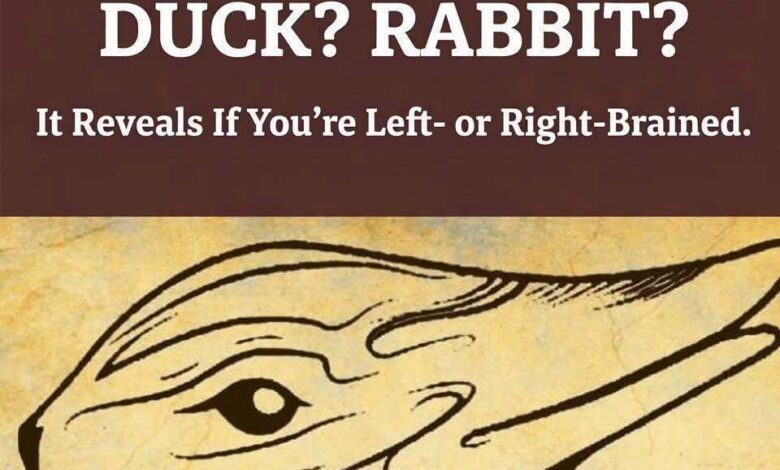
Which Animal Do You See First? The Clever Rabbit and Duck Picture Explained
At first glance, this simple black-and-white drawing may look like an ordinary picture. However, something fascinating is hidden within its familiar shapes. Some people immediately recognize a rabbit, while others are convinced they are looking at a duck. The surprising truth is that both animals are represented in exactly the same image. What makes this optical illusion so interesting is the way different people can look at identical lines and recognize completely different things.
If you notice the rabbit first, you may immediately recognize its long ears and distinctive head. If the duck catches your attention, the same lines suddenly appear to form a bill and the shape of a bird. Neither interpretation requires a different picture. Everything is already there, waiting for your brain to recognize the alternative image.
The famous rabbit-and-duck illusion is a classic example of how human visual perception works. Our brains do much more than simply receive information from our eyes. They organize shapes, identify familiar patterns, and connect what we see with information gathered through previous experiences. This process helps us understand the world around us, but it can also create interesting situations in which one image has multiple possible meanings.
One popular interpretation associates seeing the rabbit first with imagination and creative thinking. People who recognize the rabbit are sometimes described as individuals who enjoy exploring possibilities, noticing unusual connections, and approaching everyday situations with curiosity. The rabbit is often connected with alertness and quick recognition, making it an interesting symbol in informal personality discussions. However, these descriptions are entertaining interpretations rather than scientifically proven personality characteristics.
Those who recognize the duck first are sometimes associated with careful observation and analytical thinking. Popular descriptions suggest that these individuals may enjoy examining information, recognizing specific details, and understanding how different elements fit together. The duck’s recognizable bill can make this interpretation particularly noticeable. Nevertheless, seeing the duck first does not demonstrate that someone is more intelligent, logical, or practical than another person.
The real fascination begins when someone points out the second animal. Suddenly, the same drawing can look completely different. What appeared to be the rabbit’s ears may now resemble the duck’s bill. Once your attention shifts, the alternative interpretation becomes easier to recognize. This happens without changing a single line in the original picture.
Psychologists study similar visual experiences to understand perceptual flexibility, the ability to interpret information in different ways. When an image contains shapes that support multiple interpretations, the brain can switch between them. Attention, expectations, and familiarity all influence which interpretation becomes noticeable first. This explains why two people can examine the same picture and describe entirely different animals………….CONTINUED ON NEXT PAGE