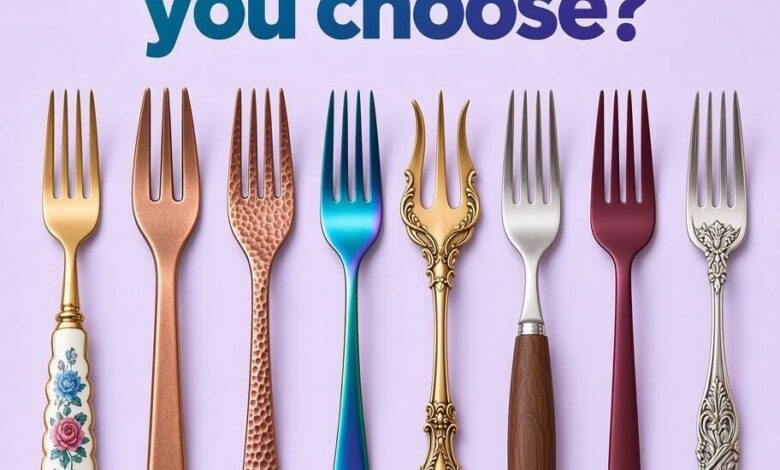
What Your Choice of Fork Says About Your Personality
A playful personality quiz invites readers to choose one of eight fork designs based on their immediate attraction. Each fork supposedly reflects a different personality type, revealing possible strengths, emotional habits, and hidden struggles behind a person’s everyday smile. Participants are encouraged to trust their first instinct rather than overthink the decision, then compare the description with their own experiences.
Fork 1 represents the caring soul, someone generous, compassionate, and naturally inclined to nurture others. These individuals often put other people’s needs before their own, offering support even when they are exhausted. Although their kindness is a strength, they may neglect their personal well-being while trying to make everyone around them happy.
Fork 2 symbolizes independence and resilience. People associated with this choice are described as strong, self-reliant, and capable of facing difficulties without asking for help. However, their determination can make vulnerability uncomfortable, causing them to hide their emotions rather than allow others to see when they are struggling. Fork 3 represents the creative dreamer, whose imagination and original thinking help them see possibilities others might miss. Their rich inner world, however, can sometimes lead to excessive overthinking.
Fork 4 reflects the adventurous spirit, characterized by courage, enthusiasm, and a desire to embrace new experiences. These individuals enjoy movement and excitement but may become impatient when progress takes longer than expected. Fork 5 represents the natural leader, someone ambitious, decisive, and motivated to achieve meaningful goals. Yet the same drive for success can create pressure to be perfect, making it difficult to accept mistakes or slow down.
Fork 6 symbolizes the loyal peacemaker, a dependable person who values harmony and works to maintain strong relationships. Their desire to avoid conflict, however, may prevent them from addressing difficult conversations. Fork 7 represents the private thinker, who carefully observes others and reflects deeply but remains guarded about personal feelings. Fork 8 describes the thoughtful old soul, someone grounded in meaning and tradition who values life’s lessons but may sometimes struggle to release the past.
Ultimately, the quiz is intended as entertainment rather than a scientifically validated personality assessment. Each description offers a possible starting point for self-reflection, but selecting a particular fork cannot establish someone’s true character. Readers are encouraged to share their chosen number and consider which traits genuinely resonate with them. The most meaningful insight comes from honest self-awareness, not from believing that a simple choice of cutlery defines who they are.
One way to enjoy the exercise is to separate recognition from prediction. You might recognize your habit of caring for others in the first description while also identifying with the private thinker or creative dreamer. That overlap is unsurprising: people behave differently in different settings, and broad descriptions can reflect more than one part of a life.
Rather than asking whether a fork has revealed a fixed identity, consider which sentence prompted a useful question. Do you allow yourself to ask for support? Is avoiding a disagreement making an important conversation harder? Those questions can lead to reflection without turning an entertaining picture into a verdict about your personality.