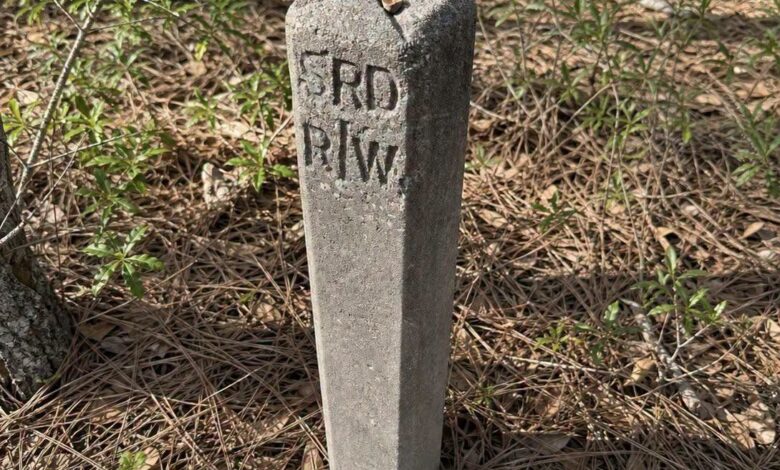
What Is This Mysterious Concrete Marker Beside the Path? Its Forgotten Purpose Revealed
Despite these changes, certain physical clues can remain visible for generations. A straight line through an otherwise uneven landscape, a narrow strip of gravel, an unusual embankment, or a series of small concrete posts may suggest that the area once served a specific purpose. These details can be especially interesting when exploring rural properties, wooded areas, and older neighborhoods.
A concrete marker can also encourage people to investigate the history of their surroundings. Old maps, historical photographs, public property records, and railway documents sometimes provide useful information about forgotten routes. Comparing older maps with modern satellite imagery can help explain why an isolated post stands in a particular location.
For example, a path that now appears to lead nowhere may once have connected two nearby communities. A narrow strip of land beside a residential area might have been part of an older transportation corridor. Even when the original infrastructure has disappeared, its former route may still influence the shape of the surrounding property.
There is also an important distinction between a historical marker and an active boundary marker. Just because a post looks old or abandoned does not necessarily mean its legal purpose has ended. Some right-of-way designations and utility corridors remain relevant even after visible infrastructure has been removed. Anyone considering construction, landscaping, or changes to the land should check the appropriate property records and contact the relevant local authority before disturbing such markers.
Perhaps the most interesting part of these overlooked objects is how easily they blend into their surroundings. People can walk past them for years without wondering why they were placed there. Yet a closer look can transform an ordinary landscape into an opportunity to discover something about local history.
Not every concrete post hides a remarkable story, and its original purpose cannot always be determined from appearance alone. Nevertheless, these small structures demonstrate how much information can survive in unexpected places.
History does not always remain in museums, historic buildings, or carefully preserved monuments. Sometimes it is found beside an ordinary path, standing quietly among weeds and gravel. A simple concrete post may be one of the few remaining clues to a landscape that once looked completely different, reminding us that even the smallest details can help explain the world around us.