Three-Dot Tattoo Explained: What It Represents Across Different Cultures
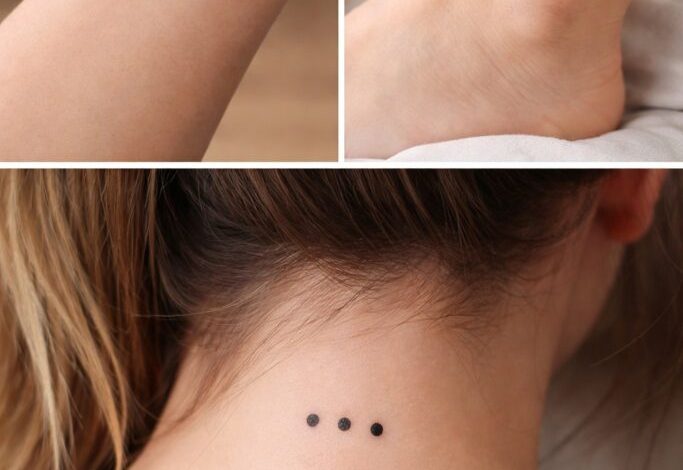
The three-dot tattoo is one of the most recognizable minimalist tattoo designs in the world. Although it consists of only three small dots, it has attracted attention for decades because of the many different meanings people associate with it. Unlike symbols that have one universally accepted definition, the three-dot tattoo has evolved in different ways across cultures, communities, and generations. For some people, it represents a personal philosophy or an important life lesson, while for others it simply serves as a meaningful reminder of their own experiences. Its popularity also comes from its simplicity, as the design is easy to recognize without being large or elaborate. Because tattoos are forms of personal expression, the same symbol can have a completely different meaning depending on who wears it. This makes it important to avoid assuming that every person with a three-dot tattoo shares the same beliefs or background. As with many forms of body art, understanding the individual story behind the design often provides a much clearer picture than relying on stereotypes or first impressions.
One of the best-known interpretations of the three-dot tattoo is its connection to the idea of the “Three Wise Monkeys.” This traditional concept encourages people to avoid seeing evil, hearing evil, and speaking evil, promoting wisdom, self-control, and thoughtful behavior. Many people choose the tattoo because they appreciate these positive values and want a simple symbol that reminds them to approach life with patience, kindness, and awareness. The design is commonly placed between the thumb and index finger, near the knuckles, or on another visible part of the hand, making it a constant personal reminder throughout daily life. Others may choose different placements depending on their preferences or artistic style. The tattoo’s minimalist appearance also appeals to those who prefer subtle body art instead of large, detailed designs. In recent years, minimalist tattoos have become increasingly popular because they can carry deep personal meaning while maintaining a clean and understated appearance. For many wearers, the three-dot tattoo represents personal growth, reflection, and the desire to live according to values they consider important.
The meaning of the three-dot tattoo can also change depending on where in the world it is seen. In some regions, it has become associated with the Spanish phrase “Mi Vida Loca,” which translates to “my crazy life.” For individuals who choose this interpretation, the tattoo may symbolize a life filled with challenges, unexpected experiences, personal transformation, or lessons learned through difficult times. Rather than celebrating hardship itself, many people see it as a reminder of resilience and the ability to continue moving forward despite obstacles. Across different cultures, tattoos often reflect important milestones, family traditions, personal achievements, or emotional memories. This is why a design that appears simple on the surface may hold years of personal history for the individual wearing it. As tattoo culture has become more accepted around the world, many traditional symbols have also gained new interpretations that are entirely separate from their historical origins. Modern tattoo artists frequently explain that clients often select designs based on personal significance instead of established symbolism, making every tattoo unique to the individual who chooses it.
Because symbols can carry different meanings, visible tattoos may sometimes be interpreted differently depending on the setting or the people viewing them. In professional environments, schools, or public spaces, some individuals may make assumptions based solely on appearance without knowing the story behind the design. This highlights the importance of recognizing that body art is a personal choice and that symbols often have multiple interpretations. Over time, attitudes toward tattoos have changed significantly in many countries, with increasing numbers of people viewing them as a form of creativity, self-expression, or cultural appreciation. Small tattoos like the three-dot design are especially popular because they allow individuals to express something meaningful without attracting excessive attention. At the same time, many tattoo enthusiasts encourage learning about a symbol before assigning a particular meaning to it. Doing so promotes understanding and reduces the likelihood of misconceptions that can arise from viewing a symbol without its cultural or personal context.
Ultimately, the three-dot tattoo demonstrates how even the simplest designs can carry rich and varied meanings. For some people it represents wisdom, mindfulness, and positive values, while for others it reflects personal experiences, resilience, or an important chapter in life. There is no single explanation that applies to every person who wears this tattoo, and that diversity is part of what makes the symbol so interesting. As tattoo culture continues to evolve, many classic designs are being reinterpreted by new generations who give them fresh personal significance. Whether someone chooses the three-dot tattoo for philosophical reasons, cultural tradition, artistic preference, or simply because they appreciate its minimalist style, its true meaning belongs to the individual. Understanding this reminds us that symbols are often far more personal than they first appear, and taking the time to learn the story behind them encourages greater respect for the many different ways people choose to express their identities.