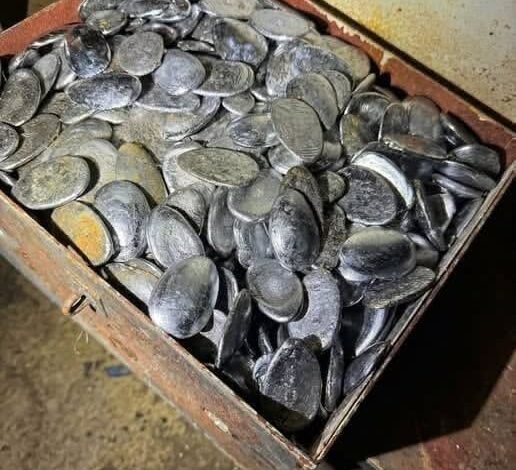
The Strange Cast Iron Old Casting Spoon for Bullets and Sinkers
An old cast iron object with a shallow bowl and a long handle can easily be mistaken for an unusually heavy kitchen spoon. Its weight, dark surface, and simple construction suggest something made to survive hard use rather than serve food. The object’s real purpose becomes clearer when it is placed beside the molds and homemade equipment once common in workshops and rural homes.
Tools of this kind were used to handle molten metal. A person could heat lead or another suitable material, hold the liquid metal in the spoon, and pour it carefully into a mold. Once cooled, the shaped metal might become a fishing sinker, a bullet, or another small item needed for daily work.
For earlier generations, producing such objects at home was practical rather than unusual. Stores were not always nearby, manufactured goods could be expensive, and delivery was nothing like the quick service people expect today. Families depended on the materials, knowledge, and equipment available around them. Making a needed weight or replacing a small metal item could be faster and cheaper than attempting to buy one.
The tool’s heavy construction suited its job. Cast iron tolerated repeated heating and provided a stable vessel for material that had to be transferred with care. The long handle created distance between the user’s hand and the hot bowl. What looks awkward for cooking makes sense as equipment designed around heat, control, and durability.
These casting spoons also reflect a culture of repair. A broken tool was not automatically discarded, and a missing part did not always require a commercial replacement. People maintained equipment, reused scrap, and developed the ability to solve practical problems themselves. Skills were often learned from relatives or neighbors and passed down through repeated use rather than formal instruction.
That history explains why the object’s identity can be difficult for modern viewers. Mass production has moved many small manufacturing tasks far from the home. Fishing weights, hardware, and similar goods arrive finished, packaged, and inexpensive. The tool that once helped create them disappeared from ordinary life, leaving later generations with an object whose shape no longer has an obvious context.
Finding one in an attic, shed, barn, garage, or antique shop can therefore produce imaginative guesses. It might be called a ladle, spoon, fireplace tool, or kitchen utensil. Careful examination can offer clues. Residue in the bowl, signs of repeated heat, the thickness of the metal, and nearby molds or workshop items may support an identification connected to casting.
Identification should still be cautious. Many antique tools share similar forms, and a photograph alone may not reveal size, material, or wear clearly enough to prove a purpose. Comparing the object with documented examples or consulting a knowledgeable collector can help distinguish a casting spoon from another implement.
Its value is not limited to money. An ordinary tool can preserve evidence of how a household organized work, what people produced, and which skills they considered essential. Unlike decorative antiques, working equipment often carries scratches, discoloration, and repairs that record repeated contact with everyday life.
The strange cast iron spoon is a reminder that self sufficiency once involved handling tasks now hidden inside factories. It represents craftsmanship, resourcefulness, and the willingness to make what was needed with one’s own hands. What first appears to be an awkward forgotten utensil may instead be a compact piece of social and technological history.
Preserving such an object with its known history is especially valuable. Notes about where it was found, who used it, and which molds accompanied it can turn an anonymous antique into evidence tied to a particular family or community. Its meaning comes from that practical story as much as from the iron itself.