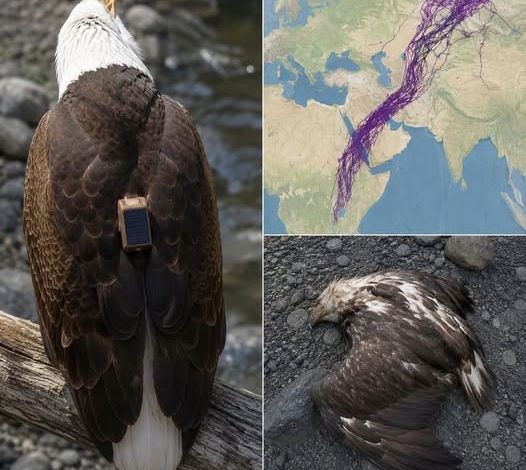
The Eagle Route That Made Researchers Look Twice
A GPS tag was supposed to help researchers follow an eagle’s migration. Instead, the bird’s long journey raised a puzzle: why did its route keep changing when many expected a more familiar seasonal pattern?
Over several years, the eagle traveled across wide stretches of land, including mountains, forests, deserts, and open terrain. Its path did not simply repeat from one season to the next. At times, it took detours, paused for longer periods, or shifted direction in ways that did not immediately fit a predictable migration map.
What first looked unusual eventually became useful. The tracking data gave researchers a rare long-term view of how one wild bird responded to the world around it.
A Route That Was Not as Random as It Looked
Researchers began comparing the eagle’s movements with environmental information, including weather patterns, wind conditions, terrain, food availability, habitat conditions, and seasonal changes.
As more GPS data came in, a clearer picture started to form. The eagle’s movements were not necessarily random. Many of the changes appeared to line up with conditions that could affect flight, rest stops, or access to food.
That suggested the bird was doing more than following a fixed route based only on instinct. It seemed to be adjusting to current conditions as they changed across the landscape.
Why GPS Tracking Matters
Wildlife tracking technology has changed how researchers study migration. Short-term observation can show where an animal is at a certain moment, but long-term GPS data can reveal patterns that might otherwise stay hidden.
By following animals over many seasons, scientists can better understand how they use habitats, where they stop, and how they respond to shifts in weather, food sources, and terrain. Satellite data and digital mapping tools also make it easier to compare animal movement with environmental conditions over time.
This kind of information can support conservation planning by helping identify areas that may be important for feeding, resting, or migration. It also shows why protecting connected habitats can matter when animals do not follow the exact same path every year.
The Bigger Picture
The eagle’s journey is a reminder that nature does not always follow the simple patterns people expect. A route that appears confusing at first can make more sense when viewed through years of careful data.
The study also points to a broader lesson about adaptability. Some wild animals may be more flexible than once assumed, adjusting their movements as weather, habitat, and food conditions change.
For researchers, that makes long-term monitoring especially valuable. For everyone else, it is a fascinating example of how much can still be learned from species that may seem familiar at first glance.
The next time a migration map looks messy, it may be worth asking what the animal already knows about the landscape that humans are only beginning to understand.