My Son Thanked Me for $40,000 I Never Gave Him—Then the Bank Exposed the Shocking Truth About My Daughter-in-Law
### PART 3
“That’s her,” I finally whispered.
Carol nodded slowly.
“Do you recognize her?”
“Unfortunately, yes.”
I leaned closer to the monitor. The image was clear enough to see the signature on the paperwork. Tara had even copied the little curve I always made at the end of the letter D.
She had studied my handwriting.
She had practiced it.
She had planned this.
“Can you enlarge the picture?” I asked.
Carol adjusted the screen.
There was something else in the photograph.
Tara wasn’t alone.
A man sat beside her, slightly turned away from the camera. He wore a dark blue shirt and held a folder on his lap.
At first, I thought it was Kevin.
But it wasn’t.
It was a man I recognized from the few times Tara had mentioned her older brother, Daniel.
I had met him twice at family gatherings. He was a smooth talker, always dressed well, and always seemed to know exactly what to say when money became part of a conversation.
“What is he doing there?” I asked.
Carol studied the image.
“According to the account-opening records, he was listed as the second witness.”
I slowly turned toward her.
“A witness to what?”
“To the identity verification process.”
I almost laughed.
Not because anything was funny, but because the entire situation was so outrageous that my mind couldn’t find another way to respond.
“They used a witness to help steal my money?”
Carol didn’t answer.
She didn’t need to.
She picked up the telephone and contacted the bank’s fraud department.
Then she asked me to remain in her office while she reported the suspicious transactions.
I watched her make the calls.
Every few seconds, she glanced at me with an expression that seemed to say she was sorry.
I didn’t want anyone feeling sorry for me.
I wanted answers.
“Carol,” I said when she finally put down the phone, “I want to know whether there is any money left in that joint account.”
She typed something into her computer.
A moment later, her expression changed again.
“Mrs. Dalton, the account currently has a balance of $1,420.”
“Only fourteen hundred?”
“Yes.”
“Where did the rest go?”
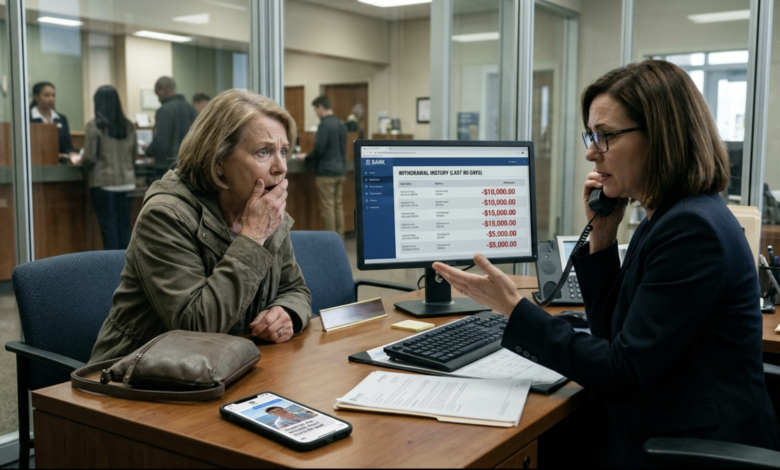
She opened the transaction history.
The money had been transferred several times.
Some had gone toward cruise reservations.
Some had been withdrawn through cash transactions.
There were payments to a luxury travel company, a jewelry store, and an automobile dealership.
One payment stood out.
$18,500 to a vehicle dealership.
I stared at it.
“Did they buy a car?”
“It appears so.”
I closed my eyes.
Kevin had been driving the same ten-year-old sedan for as long as I could remember.
Apparently, he had found a way to upgrade it.
With my retirement savings.
“Can you freeze the remaining balance?”
“Yes. Our fraud department is already working on that.”
“Do it.”
Carol immediately began the process.
Then she looked at me carefully.
“Mrs. Dalton, I need to ask you something. Did you ever give Tara or Kevin access to your personal documents?”
I thought about the filing cabinet.
The four hours.
The neat folders.
The little card.
“Yes,” I answered. “I made a mistake.”
“What happened?”
I explained everything.
I told her about the Sunday visits, Tara’s questions about my financial paperwork, Kevin’s request to add his name to my checking account, and the day Tara volunteered to organize my files.
When I finished, Carol sat quietly.
“Did you notice anything missing afterward?”
I thought for a moment.
Then something came back to me.
A few weeks earlier, I had gone looking for my husband’s old insurance policy.
I remembered placing it in a blue folder.
But when I opened the cabinet, the folder was in a different section.
At the time, I assumed Tara had simply reorganized it.
Now I wasn’t so sure.
“I need to go home,” I said.
“Please don’t confront them yet,” Carol advised. “Let the authorities investigate. We need to protect the evidence.”
I nodded.
For the first time that morning, I felt something stronger than shock.
I felt determination.
I had spent seventy-seven years being careful with money, but I had never imagined I would need to protect myself from my own family.
Carol printed copies of the suspicious transactions and gave me the fraud department’s reference number.
Before I left, she placed a hand over mine.
“Mrs. Dalton, I want you to understand something. You are not responsible for what someone else chose to do to you.”
I looked at her.
“Thank you, Carol.”
Then I walked out.
Outside, the August sun was shining.
People were going about their ordinary lives. A man was loading groceries into his car. A young mother was pushing a stroller. Two teenagers were laughing near the entrance.
Nobody knew that my son and daughter-in-law had stolen forty thousand dollars from me.
Nobody knew that I had just discovered the betrayal of my life.
I sat in my car for nearly ten minutes before starting the engine.
Then I drove home.
But I didn’t go directly inside.
I sat in the driveway and looked at my house.
Earl and I had bought it forty-three years earlier.
We had painted the kitchen together. We had planted the oak tree in the backyard when Kevin was six. We had celebrated birthdays, graduations, Christmas mornings, and countless ordinary Sundays in that house.
After Earl died, the house became my safe place.
Now, I wondered how much of my life had been watched, studied, and quietly used against me.
I finally went inside.
The filing cabinet was still in the spare room.
I opened every drawer.
The folders were perfectly arranged, just as Tara had left them.
But the little card containing my security answers was gone.
I searched the entire cabinet.
Nothing.
I checked the desk, the envelopes, and the old paperwork.
Still nothing.
Then I noticed something tucked behind a stack of insurance documents.
A small yellow sticky note.
It had three words written on it.
“Don’t forget May.”
I recognized the handwriting.
It was Tara’s.
I sat down slowly.
What happened in May?
I thought about the bank account Carol had mentioned.
It had been opened that same month.
Perhaps Tara had written herself a reminder.
Perhaps she had forgotten to remove it.
Either way, I carefully placed the note inside an envelope.
Then I called my attorney.
His name was Robert Hayes. He had handled Earl’s estate and helped me prepare my will.
He answered on the second ring.
“Margaret? Is everything all right?”
“No, Robert. Something has happened, and I need your help.”
I told him about the money.
I told him about the forged signature.
And I told him about the bank account.
He listened without interrupting.
When I finished, he was silent for a moment.
“Margaret, I want you to do three things. First, don’t contact Kevin or Tara. Second, don’t delete any messages. Third, don’t move or destroy any documents. We’ll preserve everything.”
“I understand.”
“And Margaret?”
“Yes?”
“If they have access to any of your financial records, we need to determine exactly what they took and whether they attempted anything else.”
That last sentence stayed with me.
Whether they attempted anything else.
I looked toward the filing cabinet.
“Robert, I think there may be more.”
He asked me to come to his office the following morning.
That afternoon, I received another message.
It was from Kevin.
“Mom, did you get my picture? The cruise is amazing! You should come with us next time. We love you.”
I stared at it.
Then another message arrived.
“By the way, can you check your email? There might be something from the bank. We handled a little paperwork for you. Nothing to worry about.”
I felt my stomach tighten.
I had never authorized them to handle any paperwork.
I opened my email.
There it was.
A message from my bank.
The subject line read:
**IMPORTANT: Your account information has been updated.**
I opened it.
The message stated that certain contact details had recently been changed.
A new telephone number had been added.
A new email address had also been registered.
Neither belonged to me.
I called the bank’s fraud department immediately.
After verifying my identity, the representative explained that the changes had been made several weeks earlier.
“Can you tell me which email address was added?” I asked.
She read it aloud.
It was an address I didn’t recognize.
But the first name was familiar.
Daniel.
Tara’s brother.
My hands became cold.
He hadn’t simply witnessed the account opening.
He had apparently been involved in changing the contact information on my original account.
“Please remove those details and restore my original information,” I said. “And I want every security setting reviewed.”
The representative assured me they would handle it.
I hung up and looked at the cruise photograph again.
Kevin and Tara were standing together, smiling at the ocean.
They looked like a happy couple enjoying a vacation.
I wondered whether Kevin knew how the money had been obtained.
I wondered whether he knew about the forged signature.
I wondered whether he had watched Tara sign my name.
And then I remembered something Kevin had said during his last visit.
“Mom, you know, sometimes these things are easier when family handles them. You don’t need to worry about every little detail.”
At the time, I had smiled.
Now, those words sounded very different.
The following morning, I arrived at Robert’s office at nine o’clock.
He was waiting for me with a legal pad and a cup of coffee.
After hearing everything again, he made several phone calls.
He arranged for copies of the bank’s records to be preserved and advised me to report the suspected identity theft to the appropriate authorities.
He also asked whether Earl had left any important documents that might have been accessible to Kevin or Tara.
I nodded.
“There’s one thing.”
I opened my handbag and removed a small envelope.
Inside was a photocopy of an old document.
It was part of Earl’s estate paperwork.
When Earl died, he had left me his savings, investments, and our house.
But there was something else.
A separate investment account had been established years earlier.
It was intended to cover unexpected medical expenses and provide additional security during my retirement.
The account had originally held approximately $185,000.
I had not touched it in years.
Robert examined the document.
“Have you checked this account recently?”
“No. I receive a statement every few months, but I usually just file it away.”
“Do you still receive those statements?”
I thought about it.
Then I realized I hadn’t seen one in several months.
“Actually, I don’t think I have.”
Robert looked up.
“Margaret, we need to check that account immediately.”
We contacted the financial institution.
After several security checks, a representative reviewed the account.
I heard her typing.
Then she asked me to wait.
A few minutes passed.
Finally, she returned.
“Mrs. Dalton, I need to inform you that your account has been accessed recently.”
My heart began beating faster.
“By whom?”
“An authorized representative was added to the account in May.”
I gripped the telephone.
“Who?”
There was a pause.
“Mr. Daniel Mercer.”
Tara’s brother.
Robert looked at me.
I could barely speak.
“How much money is left?”
Another pause.
“Mrs. Dalton, the account currently holds approximately $121,000.”
I felt the room tilt.
“How much was withdrawn?”
“Sixty-four thousand dollars.”
Robert immediately leaned forward.
“Can you tell us where the withdrawals went?”
The representative explained that several transfers had been made to different accounts.
Some had gone to an investment company.
Others had been transferred to an account registered under a business name.
Robert asked for the complete transaction history.
Then he asked another question.
“Was Mrs. Dalton physically present when the representative was added?”
The woman checked the records.
“No. The authorization was submitted electronically.”
“Do you have a copy of the authorization?”
“Yes. We can provide it to the account holder through our secure investigation process.”
Robert thanked her and ended the call.
Neither of us spoke for several seconds.
Finally, he looked at me.
“Margaret, this is no longer just a suspicious forty-thousand-dollar transfer. We may be looking at a much larger pattern of financial exploitation.”
I stared at the old document in front of me.
Forty thousand from my checking account.
Sixty-four thousand from Earl’s investment account.
A forged signature.
A false representative authorization.
And two people who had somehow obtained enough private information to access my financial life.
I thought about Kevin.
My little boy.
The child who used to run into the kitchen after school and ask whether I had made apple pie.
The boy who once cried because he thought our old dog had run away.
I had spent my entire life trying to give him a good future.
And now I was sitting in a lawyer’s office trying to understand how he could have become involved in something like this.
Robert gently interrupted my thoughts.
“Margaret, I need to ask you something difficult.”
“What?”
“Do you believe Kevin knew about the theft?”
I looked down.
“I don’t know.”
“Then we shouldn’t assume either way. We need evidence.”
I nodded.
He continued.
“There’s something else. You mentioned Tara had four hours alone with your filing cabinet. Did she ever have access to your house keys?”
I froze.
“Yes.”
Robert stopped writing.
“Why?”
“Last winter, I gave Kevin and Tara spare keys. I thought it would be sensible in case I fell or needed help.”
Robert slowly placed his pen on the desk.
“Do you still know where those keys are?”
I swallowed.
“No.”
He leaned back.
“Then I recommend changing every lock today.”
I agreed.
But before I could stand, my phone rang.
It was Kevin.
I looked at Robert.
He nodded toward the phone.
“Put it on speaker. Don’t accuse him of anything. Just listen.”
I answered.
“Hello, Kevin.”
“Hey, Mom! How are you?”
His voice was cheerful.
Almost too cheerful.
“I’m fine.”
“Listen, Mom, I need to ask you something.”
“What is it?”
“Did the bank call you?”
I glanced at Robert.
“Why?”
There was a short silence.
“Well, Tara said she received some notification that there might be an issue with one of the accounts.”
I felt my fingers tighten around the phone.
“Which account?”
“The joint account.”
I waited.
Kevin continued.
“Mom, don’t worry. It’s probably just some security thing. Tara said she would handle it when we get back.”
I looked directly at Robert.
He wrote something on his notepad.
Then I asked the question I had been holding back.
“Kevin, why is there a joint account in my name that I never opened?”
Silence.
Long silence.
Then I heard him take a breath.
“Mom…”
“Yes?”
“Please don’t do anything until we get home.”
My heart sank.
“Why?”
“Because there’s something you don’t understand.”
“What don’t I understand?”
He lowered his voice.
“Mom, Tara didn’t do this by herself.”
I couldn’t move.
“What did you just say?”
Kevin exhaled.
“Mom, I know about the money.”
Robert immediately began writing.
I closed my eyes.
“Then tell me exactly what happened.”
Kevin didn’t answer immediately.
When he finally spoke, his voice was trembling.
“Mom, I thought it was just a temporary arrangement. Tara told me you had agreed to help us, but you didn’t want to discuss it because you were worried about people judging you.”
I felt something break inside my chest.
“Kevin, I never gave you forty thousand dollars.”
“I know that now.”
“You know that now?”
“Mom, please listen. Tara told me the money was coming from an account you had already approved. She said you had signed the paperwork.”
I looked at Robert.
He had stopped writing.
“Then why did you send me a photograph thanking me for the money?”
Kevin went quiet.
Then he said something that made my blood run cold.
“Because Tara told me to send it.”
“Why?”
“She wanted to see whether you would say anything.”
I couldn’t believe what I was hearing.
They had stolen my money.
Then they had sent me a photograph from a cruise ship to see whether I knew.
My own son had been testing me.
“Kevin,” I whispered, “did you know Tara forged my signature?”
He didn’t answer.
“Kevin?”
Finally, he spoke.
“I saw her sign it.”
I covered my mouth.
Robert slowly stood from his chair.
“How long have you known?” I asked.
“Since May.”
“Since May?”
“Mom, I was going to tell you.”
“When?”
“When we got back.”
I almost laughed.
“When you got back from the vacation you paid for with my money?”
“Mom, it wasn’t supposed to happen like this.”
“Then how was it supposed to happen?”
He started crying.
I had not heard my son cry in years.
“Mom, please. I made a terrible mistake.”
I stared at the wall.
I wanted to believe him.
I wanted to hear that there was some explanation that could make this less painful.
But then he said something else.
“There’s another reason we needed the money.”
I closed my eyes.
“What reason?”
He hesitated.
“Tara and Daniel have been dealing with some financial problems. There were debts. A business investment that went wrong. They said they only needed the money for a few months.”
I slowly opened my eyes.
“How much debt?”
“I don’t know exactly.”
“Kevin, how much?”
He whispered something.
I couldn’t hear it.
“Speak louder.”
“About two hundred thousand dollars.”
Two hundred thousand.
I leaned back in my chair.
So this wasn’t about a vacation.
The vacation was simply what they had chosen to show me.
—
### PART 4
Later that afternoon, Robert and I drove to my house.
He wanted to examine the filing cabinet more carefully and look for any additional documents that might have been disturbed.
We also checked the garden shed.
Earl had always kept a few important papers there, in a locked metal cabinet behind the lawn equipment. He used to say the shed was the one place he could be certain no one would casually open drawers.
I had almost forgotten about it.
When we unlocked the cabinet, we found a thick notebook and a small USB drive.
There was also a sealed envelope with my name on it.
Robert watched as I opened it.
Inside was a letter from Earl, written in his careful handwriting.
*My dearest Margaret,*
*If you are reading this, then something has happened that made you search for the things I tried to protect.*
*Several years ago, I became concerned about certain conversations involving money. I overheard discussions about investments and “family assets.” I also noticed that someone had attempted to obtain information about our investment accounts.*
*I could not prove who was responsible, so I took precautions.*
*I created a separate account and placed important records in this cabinet. The account is not connected to our regular checking account. It was established to protect your future.*
*Please do not let anyone pressure you into giving away your independence.*
*Especially not someone who tells you that they are doing it for your own good.*
*I love you, Margaret. Always.*
*Your husband,*
*Earl.*
I pressed the letter against my chest.
For several minutes, I couldn’t speak.
Earl had been worried.
He had seen something.
And he had tried to protect me without frightening me.
I wiped my eyes and looked at the notebook.
Robert returned.
“Are you all right?”
I nodded.
“Not really. But I need to see what’s inside.”
The notebook contained account numbers, dates, and handwritten notes.
Some entries referred to Kevin’s business.
Others referred to Daniel Mercer.
One entry was underlined twice.
*May 14 — Attempted request for property documents. Refused.*
Below it was another note.
*If anything happens to me, Margaret must never sign a transfer without independent legal advice.*
I looked at Robert.
“Why would Earl write that?”
Robert turned a few pages.
Then he stopped.
There was a photocopy of a document attached to the notebook.
It was a property deed.
Our house.
And beside the property description was a handwritten note.
“Someone may attempt to transfer ownership using a false authorization.”
I felt sick.
“Robert, what does this mean?”
He examined the document carefully.
“It means Earl was concerned about possible attempts to interfere with the ownership of this property. We need to verify the current title immediately.”
I looked around the shed.
There was another envelope underneath the notebook.
This one contained copies of several bank statements and correspondence from a lawyer Earl had consulted.
Robert read through them.
Then he looked at me.
“Margaret, your husband was very thorough.”
“Was there something else?”
He nodded.
“He established a legal arrangement to protect part of your assets. We need to contact the lawyer named in these documents.”
He took a photograph of the information.
Then he called the lawyer’s office.
Unfortunately, the original lawyer had retired.
But the firm still had archived records.
After several calls, Robert managed to arrange an appointment with the successor handling the old files.
Before leaving, we examined the USB drive.
Robert advised me not to plug it into my personal computer. Instead, he arranged for it to be examined by a digital forensic specialist.
I locked the shed again.
For the first time since Earl died, I felt as though he was still helping me.
Not through magic.
Not through some impossible miracle.
But through the careful decisions he had made when he was alive.
And I was determined not to waste them.
Two days later, the bank’s fraud investigator contacted us.
The investigation had uncovered additional information.
The forty thousand dollars from my checking account had been transferred through the joint account, but that was only one part of the scheme.
The sixty-four thousand dollars from Earl’s investment account had also been divided among several destinations.
One account belonged to Daniel.
Another was connected to a small company registered under Tara’s name.
The investigator also discovered that the telephone number used to authorize the original transfers was registered to Daniel.
That explained how the people making the calls had been able to answer questions about my accounts.
They had my personal information.
They had my security answers.
They had access to my documents.
And they had deliberately created an account that appeared to have my approval.
The bank confirmed that the signature on the joint account paperwork was inconsistent with my verified signatures.
The institution froze the remaining money and began its formal fraud investigation.
Meanwhile, Robert contacted the relevant authorities.
I provided copies of every suspicious message, the cruise photograph, the handwritten note, and the documents from Earl’s shed.
I also gave a formal statement about my conversations with Kevin.
I didn’t enjoy any of it.
But I understood that silence would only make things easier for the people who had hurt me.
On the fourth day, Kevin returned from the cruise.
He called me three times.
I didn’t answer.
Then he sent a message.
“Mom, please. We need to talk. Tara is having a breakdown. Daniel says the bank is making everything worse. Please don’t involve the police.”
I read it twice.
Then I put my phone down.
A few minutes later, someone knocked on my front door.
It was Kevin.
He stood on the porch looking exhausted.
His expensive cruise clothes were gone. His hair was messy, and his eyes were red.
“Mom.”
I didn’t invite him inside.
“Why are you here?”
“Please let me explain.”
“You had an opportunity to explain before you left for the cruise.”
He looked down.
“I know.”
“Then explain now.”
He rubbed his forehead.
“Mom, everything happened so quickly. Tara and Daniel were in trouble. They owed money to several people. Daniel said he had an investment opportunity that could solve everything.”
“And you thought stealing from your mother was the answer?”
He flinched.
“I didn’t think of it that way.”
“Then what did you call it?”
He didn’t answer.
I looked at him carefully.
This was the boy I had raised.
The boy whose school shoes I had polished.
The boy whose university fees Earl and I had worked so hard to pay.
The boy whose wedding I had helped organize.
And standing before me was a man who had watched someone forge my name.
“Kevin, I need you to answer one question honestly.”
He nodded.
“Did you know Tara was going to steal my money before the first transfer?”
He looked away.
“I knew she was arranging the account.”
“That wasn’t my question.”
He swallowed.
“Yes.”
My eyes filled with tears, but I refused to look away.
“How long?”
“Before May.”
“So you knew before the account was opened?”
He nodded.
I stepped back slightly.
“Then you didn’t make one terrible mistake. You made a series of decisions.”
“Mom, I was desperate.”
“So was I when your father died. I was frightened, lonely, and uncertain about the future. But I never stole from you.”
He began crying.
“I know. I’m sorry.”
I waited.
Then I said something I had never imagined saying to my own son.
“I love you, Kevin. But you cannot come into this house and pretend that nothing happened.”
He looked at me with disbelief.
“You’re throwing me away?”
“No. You threw away my trust.”
“Mom, please.”
“I am not going to lie to the police for you. I am not going to withdraw my complaint. And I am not going to give you any more money.”
He wiped his face.
“What about family?”
I looked directly into his eyes.
“Family is supposed to protect one another. It is not supposed to use love as a weapon.”
He stood there for a long time.
Finally, he nodded.
Then he walked back to his car.
I watched him leave.
It was one of the hardest things I had ever done.
But I knew it was necessary.
Two weeks later, the digital forensic specialist finished examining the USB drive.
Robert called me into his office.
He looked serious.
“Margaret, we found something important.”
He placed a printed document on his desk.
It was a collection of scanned files and emails recovered from the drive.
Some were years old.
Others were dated only a few months before Earl died.
One email was particularly disturbing.
It was between Daniel and someone whose name I didn’t recognize.
The subject line read:
“Dalton Family Assets.”
The email discussed my husband’s investments, our house, and the possibility of obtaining access to my financial information.
Daniel had written that Kevin was willing to help because he believed his parents had more money than they needed.
Another message discussed the possibility of using my personal documents to open an account.
But the most shocking discovery was a draft document.
It was titled:
“Authorization for Financial Assistance and Asset Management.”
The document contained a forged version of my signature.
The date was several years earlier.
I stared at it.
“Robert, what is this?”
He explained that the document appeared to be an earlier attempt to create authority over some of my financial affairs.
It had never been successfully registered, but it showed that the planning had started long before the recent theft.
Then he showed me another email.
This one was from Tara.
She had written:
“Once everything is organized, she won’t even notice the transfers. Kevin can explain it as a family arrangement. If she asks questions, we’ll say she agreed.”
I felt my stomach turn.
It was all there.
The organization of my filing cabinet.
The security questions.
The forged signatures.
The transfers.
The lies.
And the plan to make me doubt my own memory.
Robert placed the documents back into the folder.
“These records will be provided to the investigators. They may be important evidence.”
I nodded.
But there was one question I couldn’t stop asking.
“Did Earl know about all of this?”
Robert considered the question.
“I can’t say exactly what he knew. But the documents suggest he had serious concerns about Daniel’s financial activities and Kevin’s involvement.”
I looked at the USB drive.
My husband had tried to protect me.
And I had almost lost everything because I trusted the wrong people.
The next month brought more difficult news.
The investigation revealed that Daniel had been involved in several questionable financial arrangements.
He had borrowed money from multiple people to support a business venture that failed.
When the business collapsed, he began looking for ways to cover the debts.
Tara had become involved.
Kevin had agreed to help.
The three of them had discussed using my financial records to obtain money.
They had not expected me to discover the transfers so quickly.
They had expected me to trust the explanation.
And they had expected my age to make it easier to dismiss my concerns.
But they had made one mistake.
They underestimated how carefully I had kept records throughout my life.
The police investigation continued.
The bank provided its transaction records, the forged signature documents, and the account-opening information.
The digital evidence from Earl’s shed added another important layer.
Eventually, formal criminal proceedings began.
Kevin was questioned.
Tara and Daniel were also questioned.
The legal process took months.
It was exhausting.
There were meetings, documents, interviews, and long conversations with my attorney.
Some relatives called me.
A few told me I should forgive Kevin and withdraw my complaint.
One aunt said, “Margaret, he’s your only son. Don’t ruin his future.”
Another relative suggested that I should consider the money a gift.
I listened.
Then I answered the same way every time.
“I did not give anyone permission to take my money.”
I refused to discuss the matter further.
I had spent too many years making other people comfortable at my own expense.
I wasn’t going to do that anymore.
Six months after the original discovery, Robert received a call.
The financial institutions had completed several recovery actions.
Some of the money had been traced to accounts connected to Tara and Daniel.
Other funds had been used to purchase property and personal items.
A portion had been recovered through the sale of assets.
The bank also agreed to reimburse the portion of the unauthorized transfers that its investigation determined was covered under its fraud protections.
The remaining recovery would depend on the legal proceedings and the assets available.
It wasn’t a simple or immediate victory.
But it was progress.
Then came the day I had been waiting for.
The court proceedings established that the accounts had been opened using forged documents and unauthorized personal information.
The evidence showed that I had never consented to the transactions.
Tara and Daniel faced criminal consequences for their roles in the fraud.
Kevin also faced consequences for his participation.
The court considered the evidence, the individual actions of each person, and the applicable law.
There were no magical apologies that erased what had happened.
There was no family meeting where everyone suddenly agreed that everything was fine.
There were consequences.
And for the first time in months, I felt that the truth had finally been heard.
One afternoon, Kevin sent me a handwritten letter.
I recognized his handwriting immediately.
I almost put it aside.
But eventually, I opened it.
*Dear Mom,*
*I know I have no right to ask you to forgive me.*
*I have spent months thinking about what I did. I keep remembering the times you and Dad sacrificed things so I could have a better life.*
*I remember Dad working late. I remember you saving money for my education. I remember how you stood beside me when I made mistakes as a child.*
*You trusted me.*
*And I used that trust to hurt you.*
*I don’t expect you to forget what happened. I don’t expect you to welcome me back into your life as if nothing changed.*
*I just want you to know that I am ashamed.*
*I should have protected you. Instead, I helped people take advantage of you.*
*I am sorry, Mom.*
*Kevin.*
I read the letter twice.
Then I placed it in a drawer.
I didn’t call him.
I wasn’t ready.
For a long time, I believed that being a good mother meant forgiving everything.
But I had learned something important.
Forgiveness and access are not the same thing.
I could eventually forgive my son without giving him the keys to my house, my bank accounts, or my peace of mind.
And I could love him without pretending he hadn’t hurt me.
The following spring, I finally returned to the garden.
The oak tree Earl and I had planted was covered in fresh green leaves.
I sat beneath it with a cup of tea and a photograph of my husband.
For the first time in months, the house felt peaceful again.
I had changed the locks.
I had moved my financial documents into a secure location.
My accounts had new security arrangements.
I had appointed an independent professional to assist with important financial matters, and I had reviewed my will with Robert.
No family member would be able to access my money simply because they claimed to be helping me.
I also made one more decision.
I created a small fund in Earl’s name to help older people who had been victims of financial exploitation.
I didn’t want another elderly woman sitting in a bank office, staring at a screen, wondering how her own family could have done something like this.
I wanted people to know that they could ask for help.
That they could report financial abuse.
And that being old did not mean they had lost the right to control their own lives.
One afternoon, Carol from the bank visited me.
She brought a small bouquet of flowers.
“How are you doing, Margaret?”
I smiled.
“Better.”
She sat beside me.
“I’ve thought about that day in my office many times.”
“So have I.”
“Do you ever regret reporting it?”
I looked at the flowers.
Then I looked toward the oak tree.
“No.”
Carol nodded.
“You did the right thing.”
I smiled again.
“Thank you for turning that computer screen around.”
She laughed softly.
Then she said something that stayed with me.
“You know, Mrs. Dalton, you weren’t just protecting your money that day. You were protecting yourself.”
I thought about that for a moment.
She was right.
Almost a year after the cruise photograph, I received another message from Kevin.
This time, it was short.
“Happy birthday, Mom. I hope you’re doing well. I know I don’t deserve to celebrate with you, but I hope you have a peaceful day.”
I looked at the message for a long time.
Then I replied.
“Thank you, Kevin.”
Nothing more.
I wasn’t ready for Sunday visits.
I wasn’t ready for family dinners.
I wasn’t ready to pretend that trust could be rebuilt with a few sentences.
But I didn’t hate him.
I hoped one day he would become a better man.
Whether I would be part of that journey was something I hadn’t decided.
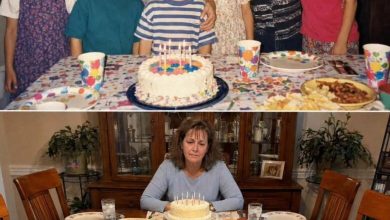
That evening, I made myself a small birthday cake.
I used Earl’s old recipe.
I placed one candle on top and sat at the kitchen table.
For years, I had believed that my happiest memories were behind me.
But as I looked around the kitchen, I realized something.
My life wasn’t over.
My story wasn’t over.
And I didn’t need to surrender my independence just because I was seventy-seven.
I had survived losing my husband.
I had survived discovering that my own family had betrayed me.
I had survived the fear of losing the money Earl and I had worked our entire lives to save.
And I had learned that protecting myself was not selfish.
It was necessary.
I blew out the candle.
Then I picked up Earl’s photograph and whispered:
“You were right, my love. I should never have signed anything I didn’t understand.”
I smiled through my tears.
“And I finally learned to protect myself.”
Outside, the wind moved gently through the oak tree.
For the first time in a long time, I felt completely at peace.
—
### EPILOGUE: THE MESSAGE I NEVER EXPECTED
Three months later, I received an envelope from Kevin.
Inside was a photograph.
It showed him standing beside the old oak tree in our backyard.
He had taken it years earlier, when he was still a child.
On the back, he had written:
“Dad planted this tree for us. I hope one day I can become someone you would both be proud of.”
I held the photograph for a long time.
Then I placed it beside Earl’s picture.
I didn’t know whether Kevin and I would ever have the relationship we once had.
Perhaps we would.
Perhaps we wouldn’t.
But I knew one thing.
I would never again allow anyone to confuse my kindness with permission.
I would never again let someone use the word family to silence me.
And I would never apologize for protecting what my husband and I had spent forty-eight years building.
I was seventy-seven years old.
I was still a mother.
I was still a widow.
But most importantly, I was still Margaret Dalton.
And my life belonged to me.
**THE END.**