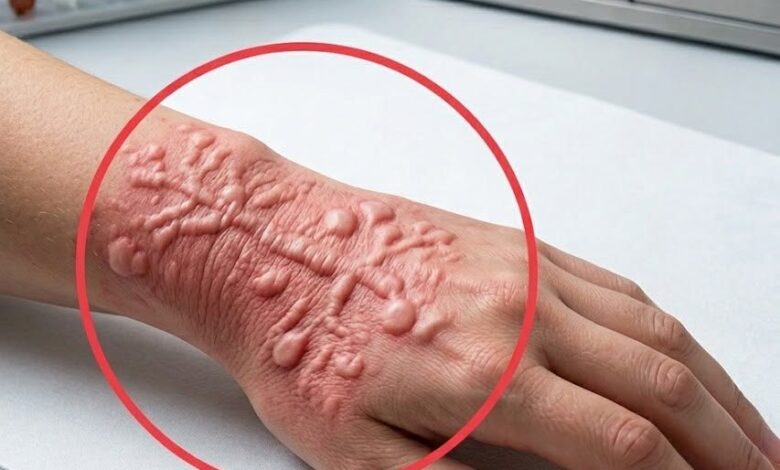
My son has been experiencing this for two months and its getting worse
When raised, itchy patches keep appearing on a childs skin for weeks, parents naturally want to know what is causing them. One possible explanation is urticaria, commonly called hives. Hives can look like pale or reddish welts, circles or irregular patches. They may join together, move from one area to another and become more noticeable after rubbing or scratching.
The rash develops when mast cells release histamine and other chemical messengers. Small blood vessels in the skin then allow fluid to leak into nearby tissue, producing the characteristic swelling. A single welt often fades within a day, but new ones may continue to appear elsewhere. That pattern can make the condition seem continuous even though individual marks come and go.
Some people also experience angioedema, which is deeper swelling under the skin. It commonly affects soft areas such as the eyelids, lips or inside the mouth. Angioedema may feel painful or tight instead of simply itchy and can take longer to settle. Swelling without ordinary hives can have other causes, including uncommon inherited conditions, so it deserves medical assessment.
Doctors generally describe hives lasting less than six weeks as acute urticaria. Possible triggers include foods, insect stings, latex, certain medicines and viral or bacterial infections. Children often develop hives during or after an infection even when no clear allergy is found. Heat, cold, pressure and emotional stress can also contribute in some people.
When outbreaks continue beyond six weeks, the condition is considered chronic. Finding a single trigger is often difficult. In some cases, an autoimmune process appears to keep mast cells activated. Clinicians may also consider thyroid disease or other underlying health issues when the history and examination suggest them. Repeated itching can interfere with sleep, school and emotional well-being, so persistent symptoms should not simply be dismissed.
A separate group called physical or inducible urticaria occurs after a specific stimulus. Dermographism creates raised lines after scratching or pressure. Cold urticaria follows exposure to cold air, water or ice, and whole-body cold-water exposure may cause a dangerous reaction in susceptible people. Cholinergic hives can appear when body temperature rises during exercise, a hot shower, spicy food or strong emotion.
Other forms may follow sunlight or sustained pressure from straps, belts or prolonged sitting. The timing is useful: some reactions appear within minutes, while delayed pressure swelling can take several hours. Photographs taken when the rash is visible can help a clinician because the marks may disappear before an appointment.
A symptom diary can also reveal patterns. Record foods, medicines and supplements, recent infections, exercise, temperature changes, stress and the time each outbreak begins. Do not stop a prescribed medicine or impose a highly restrictive diet without professional guidance. A doctor can decide whether allergy testing, blood tests or referral to a specialist is appropriate.
Treatment depends on the type and severity. Clinicians commonly use non-drowsy antihistamines, sometimes adjusting the dose under medical supervision when standard treatment is not enough. More persistent cases may require specialist therapies. At home, loose clothing, fragrance-free skin products, cool compresses and avoiding known triggers may reduce irritation, but these measures do not replace an evaluation when symptoms keep returning.
Emergency warning signs are more important than the appearance of the rash itself. Call emergency services immediately if hives occur with trouble breathing, throat or tongue swelling, faintness, severe dizziness, chest tightness or rapidly worsening symptoms. These can indicate anaphylaxis. A child with facial or mouth swelling, breathing difficulty or unusual weakness should never be left to wait for a routine appointment.
For a rash that has continued for two months or is becoming worse, arrange an appointment with a pediatrician or dermatologist. Bring photographs and the symptom diary, along with a complete list of medicines and recent illnesses. The clinician can confirm whether the marks are truly hives and rule out conditions that can resemble them.
This information is educational and cannot diagnose a particular child. Most hives are manageable, but the correct plan depends on medical history, examination and the presence of other symptoms. Timely professional care offers the best chance of identifying avoidable triggers, controlling itching and recognizing any situation that needs urgent treatment.