My Mother Left Me Alone at 11 With $20 But When She Came Home, She Found 64 Cents and a Court Order
My name is Maya, and I was 11 when my childhood ended with a crumpled $20 bill.
It happened on the first morning of summer vacation.
My mother, Valerie, stood in our foyer wearing sunglasses even though we were indoors. Beside her were two enormous suitcases, a leather carry-on, and a cream-colored sunhat she had bought specifically because she wanted beautiful photographs in Maui.
Her fiancé, Derek, had already gone outside to make sure the driver had room for all their luggage.
They were supposed to spend 30 days traveling through California, Hawaii, and the US Virgin Islands before their wedding.
I had known about the trip for months.
What I had not known was that I wasn’t staying with anyone while they were gone.
“Chloe’s family is picking me up soon, right?” I asked.
Chloe was my best friend. Her family owned a cabin near a lake, and Mom had told Derek I would spend the month there.
Mom glanced toward the open front door.
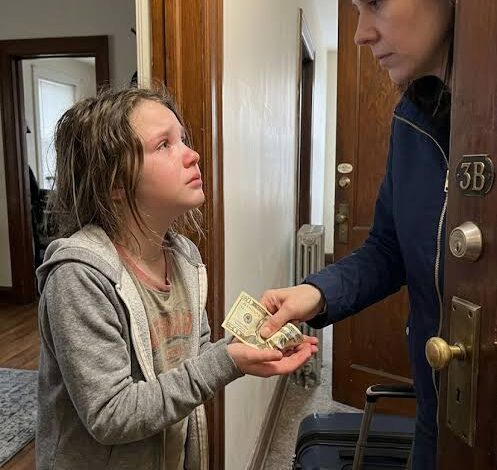
Then she reached into her purse and pressed a folded bill into my hand.
“No.”
I looked down.
It was $20.
“What do you mean, no?”
“Chloe’s parents changed their plans.”
“When?”
“A few days ago.”
“Then where am I staying?”
“Here.”
I stared at her, waiting for the answer to change.
She didn’t blink.
“By myself?”
“You’re 11, Maya. You’re mature for your age.”
“For a whole month?”
“Don’t be dramatic. There’s food in the house, and you know how to use the microwave.”
I unfolded the bill.
“Is this for emergencies?”
“It’s for whatever you need.”
“For 30 days?”
Her mouth tightened.
“You should be grateful. When I was your age, I didn’t receive spending money.”
“This isn’t spending money if I have to buy food.”
“Lower your voice.”
“I’m not yelling.”
“You’re starting to.”
Outside, Derek shut the trunk of the car.
Mom crouched in front of me, but there was nothing gentle in the way she did it. Her eyes kept darting toward the doorway like I was already making her late.
“Listen carefully. Derek thinks you’re going to the lake because I didn’t want him worrying. You are not going to ruin this trip by calling him and making a scene.”
“Does anyone know I’m staying here?”
“You know Mrs. Henderson next door.”
“She’s visiting her son in Texas.”
Mom hesitated.
“Then call 911 if the house catches fire.”
“What if something else happens?”
“Nothing is going to happen.”
“What if I get sick?”
“You won’t.”
“What if somebody tries to get in?”
“Maya, enough.”
She stood and smoothed the front of her linen dress.
The front door opened wider.
Derek leaned inside.
“The driver says we need to leave now.”
Then he smiled at me.
“Have fun at the lake, kiddo. Send us pictures.”
I looked at my mother.
She gave me a warning stare.
That was the moment I could have told him.
I could have said, “There is no lake. She’s leaving me here.”
But I had spent my whole life learning what happened when I embarrassed my mother.
She would deny everything.
She would say I had misunderstood.
She would smile at Derek and explain that I sometimes invented stories when I wanted attention.
Then, when we were alone again, she would punish me for humiliating her.
So I remained silent.
Derek carried the last suitcase outside.
Mom followed him, then stopped in the doorway.
“See?” she said with a bright smile. “You’re independent now.”
She kissed two fingers and pressed them against my forehead.
Then she left.
The suitcase wheels rattled down the driveway. The car doors closed. The engine started.
I watched from the window until the vehicle disappeared.
For several minutes, I stood in the foyer with the $20 clutched in my hand.
“I’ll be fine,” I whispered.
The empty house gave no answer.
I went into the kitchen and opened the refrigerator.
There was half a carton of milk that smelled sour, three eggs, a jar of pickles, and a container of takeout pasta with gray fuzz growing along one side.
The freezer contained an open bag of ice and an empty waffle box.
The pantry was worse.
I found a dented can of tuna, a can of creamed corn, four packets of instant oatmeal, and half a sleeve of crackers.
That was when the fear became real.
My mother had not forgotten to make arrangements.
She had deliberately left me.
On Day 1, I ate one egg for lunch and oatmeal for dinner.
I used the kitchen phone to call Mom seven times. Every call went directly to voicemail.
On the eighth attempt, I left a message.
“Mom, I checked the kitchen. There isn’t enough food. Please call me.”
She didn’t.
That evening, her first vacation photograph appeared on the tablet we shared.
She and Derek were sitting in an airport lounge, holding glasses of champagne.
The caption read:
Finally beginning our perfect adventure.
I left a comment beneath it.
Please call me.
The comment disappeared 10 minutes later.
Mom had deleted it.
On Day 2, I walked almost two miles to a gas station with the $20 tucked inside my shoe.
I bought a loaf of bread, a small jar of peanut butter, four bananas, two cans of soup, and a bottle of water.
The total was $19.36.
The cashier handed me the receipt and 64 cents.
“Big picnic?” she asked.
I nodded.
“My mom’s waiting in the car.”
There was no car.
I carried the grocery bag home against my chest, terrified the handles would tear.
That afternoon, I divided everything into portions.
If I ate two slices of bread a day, the loaf could last more than a week. If I spread the peanut butter thinly enough, it might last longer.
I wrote the numbers in a spiral notebook left over from school.
At first, it was only a food schedule.
Then it became something else.
Day 2: Spent $19.36. I have 64 cents left. Mom did not call.
Day 3: Ate 2 crackers, 1 banana, and 1 slice of bread with peanut butter. Heard something hit the kitchen window at 11:14 p.m.
Day 4: Slept on the couch because upstairs felt too far from the front door. Called Mom 5 times. No answer.
Day 5: Finished the eggs. The milk is bad. I am scared to take out the trash because someone might notice I am alone.
Every night, I pushed a dining chair beneath the front doorknob.
I kept a kitchen knife beside the couch even though I knew I probably couldn’t use it.
The house made sounds I had never noticed before.
Pipes knocked inside the walls.
Floorboards creaked upstairs.
Tree branches scratched the windows.
Once, I became convinced someone was breathing on the other side of the back door.
I sat behind the kitchen island for nearly an hour before I found enough courage to look.
Nobody was there.
On Day 5, I called Chloe.
Her mother, Sarah, answered.
“Maya? Is everything all right?”
“Can I talk to Chloe?”
“She’s in Colorado visiting her grandparents. She left with her father three days ago.”
My stomach tightened.
“Colorado?”
“Yes. She’ll be there for two weeks. I stayed home because of work.”
“I thought you were going to the lake.”
“No, the cabin is closed for repairs this summer.”
Mom had not chosen Chloe’s family by accident.
She knew Chloe would be out of town.
She knew the cabin would be empty.
She had used them as her excuse because she assumed no one would check.
Sarah continued speaking.
“I thought you were traveling somewhere too.”
“I am.”
“Where are you?”
I looked around the empty kitchen.
“At home.”
“Is your mother there?”
I panicked.
Mom had warned me not to make a scene.
“I have to go.”
“Maya, wait—”
I hung up.
At 8:12 the next morning, someone knocked on the front door.
I had been sleeping on the couch.
The sound sent me running upstairs.
“Maya?” a woman called.
I recognized Sarah’s voice, but I was too frightened to answer.
She knocked several more times.
Then I heard her walking around the side of the house.
I stayed inside Mom’s bedroom until I heard a car drive away.
When I finally went downstairs, I found footprints beneath the kitchen window.
There were also three smudges on the glass, as though someone had pressed their fingertips against it while trying to see inside.
Even though I had recognized Sarah’s voice, fear twisted everything.
What if it had only sounded like her?
What if she had brought someone else?
What if Mom found out I had spoken to her?
I locked myself in the bathroom and called Mom.
This time, she answered.
Music and laughter filled the background.
“Maya?” she said. “Why are you calling so much?”
The sound of her voice made my eyes fill with tears.
“Someone was outside.”
“What?”
“There are footprints by the kitchen window.”
“It was probably a delivery person.”
“We didn’t have a delivery.”
“Then it was a utility worker.”
“At night?”
She sighed.
“You’re frightening yourself.”
“When are you coming home?”
“You know when.”
“There isn’t enough food.”
“What happened to the money?”
“I bought food.”
“You spent all of it?”
“It was $20.”
“Then look in the pantry.”
“I did.”
“Be resourceful.”
My fingers tightened around the phone.
“I’m hungry.”
For a moment, she said nothing.
Then Derek’s voice sounded in the background.
“Is that Maya? Tell her we said hello.”
Mom lowered her voice.
“I have to go.”
“Please don’t hang up.”
“Stop behaving like a baby.”
“You left me alone.”
“You’re safe in your own home.”
“I don’t feel safe.”
“That is enough, Maya.”
The line went dead.
I stood there listening to the dial tone.
That was the last time I cried while I was alone.
At 2:17 that afternoon, someone knocked again.
“Maya?” Sarah called. “It’s Chloe’s mother. I came this morning, but you didn’t answer.”
I crouched behind the kitchen counter.
For the first time in six days, I heard an adult say the words I had been waiting for. “Something is wrong.” I didn’t know yet that those three words would change everything. I stayed crouched behind the kitchen counter, barely breathing. Outside, Sarah was talking on her phone. “Yes, I’m at the residence now,” she said. “I’m not a relative. I’m a neighbor and a friend of the family.” A pause. “Yes. The child is inside.” Another pause. “No, I haven’t entered. The doors are locked.” My heart began pounding so hard I could hear it. The word child sounded strange when she said it. Not “Maya.” Not “Valerie’s daughter.”
PART 3 Just the child.
As if she were already speaking about me as someone who needed protection.
I slowly stood.
Sarah looked through the kitchen window again.
Our eyes met.
She raised both hands, showing me she wasn’t holding anything.
Then she mouthed something I couldn’t hear.
I moved closer to the glass.
“Are you alone?”
I nodded.
Sarah’s expression tightened.
She looked away and spoke into her phone again.
“I need someone here immediately.”
I wanted to unlock the door.
I wanted to run outside.
But my mother’s voice was still inside my head.
Don’t call my fiancé and ruin this trip.
Don’t embarrass me.
Don’t make a scene.
You’re fine.
So instead, I whispered through the glass.
“My mom told me not to talk to anyone.”
Sarah’s face changed.
“She told you that?”
I nodded.
“Did she leave you food?”
I looked toward the pantry.
Then back at Sarah.
“Not enough.”
Sarah closed her eyes for a second.
When she opened them again, she looked furious.
But not at me.
At someone else.
“Okay,” she said softly. “Maya, listen to me. You haven’t done anything wrong.”
I didn’t realize how badly I needed to hear that.I had spent six days thinking maybe I had.
Maybe I was too needy.
Maybe I was too scared.
Maybe I should have been more mature.
Maybe an eleven-year-old really was supposed to know how to survive thirty days alone.
Sarah spoke again.
“You need to stay inside until the deputy gets here. Can you do that?”
“Yes.”
“Lock every door?”
“They’re already locked.”
“Good.”
“Am I in trouble?”
Her eyes filled with tears.
“No, sweetheart.”
She shook her head.
“You are not in trouble.”
A police vehicle arrived less than ten minutes later.
I watched it through the curtains.
A deputy stepped out and walked toward Sarah.
They spoke for several minutes.
Then Sarah pointed toward the house.
The deputy approached the front door.
He knocked.
“Sheriff’s Office. Maya, my name is Deputy Collins. I’d like to speak with you.”
I stood frozen in the hallway.
“Can you unlock the door?”
I looked at the chair.
Then at the deadbolt.
Then at the phone in my hand.
“Are you really a police officer?”
“Yes.”
“Can I see your badge?”
There was a pause.
“Of course.”
He held his badge against the glass.
I stepped closer.
I had seen police officers on television, but never one standing outside my own house because someone had called for me.
I unlocked the deadbolt.
Then I unlocked the chain.
The moment I opened the door, Sarah rushed forward and wrapped both arms around me.
I stiffened.
Nobody had hugged me in six days.
Then I started crying.
Not the quiet tears I had shed in the bathroom.
Not the kind I could wipe away before anyone noticed.
This was different.
It was everything.
The hunger.
The fear.
The nights sleeping beside the door.
The unanswered calls.
The empty refrigerator.
The lie about the lake.
The twenty dollars.
The way my mother had looked at me before leaving.
It all came out at once.
Sarah held me while I sobbed into her shoulder.
Deputy Collins stood nearby, giving us space.
After several minutes, he crouched down.
“Maya, I’m going to ask you some questions. You don’t have to be afraid.”
“Is my mom in trouble?”
He didn’t answer immediately.
That frightened me more than anything.
“We’re going to figure out what happened first.”
“She told me I was mature.”
He looked at Sarah.
Then back at me.
“You’re eleven years old.”
“I know.”
“You shouldn’t have been alone here.”
“I know.”
He asked me when my mother had left.
I told him.
He asked what food had been available.
I showed him the pantry.
He opened the refrigerator.
He didn’t say anything.
He simply stared.
Then he asked about the $20.
I showed him my notebook.
He read the entries.
Every meal.
Every call.
Every noise.
Every day.
He stopped at the page where I had written:
Day 5. Mom answered. I told her I was hungry. She told me to be resourceful.
His jaw tightened.
“Did your mother know you were alone?”
“Yes.”
“Are you sure?”
“She left me here.”
“Did she say where you were supposed to stay?”
“The lake.”
“But you never went there.”
“No.”
“Did anyone else know you were here?”
“I don’t think so.”
Sarah interrupted quietly.
“I certainly didn’t.”
Deputy Collins nodded.
Then he asked me one more question.
“Does your mother have a fiancé named Derek?”
I nodded.
“Did he know you were here?”
“I don’t know.”
“Did you talk to him?”
“No.”
“Did your mother ever tell him you were staying somewhere else?”
I hesitated.
“She told him I was going to the lake.”
Deputy Collins wrote something down.
Then he asked Sarah to stay with me while he made a few calls.
I sat at the kitchen table.
Sarah brought me food from her car.
A sandwich.
An apple.
A bottle of water.
I ate too quickly.
She gently slowed me down.
“Small bites.”
I nodded.
I hadn’t realized how hungry I had become.
Deputy Collins returned to the room.
“Maya, we’re going to make arrangements for you to stay somewhere safe tonight.”
I immediately panicked.
“Where?”
“We’re still figuring that out.”
“I don’t want to go somewhere Mom can’t find me.”
Sarah took my hand.
“You won’t be abandoned.”
I looked at her.
“Promise?”
She squeezed my fingers.
“Promise.”
That night, I was taken to a temporary family services placement.
I didn’t understand what that meant.
I only understood that I had a bed.
There was a night-light.
There was a glass of water beside me.
There was food in the kitchen.
And there was an adult who knocked before entering my room.
For the first time in six days, I slept without a chair beneath a doorknob.
But I woke up at 3:11 in the morning.
I didn’t know why.
Then I remembered.
My mother.
I reached for the phone beside the bed.
There were eleven missed calls.
Not from Mom.
From a number I didn’t recognize.
I stared at the screen.
Then it rang again.
I answered.
“Maya?”
It was Derek.
I sat upright.
“Derek?”
“Where are you?”
I couldn’t speak.
His voice became sharper.
“Your mother says the police are involved.”
I swallowed.
“She left me alone.”
“What?”
“She went to Hawaii.”
“I know where she went.”
“She left me here.”
There was silence.
Then Derek said something that made my stomach drop.
“She told me you were staying with Chloe’s family.”
“I wasn’t.”
“I know that now.”
“How?”
“Because the police called me.”
I looked toward the bedroom door.
“Does Mom know?”
“She knows.”
“Is she coming home?”
Another silence.
“I don’t know.”
I started crying again.
Derek’s voice softened.
“Maya, listen to me. I need you to tell the social worker exactly what happened.”
“I did.”
“Everything?”
“Yes.”
“The money?”
“Yes.”
“The food?”
“Yes.”
“The calls?”
“Yes.”
“The notebook?”
“Yes.”
He breathed out slowly.
Then he said:
“Keep that notebook.”
“Why?”
“Don’t lose it.”
I didn’t understand.
“Why?”
“Because it shows what happened.”
Before I could ask anything else, he said goodbye.
The next morning, a social worker named Elena met with me.
She was calm and spoke slowly.
She asked me the same questions Deputy Collins had asked.
But then she asked something different.
“What do you want to happen?”
I stared at her.
“I want my mom to come home.”
Elena nodded.
“Anything else?”
“I want her to stop being angry with me.”
“Why do you think she’ll be angry?”
“Because I told people.”
Elena leaned forward.
“You didn’t tell people to get your mother in trouble.”
“I didn’t?”
“No.”
“You told people because you needed help.”
I looked down.
“I was scared.”
“That was the correct thing to do.”
I didn’t know what to say.
Then Elena placed a folder on the table.
“There are going to be adults making decisions about where you stay while this is investigated.”
“Am I going back home?”
“I don’t know yet.”
“Can I go back when Mom returns?”
“We’ll see.”
I nodded.
Then Elena said something that made me realize this wasn’t just about my mother leaving me.
“There is another concern.”
“What?”
“Your mother has apparently told several people that you were staying with Chloe’s family.”
My stomach twisted.
“Why?”
“We don’t know.”
“Because she didn’t want Derek to know.”
“That’s what we’re trying to understand.”
I looked at my hands.
“Is Derek angry?”
“He’s upset.”
“At me?”
“No.”
That answer came quickly.
“No, Maya. Not at you.”
Later that afternoon, Deputy Collins returned.
He had something with him.
My notebook.
I had left it on the kitchen table.
He handed it back to me inside a clear evidence bag.
“You can keep this.”
“Why was it evidence?”
“Because it documents what happened while you were alone.”
I touched the plastic.
Every page represented a day I had survived.
I suddenly wished I had written more.
Then Deputy Collins said:
“There’s one more thing you should know.”
I looked up.
“We checked the house.”
“Did you find anything?”
“We found something unusual.”
“What?”
He hesitated.
“Your mother’s bedroom.”
“What about it?”
“There was a second phone.”
I stared at him.
“What?”
“A phone hidden in a drawer.”
I had never seen it.
“Was it hers?”
“We believe so.”
“What’s on it?”
“We’re still examining it.”
My heart began pounding.
“Could it have my mom’s messages?”
“Possibly.”
“Messages to who?”
“We don’t know yet.”
That night, I couldn’t sleep.
I kept thinking about the second phone.
The secret phone.
The phone my mother had never mentioned.
The phone she had apparently hidden before leaving for vacation.
And then I remembered something.
Three days before she left, Mom had been in her bedroom with the door locked.
I had heard her arguing with someone.
I couldn’t hear the entire conversation.
But I remembered one sentence.
“You promised me this would stay quiet until after the wedding.”
At the time, I thought she was talking about wedding decorations.
Now I wasn’t so sure.
The next morning, Elena came to see me again.
She wasn’t alone.
Derek was with her.
He looked completely different from the man who had smiled at me in the driveway.
His face was pale.
He sat across from me and placed both hands on the table.
“Maya, I owe you an apology.”
I stared at him.
“For what?”
“For believing your mother.”
I didn’t answer.
He swallowed.
“She told me you were staying somewhere safe.”
“You believed her?”
“Yes.”
“Why?”
“Because she showed me a message.”
“What message?”
“She sent me a photograph.”
“Of Chloe’s house?”
He nodded.
But then he said:
“It wasn’t a recent photograph.”
My stomach dropped.
“What do you mean?”
“She sent me a picture of you standing beside the lake.”
I stared at him.
“I’ve never been there.”
“I know.”
“Who was in the picture?”
He looked at Elena.
Then back at me.
“We’re not sure.”
“What does that mean?”
Derek opened his phone.
He showed me the photograph.
It was me.
Standing beside a lake.
Wearing a blue sweater.
Smiling.
But I had never seen that photograph before.
I stared at my own face.
Then I noticed something.
Behind me was a wooden cabin.
And on the porch stood a woman.
A woman I had never met.
Derek zoomed in.
My blood went cold.
Because the woman was holding a little girl.
And that little girl looked exactly like me.
Same dark hair.
Same face.
Same age.
Same blue sweater.
I whispered:
“Who is she?”
Derek didn’t answer.
Then Elena quietly said:
“We don’t know yet.”
Derek looked at me.
“But your mother does.”
And for the first time since she left for Hawaii, I realized something terrifying.
Maybe my mother hadn’t abandoned me because she wanted a vacation.
Maybe she had left because she was running away from something.
And whatever it was…
It had already been waiting for me.
PART 4 The photograph stayed on the screen between us.
I couldn’t look away.
There I was, standing beside a lake I had never visited, wearing a blue sweater I remembered owning when I was nine.
Behind me was the cabin.
And behind the cabin stood a woman holding a little girl who looked exactly like me.
For several seconds, nobody spoke.
Then I whispered the question that had been burning inside me.
“Is that my twin?”
Derek’s face changed.
Elena looked at him.
He slowly shook his head.
“We don’t know.”
“But she looks like me.”
“I know.”
“Then who is she?”
“We’re trying to find out.”
I pushed the phone away.
“I want my mom.”
Derek looked down.
“I know.”
“I want to ask her.”
“I know.”
“Then call her.”
Nobody moved.
“Call her!”
My voice cracked.
Derek finally picked up his phone.
He dialed.
The call went unanswered.
He tried again.
Nothing.
Then a message appeared.
I’m unavailable. Stop calling.
Derek stared at it.
“She sent that to me earlier.”
I felt something inside me break.
My mother knew I was safe.
She knew the police had found me.
She knew I was asking for her.
And she still wasn’t coming home.
That was when I stopped hoping she would walk through the door and explain everything.
Something had changed.
I no longer wanted an explanation that made everything okay.
I wanted the truth.
Three days later, investigators found the cabin.
It wasn’t in Hawaii.
It wasn’t in California.
It was in a small mountain community nearly four hours from our home.
The property belonged to a woman named Rebecca Mercer.
Rebecca had never met me.
At least, that’s what she claimed.
But when investigators showed her the photograph, she immediately started crying.
And when they showed her my picture, she said something that made everyone in the room go silent.
“That isn’t the girl you think it is.”
The girl in the photograph wasn’t me.
Her name was Lily.
She was Rebecca’s daughter.
And she had been born eleven years earlier.
Rebecca explained that Lily had a rare resemblance to another child she had once known.
A child named Maya.
My name.
The investigators asked her how she knew that name.
Rebecca told them the story.
Eleven years earlier, before I was born, my mother had been pregnant.
She had been married to my father.
At the time, my father had a younger sister named Rebecca.
Rebecca and Valerie had been close.
Very close.
Until something happened.
A family dispute over money.
A missing inheritance.
A secret bank account.
And an accusation that had destroyed the family.
Rebecca had accused Valerie of stealing money from their grandmother.
Valerie denied it.
The family eventually sided with Valerie’s version of events.
Rebecca left.
She moved away.
She got married.
And years later, she had Lily.
But Rebecca had never forgotten her brother.
Or his first child.
My father.
The investigators asked where my father was.
Rebecca said:
“He died before Maya was born.”
I had always known my father had died.
My mother had told me he had been killed in an accident.
That was all I knew.
But Rebecca told investigators something else.
“My brother didn’t die in an accident.”
The words eventually reached me through Elena.
I stared at her.
“What happened to my father?”
“We’re still investigating.”
“But you know something.”
She hesitated.
“We know the original report described an accident.”
“And?”
“There are inconsistencies.”
I felt sick.
“Was my mother there?”
“We don’t know.”
“But she knows something.”
“We believe she does.”
That night, I sat by the window of my temporary room and watched rain slide down the glass.
I thought about my mother.
About the twenty dollars.
About the hidden phone.
About the photograph.
About my father.
About the woman who looked like she had been waiting eleven years for someone to uncover the truth.
Then I remembered something from my notebook.
Day 1.
I had written:
Mom left at 8:32 a.m.
Why had I written the exact time?
Because I was scared.
Because I thought maybe nobody would believe me.
I had documented everything.
And now those little details were helping investigators rebuild what happened.
The next morning, Elena came in carrying a folder.
She placed it on the table.
“Maya, there’s something you should see.”
Inside was a copy of my mother’s travel itinerary.
Hawaii.
California.
Virgin Islands.
Thirty days.
But there was another booking.
One that had never been mentioned.
A flight scheduled for Day 17.
To another state.
“What is this?”
“We don’t know yet.”
“Where was she going?”
Elena looked at me.
“To meet someone.”
“Who?”
“Your mother’s former attorney.”
My heart started racing.
“Why?”
“We don’t know.”
Then Elena opened another document.
A financial record.
There were several large transfers from an account in my mother’s name.
One had been made eleven years ago.
Another nine years ago.
Another six months before the trip.
The newest transfer was for $180,000.
My mother had moved the money into an account under a different name.
The name was:
Lily Mercer.
I stared at it.
“Why would she send money to that girl?”
Nobody knew.
Then Derek arrived.
He looked exhausted.
He sat down beside me.
“I found something.”
He placed an envelope on the table.
“This was in Valerie’s suitcase.”
My hands trembled.
“What is it?”
“I haven’t opened it.”
“Why?”
“Because it has your name on it.”
I slowly picked it up.
The envelope was old.
The paper was yellowed.
My name was written across the front.
Not in my mother’s handwriting.
In my father’s.
I knew immediately.
I had seen his handwriting before.
There was a birthday card he had written before I was born.
Mom had kept it in a box.
I opened the envelope.
Inside was a letter.
It began:
Maya,
If you’re reading this, something happened to me before I could tell you the truth.
My hands began shaking.
I continued.
My father wrote that he had discovered Valerie had been secretly moving money from a family trust.
He had confronted her.
She told him she would return it.
But he didn’t believe her.
He had started collecting evidence.
Bank records.
Photographs.
Messages.
He intended to take everything to a lawyer.
Then the letter changed.
Valerie knows I found out.
If something happens to me, do not believe the accident story.
I stopped reading.
I couldn’t breathe.
Derek took the letter from my hands.
Elena read the rest.
My father had written that he believed Valerie was planning to leave the country with me.
He had also discovered that Valerie had secretly contacted Rebecca.
The woman in the photograph.
There had been an agreement.
Valerie had intended to give Rebecca money to keep quiet about the family trust.
But Rebecca refused.
My father planned to expose everything.
Then he died.
The accident happened two days later.
The official report said his car had lost control on a wet road.
But the letter suggested something else.
My father believed his brakes had been tampered with.
And at the bottom of the letter was one final sentence.
If Valerie tells Maya I died because of an accident, she is lying.
I cried.
Not because I had suddenly discovered that my mother might have been involved.
I cried because my father had known I might one day need the truth.
And he had tried to leave it somewhere I could find it.
My mother returned on Day 13.
Not because she wanted to.
Because investigators located her.
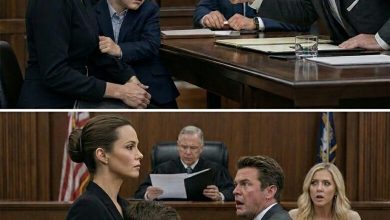
She arrived at the courthouse wearing the same expensive clothes she had worn in her vacation photographs.
But she no longer looked sun-kissed.
She looked frightened.
When she saw me, she stopped.
“Maya.”
I stared at her.
She took a step toward me.
I stepped back.
Her face collapsed.
“You’re angry.”
I said nothing.
“I can explain.”
“You left me.”
“I know.”
“You gave me twenty dollars.”
“I thought there was food.”
“There wasn’t.”
“I didn’t know.”
“You didn’t check.”
She opened her mouth.
Nothing came out.
“You told Derek I was at the lake.”
She looked at him.
“You told him I was safe.”
Her eyes filled with tears.
“I made a terrible mistake.”
“No.”
My voice was quiet.
“You made many choices.”
She looked at me.
I continued.
“You chose to leave.”
“You chose to lie.”
“You chose not to answer.”
“You chose not to come home.”
“And you chose to hide the phone.”
Her face went white.
She looked at the investigators.
Then at Derek.
Then back at me.
“I never wanted you hurt.”
“Then why did you leave me?”
She couldn’t answer.
Finally, she whispered:
“Because I was afraid.”
“Of what?”
She started crying.
“Everything.”
“Were you afraid I’d find out about Dad?”
She closed her eyes.
That was the answer.
She didn’t need to say anything.
I knew.
The investigation continued for months.
My mother was charged with child abandonment and several financial crimes related to the family trust.
The circumstances surrounding my father’s death were reopened.
Investigators eventually discovered that the original accident report had missed evidence from the vehicle.
The brakes had indeed been tampered with.
But proving who had done it was another matter.
There wasn’t enough evidence to establish that my mother had caused the crash.
There were suspicions.
There were documents.
There were contradictory statements.
There were missing records.
But there was no final answer.
And I learned something important during those months.
Sometimes the truth doesn’t arrive as a perfect ending.
Sometimes it arrives as pieces.
A receipt.
A photograph.
A notebook.
A letter.
A forgotten phone.
A person finally deciding to speak.
Piece by piece, you build a picture.
And sometimes that picture is painful.
But it is still better than living inside a lie.
I didn’t go back to live with my mother.
For a while, I stayed with Sarah and her family.
The woman who had stood outside my kitchen window became one of the most important people in my life.
She never treated me like a problem.
She never told me I was dramatic.
She never said I was too young to understand.
When I was scared, she listened.
When I was angry, she listened.
When I asked the same question five times, she answered it five times.
And slowly, I learned what a safe home felt like.
It wasn’t a house where nobody argued.
It wasn’t a house where everything was perfect.
It was simply a house where you didn’t have to be afraid of asking for help.
Derek eventually disappeared from our lives.
He testified during the investigation and admitted that he had believed Valerie’s lies.
He apologized to me one final time.
“I should have asked questions,” he said.
I told him:
“Yes.
You should have.”
Then I walked away.
Years passed.
I kept the notebook.
The original one.
The pages were bent.
The cover was stained.
Some of the writing had faded.
But I kept it.
Because it reminded me of the girl I had been.
The eleven-year-old who thought surviving meant staying quiet.
The girl who believed adults automatically knew better.
The girl who thought asking for help meant she had failed.
She hadn’t failed.
She had survived.
And I wanted her to know that.
When I turned eighteen, I received a letter from my mother.
She was serving her sentence.
The letter was four pages long.
She apologized.
She explained.
She blamed circumstances.
Then she apologized again.
At the very end, she wrote:
I hope one day you understand that I loved you.
I stared at that sentence for a long time.
Then I wrote my response.
I didn’t tell her I forgave her.
I wasn’t ready.
Instead, I wrote:
I believe you loved me.
But love isn’t enough when someone isn’t safe.
I needed you to protect me.
You chose something else.
Maybe someday I’ll understand why.
But understanding isn’t the same as forgetting.
I mailed the letter.
And I never regretted it.
Years later, I visited the lake from the photograph.
The cabin was still there.
Rebecca had sold the property, but she had given me the address.
I stood beside the water.
For years, I had imagined that photograph as proof that someone had stolen my childhood.
Now I understood something different.
The photograph had become a symbol of everything my mother had tried to hide.
I took out my old notebook.
I opened it to the first page.
Day 1: Mom left at 8:32 a.m.
I smiled sadly.
Then I turned to the last page.
There was only one sentence.
I had written it years after everything happened.
I survived the day she left me, but I became myself the day I stopped blaming myself.
I closed the notebook.
The wind moved across the lake.
For a moment, I imagined the eleven-year-old version of me standing beside the water.
She was holding a twenty-dollar bill.
She was scared.
She didn’t know anyone was coming.
She didn’t know Sarah would find her.
She didn’t know the police would believe her.
She didn’t know the notebook would become evidence.
She didn’t know the truth about her father would eventually come out.
She didn’t know her mother would lose the life she had tried so desperately to protect.
And most importantly, she didn’t know that the life waiting for her would be bigger than the house she had been abandoned in.
I whispered:
“You made it.”
The lake gave no answer.
But for the first time, I didn’t need one.
I never got the perfect ending.
My father never came back.
My childhood could never be returned.
My mother could never erase those thirty days.
And there were questions about my father’s death that might never have complete answers.
But I got something more important.
I got a life that belonged to me.
I finished school.
I went to college.
I built a career helping children who found themselves in situations where adults had failed them.
Whenever I met a frightened child who whispered, “Nobody will believe me,” I knew exactly what to say.
“I will listen.”
Because once, I had been that child.
The child with twenty dollars.
The child with an empty refrigerator.
The child sleeping beside the front door.
The child who thought she had to survive quietly.
And if there was one thing I wanted every child like me to understand, it was this:
Being abandoned is never your fault.
Being hungry is not being dramatic.
Being afraid is not being weak.
And asking for help is not ruining anyone’s life.
Sometimes asking for help is the first step toward getting your life back.
I kept the 64 cents from that summer too.
Not because it was valuable.
It wasn’t.
It was just three quarters short of a dollar.
But it represented the moment I realized that I couldn’t depend on the person who was supposed to protect me.
And years later, I finally understood something else.
Those 64 cents weren’t what I had left.
They were what I had survived with.
And somehow, from that tiny amount, I built an entire life.
A life my mother didn’t choose.
A life Derek didn’t control.
A life no one could take away.
My own.
And that was the ending I never knew I was fighting for.