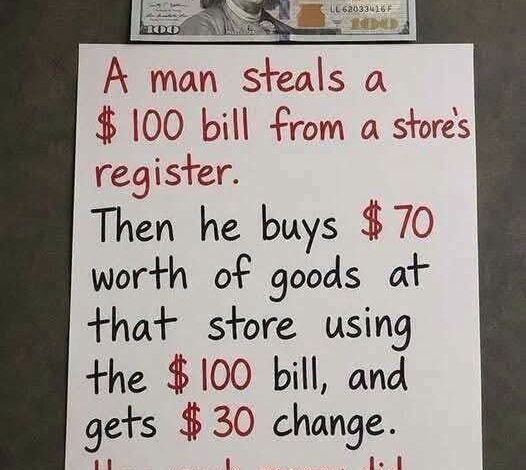
Continue Below The Stolen 100 Dollar Bill Riddle
The shelf tells the rest of the story. The shopper leaves with items marked at seventy dollars, and the store receives no money that the shopper brought in from outside. The same bill is doing two jobs in the telling of the puzzle: first it is taken, and then it is handed back. A ledger records those as opposing movements. Counting the first withdrawal again after crediting the return would count the same money twice.
A second way to see the answer is to look at the shopper’s final position. The person starts without the store’s bill and ends without it, because it has gone back into the register. What remains in the shopper’s possession is thirty dollars in change and the goods. On the puzzle’s stated valuation, that adds up to one hundred dollars.
The merchandise is valued at its seventy-dollar sale price in the riddle. If the question instead asks how much cash and inventory cost the store on its own books, the cost of that inventory would have to be supplied separately. The puzzle gives a selling price and asks for the loss using that figure. Under those terms, the thirty dollars and seventy dollars are the two amounts that remain after the original bill is accounted for.