Can You Spot The Problem With This Picture Three Women on Invisible Chairs
At first glance, the photograph appears completely ordinary. Three women are seated close together, smiling toward the camera as though posing for a casual group picture. Nothing immediately demands suspicion, which is precisely why the visual puzzle works. The brain accepts the general scene before checking whether every physical detail actually makes sense.
The challenge is to identify what is wrong. Viewers often begin by studying faces, clothing, hands, shadows, or the background. They expect a hidden object, a mismatched pattern, or a small editing mistake. That search for complexity pulls attention away from the most important part of the image, the way the women are positioned.
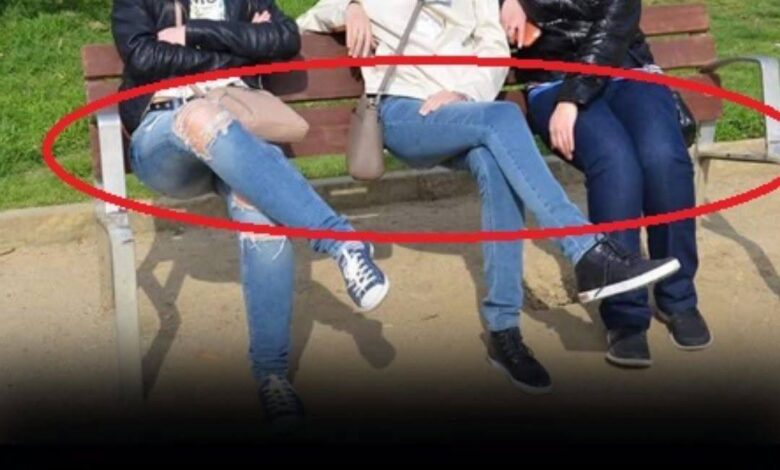
A closer look reveals that two of the women do not appear to be sitting on anything. Their bodies have the posture of people resting on chairs, yet no visible seats support them. The effect makes them seem to float. Because their expressions and poses look natural, the mind supplies the missing furniture and initially treats the scene as normal.
This kind of illusion demonstrates how perception depends on expectation. Human vision does not process every detail independently before forming an interpretation. Instead, the brain rapidly compares what it sees with familiar patterns. Three people holding seated poses are interpreted as three people on chairs, even when the supporting objects are absent.
Context strengthens that assumption. The women are arranged like countless group photographs viewers have seen before. Their shoulders are aligned, their knees bend naturally, and their smiles suggest an ordinary social moment. Those signals are powerful enough that the missing seats may go unnoticed until someone specifically asks viewers to find a problem.
Once the oddity is identified, it becomes difficult not to see. The same image that looked normal moments earlier now appears obviously impossible. Nothing in the photograph has changed. What changed is the viewer’s attention. The brain stopped relying on the broad pattern and began testing the physical details against it.
Visual riddles are enjoyable because they produce this sudden shift. The satisfying answer is rarely about possessing special knowledge. It comes from changing the way the available information is examined. A viewer who searches for an elaborate trick may remain stuck, while someone who asks a direct question about support and balance discovers the clue quickly.
The puzzle also reflects a wider habit. People often assume that difficult questions require complicated answers. They gather extra information, invent hidden explanations, and overlook the plain inconsistency directly in front of them. Complexity can feel more intelligent, but it sometimes creates distance from the truth.
A useful strategy is to describe a scene literally. Who is present? What is each person doing? What physical object makes that action possible? In this photograph, the literal description exposes the contradiction. The women look seated, but the expected seats cannot be found. Removing assumptions makes the missing support more noticeable.
If the illusion fooled you initially, it does not indicate poor observation. It shows that your brain efficiently used familiar visual rules to complete an incomplete scene. The challenge simply exploited that efficiency. The answer was hidden not by its size, but by how strongly the rest of the picture encouraged viewers to overlook it.
The two women appear to float because they are posed as though sitting on invisible chairs. That is the problem in the photograph and the reason it can take longer to notice than expected. Sometimes the clearest solution appears only after we stop hunting for something elaborate and examine the ordinary scene directly.
Looking again after learning the answer is part of the fun. The illusion collapses instantly, revealing how confidently perception had filled in something the photograph never showed.