The Secret in the Cedar Playhouse: What My Son’s Bus Driver Saw Before He Drove Away
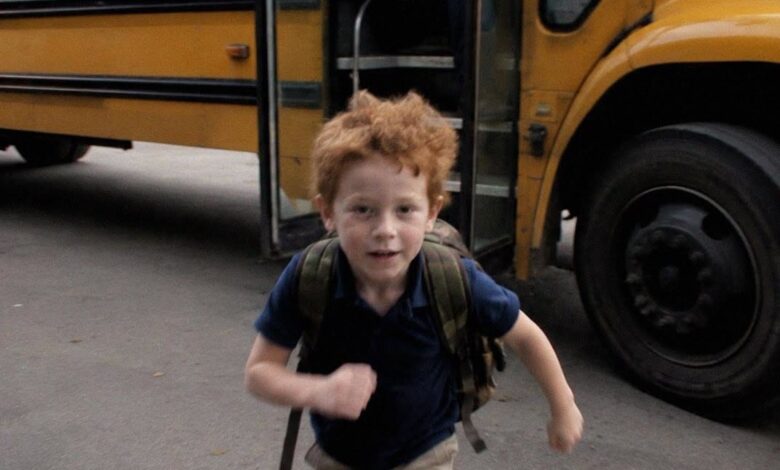
My seven-year-old son, Ethan, always sprinted off the school bus and threw his arms around me like he had escaped a wild storm. But on one chilly Thursday afternoon, everything changed. He walked past me in dead silence, his face pale and his eyes fixed on the pavement. Before I could process his icy demeanor, the school bus engine roared, and the driver leaned through the open window to deliver four chilling words that sent a wave of absolute terror through my blood: “Don’t trust the nanny.” Seconds later, he sped into the distance, leaving me utterly helpless.
The routine had been unbreakable since the start of the school year. Every afternoon at exactly 3:20 p.m., the low, familiar rumble of the yellow bus echoed down our street. I would step out onto the porch, often holding a cooling mug of tea or a dish towel, waiting for the sudden explosion of energy that was my son. Small for his age, Ethan moved as if he had springs tucked inside his shoes. His red backpack bounced against his shoulder blades while he shouted details about snack trades, spelling tests, and recess drama before his feet even touched the top porch step. He lived in a world where every single thought belonged to me, and I cherished every second of it.
That Thursday was vastly different. A blanket of grey clouds hovered low, and a biting wind swept dry leaves across our lawn. When the folding bus doors groaned open, Ethan stepped off with unnerving slowness. He did not smile. He did not look up. Drawing his shoulders inward, he gripped the straps of his pack and hurried past me into the dark entryway of our home.
I stood frozen on the lawn, wondering if he had failed a quiz or been bullied on the playground. Then I realized the bus had not moved. The driver, Jacob—a gentle, tired-eyed man in his early forties who had safely driven Ethan’s route for months—was staring straight at me from behind the wheel. His knuckles were white against the steering wheel. He cast a hurried glance down the empty street, leaned toward his open window, and whispered those four terrifying words.
Before I could demand an explanation, the bus lurged forward and vanished down the block, leaving me alone with a racing heart.
My immediate thought was that Jacob had made a massive mistake. Our nanny, Melissa, had been a vital part of our household for nearly a year. Recommended by a respected family at Ethan’s school, the twenty-eight-year-old was punctual, organized, and endlessly patient. She remembered library return dates, packed fresh fruit instead of processed sugar, and knew exactly how to soothe Ethan after bad dreams. I trusted her implicitly.
I stepped inside the house. The quiet felt heavy, almost suffocating. Ethan was sitting at the kitchen table with his backpack still strapped to his back, his hands clasped tightly in his lap, staring blankly at the dark wood. From down the hallway, the faint sound of closet doors opening and closing signaled Melissa’s presence.
I sat beside my son and placed a gentle hand on his knee. “Sweetheart, did something happen today?”
He glanced nervously toward the hallway, his lower lip trembling with the weight of a heavy secret. “Please don’t tell Melissa,” he whispered. “I promised.”
Cold terror rushed through me. Before I could press him further, Melissa stepped into the kitchen wearing her dark jacket, her purse slung over her arm. Her expression was pleasant, but her eyes held a unnatural sharp focus.
“I’m taking Ethan to the park,” she said smoothly.
“No,” I replied, the word coming out sharper than intended. I quickly softened my voice. “I think we’ll stay home today.”
The friendly warmth instantly vanished from her face, leaving behind a cold, unreadable mask. Without arguing, she grabbed her bag, walked out the front door, and pulled it shut behind her. I hurried to the living room window and parted the curtains. Instead of driving away, Melissa parked her car directly across the street, cut the engine, and sat staring at our front door.
That was the moment I dialed the police.
While waiting for the patrol car to arrive, Ethan softly tugged on my sleeve. His eyes were wide with fear. “Melissa said I wasn’t supposed to tell you,” he choked out, pointing a trembling finger toward the backyard. “She hid something.”
I ran into the yard toward the old cedar playhouse built by my brother years ago. It sat quietly near the fence line, its dark green wooden roof weathered by seasons. Approaching it, I noticed one of the roof panels had been pried open slightly, leaving a narrow gap.
Suddenly, a car door slammed in the front of the house. Melissa barged through the side gate, sprinting across the grass with a look of sheer desperation. “Phoebe, stop!” she screamed.
Ignoring her, I reached into the narrow gap beneath the roof and hauled out a heavy, dark canvas bag. The zipper was half-undone. Before Melissa could reach me, the wail of police sirens echoed down the street. She stopped dead in her tracks, her face draining of color, and collapsed onto the small wooden bench, sobbing quietly as two officers burst through the side gate with their hands resting on their holsters.
The police secured the scene and guided Ethan and me safely inside while they examined the contents of the bag. Minutes later, an officer joined us in the kitchen to explain the nightmare we had unknowingly been living through.
Inside the canvas bag were stacks of photographs, maps, notes, and a camera—all belonging to a dangerous man who had been stalking the school bus route. That man was Melissa’s older brother, Darren, a convict recently released from prison. Melissa had spotted his gray truck following the bus days earlier, confronted him at a local gas station, and stolen the bag out of his vehicle while he was inside.
Terrified that her brother would search her own apartment, and frantic to handle the situation without ruining her job or involving her criminal family, she made a reckless, desperate choice: she hid the evidence in our yard. Ethan had accidentally witnessed her hiding it two days prior, and she had sworn him to secrecy, claiming she was trying to protect us from a “bad man.” Jacob, the bus driver, had noticed the gray truck, spotted Melissa talking to the suspicious driver the day before, and realized something dangerous was unfolding around my son.
The police arrested Darren two streets away short hours later, guided by the contents of the hidden bag. Though Melissa acted out of a misguided attempt to protect her family from her brother’s dark past, her terrible decision to involve a seven-year-old child and hide danger on our property meant she could never return to our home.
That night, Ethan and I established a sacred rule for our family: surprises are wonderful, but secrets that cause fear must never be kept. From that day forward, whenever the yellow bus rounds the corner, I stand on the porch, waiting to pull my son into a safe, open embrace.