Can You Spot All the Hidden Monkeys? What This Viral Illusion Really Says About How We See
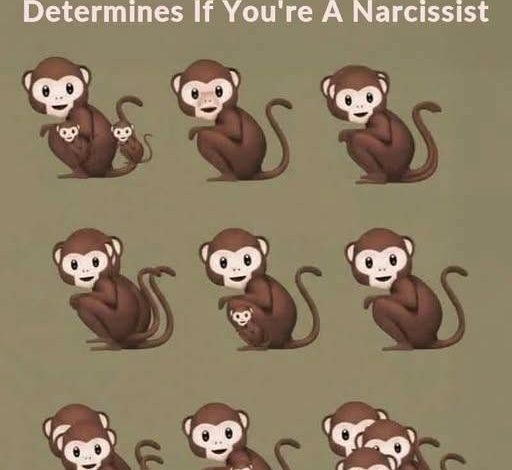
You may have seen a viral image showing a group of cartoon monkeys, with a caption asking viewers to count how many they can find. Some versions of the puzzle go a step further and claim that your answer reveals something about your personality.
That claim makes the puzzle sound much more scientific than it really is.
There is no reliable way to determine whether someone has narcissistic traits—or any other personality characteristic—simply by counting figures in a cartoon image. Personality is far more complicated than a quick visual puzzle can measure.
What the image can demonstrate, however, is something genuinely interesting: people don’t always notice the same details when looking at the same picture.
Why Do People See Different Things?
When you first look at a busy image, your brain has to organize a large amount of visual information almost immediately.
You may notice the largest shapes first. Another person might focus on the edges, background, or smaller details. Someone else may quickly recognize a pattern that you didn’t notice until your second or third look.
This is a normal part of visual perception.
Our brains constantly decide what information deserves attention. We don’t consciously analyze every shape, color, and object in our field of vision with equal intensity.
That’s why a picture that seems obvious at first can sometimes reveal additional details when you slow down and examine it carefully.
The Interesting Part Isn’t Your Number
The viral versions of these puzzles often encourage people to compare answers.
One person might say they counted a certain number of monkeys, while someone else insists there are more hidden in the image.
That difference doesn’t mean one person is more intelligent, more observant, or more narcissistic.
It simply shows that people can approach the same visual information differently.
Some viewers may quickly recognize the most obvious objects. Others may naturally spend more time searching for smaller or partially hidden shapes.
Neither approach is automatically better.
In everyday life, both broad-picture thinking and attention to detail can be useful.
Why Hidden Images Can Fool Us
Visual illusions and hidden-object puzzles work partly because our brains rely on patterns and expectations.Geographic Reference
When an image is complicated, we often make a quick interpretation based on the information that stands out most. Once we have formed that initial impression, we may not immediately notice details that don’t fit it.
Then something changes.
Perhaps another person points out a hidden figure.
Suddenly, you can see it.
You may even wonder how you missed it the first time.
The figure was there all along. Your attention simply wasn’t directed toward it.
Does Your Answer Reveal Your Personality?
This is where it’s important to separate entertainment from established psychology.
A viral puzzle may tell you that seeing a certain number of monkeys means you’re confident, analytical, self-centered, creative, or even narcissistic.
Discover more
camera
Movies
Journalism & News Industry
These claims should not be treated as psychological assessments.
A personality trait cannot be reliably diagnosed from one cartoon, one optical illusion, or one answer to an online quiz.
In particular, narcissistic personality disorder is a clinical condition that involves a broader pattern of thoughts and behaviors and cannot be identified through a visual counting exercise.
So if you see a post claiming that your answer “proves” something about your personality, treat it as entertainment rather than a scientific test.
What the Puzzle Can Actually Teach Us
Even without the personality claims, these images can provide a useful reminder about perception.
We can be very confident that we’ve noticed everything in front of us when, in reality, we’ve only processed part of it.
That’s not a flaw.
It’s simply one of the ways human attention works.
The same idea appears in everyday situations. You might overlook a detail in a conversation because you’re concentrating on the main point. You might walk past something familiar without noticing a small change. Or you might form an initial impression of a situation and only later discover information that changes your understanding.
Taking another look can sometimes make a significant difference.
Why We Enjoy These Puzzles
Discover more
Magazines
News
Men’s Interests
There is also a simple reason hidden-object challenges become popular online: they’re fun.
They create curiosity almost immediately.
Can you find everything?
Did you miss something?
Can your friends spot more than you?
That small challenge encourages people to look again, compare answers, and discuss what they noticed.
The social aspect can be just as entertaining as the puzzle itself.
However, adding dramatic personality claims can make an ordinary visual challenge seem more authoritative than it is.
A more useful way to approach these images is to enjoy the challenge without treating the result as a judgment about yourself.
Try Looking Again
If you encounter a similar image, take a moment before reading the answer.
Look at the larger shapes first.
Then examine the edges.
Check areas where objects overlap.
Look at the background.
Finally, scan the entire image one more time.
You may discover details that weren’t obvious during your first glance.
And if you don’t, that’s perfectly fine too.
There isn’t a personality type hiding behind your answer.
The Real Lesson Behind the Illusion
The most interesting part of a hidden-object puzzle isn’t necessarily how many figures you find.
It’s the realization that seeing and noticing aren’t always the same thing.
Our attention is selective. Our first impressions can be incomplete. And sometimes, taking a second look reveals information that was present from the beginning.
So enjoy the puzzle, compare your answer with friends, and have fun searching for the hidden details.
Just don’t let a viral caption convince you that a cartoon can diagnose your personality.
The number of monkeys you spot may not reveal who you are—but discovering what you missed might remind you of something much more useful:
Sometimes, looking at something twice is enough to see it differently.