At 58, Gillian Anderson announces she s pansexual here s what it means
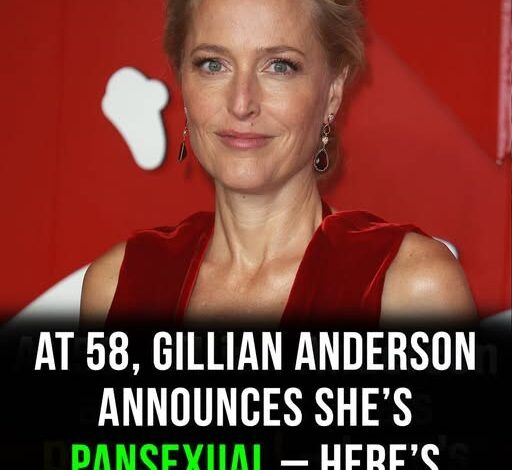
Actress Gillian Anderson has finally put a name to something she has been openly exploring for years, revealing that she identifies as pansexual.
The X-Files and Sex Education star made the candid revelation in a new interview with The Australian while discussing her latest book, More, a follow-up to her bestselling 2024 collection Want.
In the interview, 58-year-old Anderson, who has been open on her fluid approach to love and attraction for years, told interviewer Nikki Gemmell that she is “pan”, as in “pansexual”, describing herself as being attracted to people of any gender.
The announcement is not entirely unexpected for those who have followed Anderson’s career. She has previously spoken about having relationships with women, including during her younger years
In a 2024 interview with The New Yorker, however, Anderson was still questioning which label best described her, asking herself whether she was “pansexual” or “bisexual.”
Anderson has also gone on record before to clarify that she did not want to overstate her experiences with women or claim an identity that did not feel right to her. Her comments in the aforementioned The Australian interview therefore mark a more definitive step in describing her sexuality publicly.
The actress, active since 1986, is currently rumored to be in a relationship with playwright and screenwriter Peter Morgan, but has previously outlined that the fact her partner is a man does not necessarily define who she could fall in love with.
The revelation comes as Anderson continues to explore themes of sexuality, desire and intimacy through her work. Her new book More collects anonymous sexual fantasies submitted by women, following the success of Want, while she has credited her role as sex therapist Jean Milburn in Sex Education with helping her become more comfortable discussing sexuality openly
She also said that the publication of her book and the release of the film Miasma, in which she has a starring role, could effectively close a chapter in her life, admitting: “Once this book is done and once this film [Miasma] is done, I feel like… it might be the end of this chapter of my life.”
At the center of Anderson’s remarks is the distinction between a current relationship and the way a person describes their attraction. Her explanation does not treat the gender of one partner as a complete definition of her sexuality. Instead, she describes the possibility of being drawn to people of any gender. That distinction gives context to her use of the word pansexual and to her earlier questions about which label felt appropriate.
Her comments also trace a process rather than a sudden reversal. Earlier interviews described uncertainty about terminology and a desire to be accurate about her experiences. The newer interview presents a clearer self-description. Read together, those remarks show how discussing an identity publicly can involve reflection before a person settles on the language they prefer.
The books and acting roles mentioned in the interview provide another thread connecting her public work with these conversations. Desire and intimacy are subjects she has explored through characters and through the anonymous contributions collected in her books. Her account places the interview within that continuing exploration, while leaving her own description of her identity in her own words.