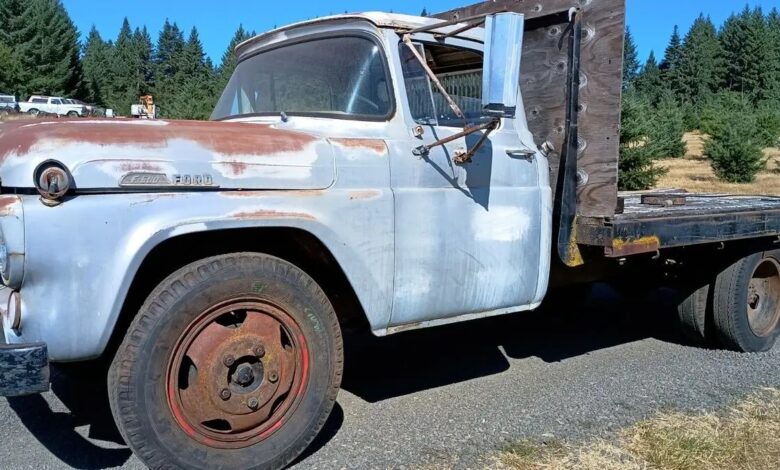
After 31 Years of Marriage My Husband Left Me With His Fathers Rusty 1957 Pickup Then a Stranger Offered Me 85 000 and Told Me to Look Under the Seat
“For that?” I said. “That truck? It doesn’t even run, Mr. Ashby. The tires are flat. There’s a bird’s nest on the roof.”
He smiled.
“Ma’am,” he said, “that truck’s worth a lot more than you think. That’s a 1957 Chevrolet Cameo Carrier. They only made about twenty-two hundred of them that year. Elmer bought it brand new off the lot on Union Avenue, and he’s the only man who ever owned it. The engine’s original. The paint’s original, what’s left of it. He kept every receipt and every service record since the day he drove it home. Trucks like that, with that kind of history, collectors go crazy for. I’ve been trying to buy it off him since 1985. He always said no.”
I stood there with my hand on the doorframe and my coffee getting cold.
“Then why now?”
“Because he made me promise,” Bertrand Ashby said. “Two weeks before he died, he called me in Santa Fe. First time he’d ever called me. He said, ‘Bert, when I’m gone, my boy’s going to have that truck, and he’s going to let it rot in a barn because he doesn’t know what it is. But someday it’s going to end up with my daughter-in-law, Alva. When it does, you go to her and make her a fair offer. Not a collector’s offer. A fair one.’” He shook his head. “I asked him how he knew it would end up with you. He just said, ‘I know my son.’”
I didn’t say anything. I couldn’t.
“I’ve been keeping an eye out,” Bertrand said. “A friend of mine in Pueblo knows the fellow who towed it. Hector Rubio. When Hector mentioned last summer that he’d hauled a ’57 Cameo from the Hartley place to a duplex on the east side, I knew. But Elmer said to wait. He said to let you get settled first. Let things calm down. So I waited until after Thanksgiving.”
He reached into the inside pocket of his suit jacket.
“But ma’am, before you say yes, Elmer asked me to make sure you did one thing first. He was very particular about it. He made me repeat it back to him on the phone.”
He held out his hand. In his palm was a small, rusty key on a loop of old leather string.
“He said, ‘Tell her to look under the seat.’”
I took the chain off the door.
I don’t remember putting on my shoes. I must have, because I remember the gravel didn’t hurt. I walked around the side of the duplex in my bathrobe with Bertrand Ashby following a few steps behind me, holding his hat. The morning was cold and bright, with frost still on the crabapple branches. The old truck sat there in the gravel under the tree, green and rusty, with frost on the cracked windshield and dead crabapple leaves piled up on the hood.
My hands were shaking. I walked up to the driver’s side and pulled the handle. It stuck. I pulled harder. The door came open with a long, loud creak, the way old doors do, and the smell came out at me, dust and old leather and motor oil and something else, something that smelled like Elmer. Like pipe tobacco and hay.
I hadn’t smelled that in six years. I had to stand there for a second with my hand on the door.
The bench seat was old brown leather, cracked all over and patched with silver duct tape in three places. I reached down along the front edge of it, the way you’d lift a couch cushion. It was stiff and heavy. I pulled. It didn’t move. I pulled again, harder, with both hands, and it came up with a crack and a puff of dust, hinged at the back the way old truck seats are.
And underneath it was a metal box.
It was a gray steel box, the kind you’d keep tools in, or important papers, about the size of a shoebox. It was wrapped tight in a heavy clear plastic bag, the kind you’d use for feed, folded over and over and wound around with gray duct tape.
On the lid, under the plastic, painted in white letters with a small brush, in an old man’s careful, shaky hand, was my name.
ALVA.
I stood there in the cold in my bathrobe and looked at it for a long time.
“I don’t know what’s in it, ma’am,” Bertrand said quietly behind me. “I swear to that. He never told me. He only said to tell you to look under the seat. I’ll wait out front, if you’d like some privacy.”
“No,” I said. “Stay. Please.”
I lifted the box out. It was heavy. Heavier than it looked. I carried it into the duplex and set it on my card table, next to my coffee cup and the crossword puzzle, and I cut through the plastic and the duct tape with my kitchen scissors.
The box had a small padlock on it. The rusty key Bertrand had given me fit it.
I opened the lid.
On top was an envelope. A plain white envelope, yellowed now, with my name on it again, in that same careful, shaky handwriting.
Under the envelope was a stack of something wrapped in a dish towel, a blue checked dish towel I recognized. It was one of mine. One of the ones I used to wrap the biscuits in, every Sunday, when I drove out to the ranch. I’d lost a lot of those dish towels over the years. I always figured Elmer was just bad at giving them back.
I opened the envelope first. My hands were shaking so hard I tore it.
It was a letter, on one sheet of lined paper, in pencil.
“Alva,
“If you’re reading this, then my son did what I figured he’d do, and you’re the one who’s got the truck. I’m sorry about that, honey. I’m sorry about whatever he did. I raised him, so some of it’s on me.
“I want you to know a few things.
“Every Sunday for twenty-five years, you drove out here with a hot dinner. You never once asked me for anything. You never once asked about the ranch or the money or what I was leaving to who. You just sat on my porch and ate pie with me and looked at the mountains. Do you know how rare that is? I’ve known a lot of people in eighty-seven years. Most of them wanted something. You never did.
“So I started putting something aside for you. Every Sunday after you left, I’d take a little money down to the bank in Rye and buy a savings bond in your name. Twenty-five dollars, at first. Later on, fifty, when cattle prices were good. I never told you because you’d have told me to stop. I know you. You’re as stubborn as I am.
“They’re all in here, wrapped in one of your dish towels. I know you’ve been wondering where those went.
“The bonds are in your name, not Devlin’s. They’re yours and nobody else’s. I asked the man at the bank, and he says that’s how it works. My son can’t touch them.
“About the truck. Bert Ashby has been trying to buy that truck off me since Reagan was president. He’s a good man and an honest one. If he comes, and he will, you sell it to him if you want to. Or keep it. It’s yours either way. But don’t you ever sell it to anybody my son sends, and don’t sell it for scrap.
“You were more of a daughter to me than I ever had a right to. Thank you for the biscuits.
“Elmer”
I put the letter down on the card table and put my face in my hands.
Bertrand Ashby stood in the doorway of my little living room with his hat against his chest, and he didn’t say anything, and he didn’t move, and I was grateful for that.
When I could see again, I unwrapped the blue dish towel.
They were savings bonds. A thick stack of them, maybe three inches high, held together with old rubber bands that had gone brittle and snapped as soon as I touched them. Series EE United States Savings Bonds, with the faces of different presidents on them. Each one had my name typed on it. Alva J. Hartley. And a date in the corner.
The first one was dated June 7, 1992. That was the first Sunday I ever drove out to the ranch with biscuits and chicken and dumplings.
I started going through them. One for every Sunday. Some Sundays, two. Twenty-five dollars, then fifty, then a few for a hundred. Hundreds of them. They went all the way up to September of the year Elmer died.
Bertrand finally came in and sat down in the chair across from me at the card table. He helped me sort them. It took us almost two hours, sitting there with the stacks spread out over my card table and my crossword puzzle shoved onto the floor. We made piles by year. I wrote the numbers down on the back of my electric bill.
When we were done, there were eleven hundred and four bonds. The face value, the amount printed on them, came to a little over seventy-one thousand dollars. But Series EE bonds keep earning interest for up to thirty years, and a lot of these had been earning for twenty-five years or more.
“You’ll want to have somebody at the bank figure the exact value,” Bertrand said. “The Treasury has a calculator for it, I believe. But I’d guess, ma’am, with the interest, you’re looking at something well north of a hundred and thirty thousand dollars. Maybe a fair bit more.”
I sat there at my card table in my bathrobe, and I looked at the stacks of savings bonds, and the blue dish towel, and Elmer’s letter in pencil.
“He never said a word,” I said. “Twenty-five years. Not one word.”
“No,” Bertrand said. “He wouldn’t have. That was Elmer.”
He was quiet for a minute.
“Ma’am,” he said, “I’ll come back another day about the truck. There’s no hurry. You’ve had enough of a morning.”
“No,” I said. “Stay. I’d like you to tell me about him. About the forty years.”
So he did. We sat at my card table for another two hours, and he told me about the cattle auction in La Junta in 1981, and a fishing trip to the Conejos River in 1990 when Elmer fell in the river and wouldn’t admit it, and the time Elmer drove all the way to Santa Fe in that green truck, five hours each way, to bring Bertrand a calf for his granddaughter’s 4-H project. I made a fresh pot of coffee, and then another one. I heated up leftover pie from Thanksgiving. He said it was almost as good as Elmer’s wife’s, which I knew from Elmer was the highest compliment Bertrand Ashby gave.
I sold him the truck.
Not that day. I made him wait until Monday, because I wanted Rosa to look at everything first, and I wanted to sit with the truck one more weekend. On Saturday afternoon, I went out and sat in the driver’s seat for a long time with the door open, smelling the pipe tobacco and the hay. On Sunday, I drove out past Rye, to the gate of the old ranch, which belongs to some people from Denver now, and sat in my Honda by the side of the road and looked at the mountains for a while.
On Monday morning, Rosa met me at the credit union on Northern Avenue. She’d read the settlement agreement again over the weekend, every word. She showed me the line she’d written in the margin at the mediation, typed up now on page eleven, paragraph four.
“The 1957 Chevrolet pickup truck, VIN on file, and all of its contents, shall be the sole and separate property of Alva J. Hartley.”
“All of its contents,” Rosa said, tapping it with her pen. She was grinning. “You told me to put that in. At the mediation. You leaned over and whispered it to me. I thought you meant, like, his old hat or something.”
“I didn’t know what was in it,” I said. “I just knew Elmer.”
“Well,” Rosa said. “Devlin signed it. Every page. In front of his own lawyer. And the bonds were in your name the whole time anyway. Gifts to you from his father. They were never his. And now there isn’t anything in the world he can do about it.”
The man at the credit union, a young loan officer named Mr. Tafoya, spent most of Monday morning going through the bonds one by one on his computer with the Treasury Department’s website. When he finished, he turned his monitor around to show me.
The total value of the bonds, with twenty-five years of interest, was one hundred and forty-three thousand, six hundred and eighteen dollars.
Mr. Tafoya looked at me over the top of his monitor.
“Ma’am,” he said, “can I ask where you got these?”
“My father-in-law,” I said. “Every Sunday. For biscuits.”
He looked at me like I’d lost my mind. Then he helped me fill out the paperwork to cash some of them and leave the rest earning interest, because Rosa said there was no reason to cash them all at once and pay all the taxes in one year.
Bertrand Ashby came back that afternoon with the cashier’s check from First Bank of Santa Fe. Eighty-five thousand dollars. He’d brought a flatbed trailer behind a big white pickup, and his grandson, a quiet young man about twenty named Eli, who helped him winch the old green truck up onto the trailer with a lot more care than Hector had used getting it out of the barn.
When it was chained down, Bertrand stood beside it with his hand on the rusty green fender.
“I’m not going to restore her,” he said. “I want you to know that. Not all the way. I’ll get her running, and I’ll fix the brakes and the tires so she’s safe. But I’m going to leave the paint the way it is. And the dent in the tailgate. And the duct tape on the seat.” He patted the fender. “That’s Elmer. That stays.”
“Thank you,” I said.
“You’re welcome to come visit her,” he said. “Anytime. Santa Fe’s a pretty drive. I’ll even let you drive her around the block, once she runs. Elmer would want that.”
“I might take you up on that.”
He shook my hand. Then he got in his white pickup, and Eli got in the passenger side, and they pulled out of the gravel strip behind my duplex and onto the alley. The old green truck sat up on the trailer behind them in the late afternoon sun, with crabapple leaves still caught in its windshield wipers.
I stood there and watched it go all the way to the end of the alley and turn onto Fourth Street.
Devlin found out about two weeks later.
I didn’t tell him. Cody did. Not on purpose. I’d told Josie and Cody both, on the phone, the night after Bertrand came, because I didn’t want them to hear it from somebody else. I didn’t tell them to keep it a secret. I never asked my kids to keep secrets from their father, and I wasn’t going to start. Cody mentioned it at the office. Then Kendra heard. And then Devlin heard.
He called me on a Tuesday night at nine-thirty. I hadn’t heard his voice since July.
“Alva,” he said. No hello. “What the hell is this about Dad’s truck?”
“I sold it,” I said.
“For eighty-five thousand dollars?”
“Yes.”
“That’s my father’s truck!”
“It was my truck,” I said. “You gave it to me. You said it was worth five hundred dollars for scrap. You said ‘enjoy.’”
“I didn’t know what it was worth!”
“No,” I said. “You didn’t.”
There was a long silence on the line.
“And Cody says there were savings bonds,” Devlin said. His voice had gone low and tight. “Under the seat. From Dad.”
“There were.”
“How much?”
I didn’t answer that.
“Alva. How much?”
“Enough,” I said.
“That’s my inheritance,” he said. “That’s my father’s money. I’m his son. I’m calling Garrett in the morning. We’re going back to court.”
“Go ahead, Devlin,” I said. “Have Garrett read page eleven of the settlement. Paragraph four. ‘And all of its contents.’ You signed every page of it. Then have him look at the bonds. They’re in my name. Your father bought them for me. Every Sunday. For twenty-five years. While you were too busy.”
He didn’t say anything.
“Your father told me something before he died,” I said. “He said, ‘Don’t ever let my son sell that truck.’ I didn’t understand what he meant at the time. I do now.”
He hung up on me.
Garrett Pruitt did send a letter, about a week later. It came to Rosa’s office, not to me, on heavy cream-colored paper with his firm’s name embossed at the top. It said that Devlin Hartley believed the contents of the truck had been “unknowingly and inadvertently conveyed” and “requested that Ms. Hartley voluntarily return any assets of his late father’s estate.”
Rosa wrote back. Her letter was one paragraph long. It quoted page eleven, paragraph four, in bold. It said the bonds had been gifts from Elmer Hartley to Alva Hartley during his lifetime, registered in her name alone, and had never been part of his estate or of the marital property. It said Ms. Hartley respectfully declined.
Rosa showed it to me before she mailed it. At the bottom, after her signature, she’d added one more line, and then crossed it out, but not very hard, so you could still read it.
“P.S. You should’ve read the contract, Garrett.”
“Rosa,” I said. “You can’t send that.”
“I crossed it out,” she said innocently.
She sent it.
We never heard from Garrett Pruitt again.
It’s January now. I’m still in my little rented duplex on the east side, with the chain-link fence and the crabapple tree and Mr. Archuleta’s Marty Robbins records on Saturday nights. I’ve thought about buying a house. Rosa says I should. Josie says I should. Maybe in the spring. I’m in no hurry. I’ve been in a hurry for thirty-one years.
I paid off my Honda. I put most of the money in the credit union, in a CD and an IRA that Mr. Tafoya set up for me. I gave Josie five thousand dollars toward her student loans, and I put five thousand in an account for Cody, for whenever he decides he wants to do something besides roof houses for his father. I haven’t told Cody about that one yet. I’ll know when.
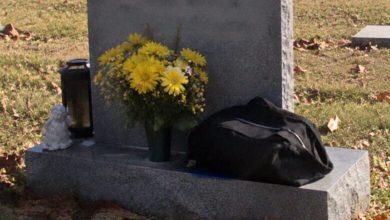
I went back to the cemetery at Rye on New Year’s Day. Elmer’s buried next to his wife, Ruth, on a little rise looking at the mountains, behind the old white church. I brought a pan of biscuits, wrapped in a blue checked dish towel, and I sat on the cold ground next to his stone for a while and ate one and looked at the Wet Mountains with snow on them.
“Thank you for the bonds, Elmer,” I said. “And for the truck. And for all those Sundays.”
I left the biscuits on the stone. The birds would get them.
When I got home, there was a postcard in my mailbox from Santa Fe. It was a picture of an old adobe church. On the back, in big, slanting handwriting, it said:
“She runs. Come drive her. Bring biscuits. —Bert”
I put it on my refrigerator under a magnet shaped like a pie.