A Strange Discovery Washed Ashore—Here’s What It Turned Out to Be
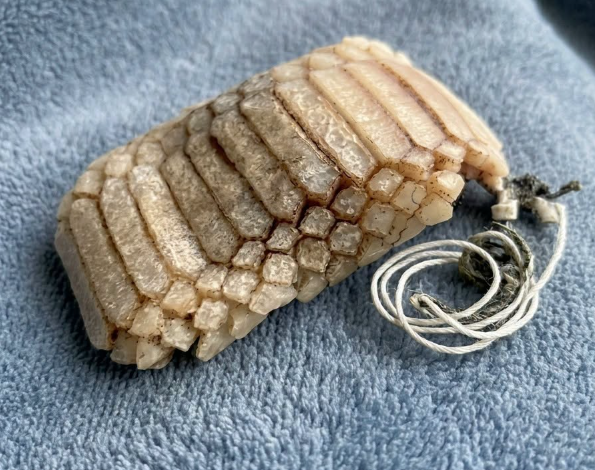
More than once, beach visitors have discovered unusual objects along the shoreline that spark curiosity and lively discussions. One such object, found resting in the shallow surf, appeared almost impossible to identify. With its rough texture, layered edges, and rows of pointed ridges, it looked unlike anything most people had ever seen. Some imagined it belonged to an unknown sea creature, while others believed it might be part of a rare marine animal. Although its appearance seemed mysterious, the explanation turned out to be both simple and fascinating.
The object was connected to a chiton, a small marine mollusk that lives on rocky coastlines around the world. Chitons may not be as well known as clams or snails, but they are remarkable animals with unique adaptations. Their bodies are protected by eight overlapping shell plates, allowing them to remain flexible while still providing excellent protection. Most of the time, these creatures go unnoticed because they cling tightly to rocks where waves constantly crash, blending naturally into their surroundings.
One reason chitons are so successful is their powerful muscular foot. This broad, flexible structure creates a strong grip that helps the animal stay attached to rocks even during rough surf. Living in the intertidal zone means facing changing tides, strong currents, and constant wave action. Thanks to their specialized anatomy, chitons can remain securely in place while many other small marine animals would be swept away. When parts of their body become separated and eventually wash onto the beach, they can appear unfamiliar and surprisingly dramatic without the rest of the animal for context.
Another fascinating feature of chitons is the way they feed. Like many grazing mollusks, they use a ribbon-like feeding organ covered with rows of tiny teeth to scrape algae from rocks. These microscopic teeth are exceptionally durable because they contain magnetite, an iron-rich mineral that naturally strengthens them. Scientists have studied this remarkable material because it provides an excellent example of how nature develops durable biological structures. Despite their impressive strength, these teeth serve a simple purpose: helping the chiton collect food from hard surfaces throughout its life.
Discoveries like this remind us that nature often looks far more unusual than we expect. The ocean constantly moves shells, plants, rocks, and animal remains from one location to another. As waves separate individual parts from the complete organism, familiar animals can suddenly appear mysterious. Without seeing the entire creature, even experienced beachcombers may struggle to recognize what they have found. Many strange-looking objects found along the shoreline have perfectly ordinary explanations once marine biologists examine them more closely.
Learning the true story behind these discoveries makes them even more interesting. Instead of being evidence of an unknown sea creature, the unusual object represents one small part of a well-adapted marine mollusk that has survived in coastal environments for millions of years. The chiton’s armor, powerful grip, and durable feeding structures demonstrate the incredible variety of life found beneath the waves. The next time an unusual object washes ashore, it may be worth taking a closer look. What first appears mysterious could simply be another example of the remarkable adaptations that allow marine animals to thrive in challenging environments.