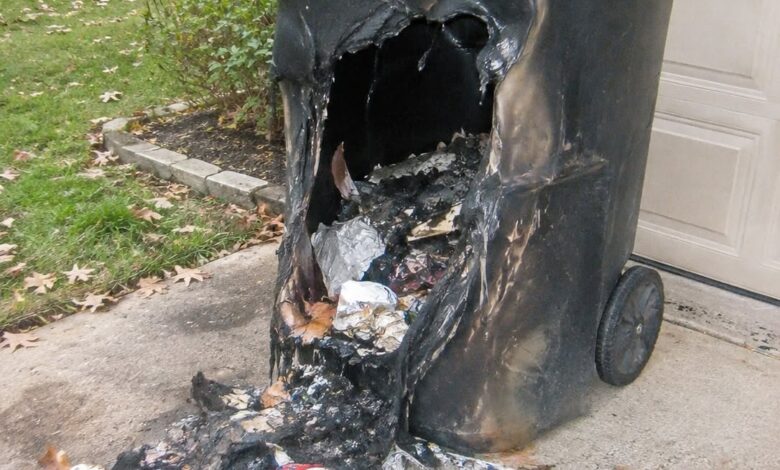
A Neighbor Ruined Her Trash Can and Got an Unexpected Thanksgiving Surprise
“No,” I said. “She told me to buy a new one.”
Lily made a face. A fourteen-year-old face. Pure outrage.
“That’s so rude. Are you gonna make her pay for it?”
I looked at her. My granddaughter. Fourteen, with braces and a ponytail, who has never once in her life let anybody cut in front of her in line.
“I’m going to try,” I said.
Kim had come in behind her. I hadn’t seen her. She was standing in the doorway with a stack of dirty plates.
She put them in the sink. Then she put her hand on my arm.
“Good,” she said quietly. “Ruth. Good.”
Kim’s known me twenty years. She’s seen me give away more than I should. She saw me lend Lou’s son four thousand dollars for a car that he crashed and never paid back. She was there the time I let a door-to-door salesman into the house and ended up buying a vacuum I didn’t want just because I didn’t want him to feel bad.
She didn’t say any of that. She didn’t have to.
We ate. Everyone had seconds, then thirds. Ben fell asleep on the couch with his mouth open. Lou and Frank argued about football. Kim and I did the dishes, and everyone went home with leftovers in my good plastic containers that I knew I’d never see again.
It was nearly eight by the time the last car pulled out.
Frank was still trying to get a lid onto the leftover pie. He was fighting with the plastic wrap. He always fights with the plastic wrap.
I reached for the big serving platter.
My mother’s turkey platter. White china, with a little band of gold around the edge. I’d already washed it once that day, after dinner.
I dried the rim with a dish towel.
Then I opened the drawer and took out the folder.
Frank stopped fighting with the plastic wrap.
“Ruth,” he said. “What’s that?”
“Something for next door.”
I laid the papers on the platter, one by one. The confirmation first, on top. Then the letter. Then the two pictures, underneath.
I covered it with the domed silver lid.
Frank stood there holding the pie.
“You’re bringing her a platter,” he said.
“I am.”
He looked at me for a long moment. Then he started to smile. Slowly. The way he used to smile at me across the dance floor at the Elks Lodge in 1971.
“Do you want me to come?”
“No,” I said. “But you can watch from the window.”
“I was going to anyway.”
There were still cars outside Denise’s house. Five of them, lined up along the curb. I could hear the TV from her front walk. Another game. More laughing.
I walked carefully. The platter’s heavy, and I didn’t want to trip on the step. On the black streak the can had left that afternoon.
I rang the bell.
When she opened the door, I could hear her guests talking over each other. Someone said, “No, the other one!” Somebody else was laughing so hard they were coughing.
Denise had changed into a sweater. Her face was flushed from the wine and the kitchen.
She saw me. She saw the platter.
She smiled. A big, warm, surprised smile. And she held out both hands.
I think she thought it was pie. I think she thought the old lady next door had come over with a peace offering, the way old ladies do.
I lifted the lid.
Her hands dropped.
The color went out of her face.
I watched it go. Like water running out of a tub. Pink, and then less pink, and then pale.
“Are you kidding me?!” she said. “No. Cancel it! Right now!”
The first thing Denise saw was the appointment confirmation.
The Valley Community Mediation Center logo at the top. Two hands shaking inside a circle. Then my name and the time. Monday, 10:00 a.m.
Under it was the letter I’d signed. It had the price of a replacement can on it. $68.49.
And under that, the two pictures.
I wanted her to see the second picture most.
We’d talked about when I could get my mower back. We’d talked about that in her backyard, back in June.
We’d never talked about what made her think she could take it.
She picked up the mower picture by one corner. Like it might be hot.
She looked at it.
She read the date across the top.
June 14. 10:52 a.m.
Then she laid it facedown on the platter.
“What did you tell them?” she said.
Her voice was very low.
“It was an online calendar,” I said. “I picked a time.”
She glanced past me at our house. At the front window, where Frank was standing with the pie, not even pretending to do anything else.
Then she looked over her shoulder. At her living room. At the folding table, and the coats on the stairs, and her teenagers, and all those people she’d invited to her first Thanksgiving in her first house.
Someone inside called out, “Denise? You need a hand?”
“No!” she said. Too loud. “No, I’m fine!”
She pulled the door closer behind her. Until it was almost shut, with just her in the gap, and the noise of the party muffled behind her back.
“I’ll buy the can,” she said, lowering her voice. “Is that what you want? I’ll buy it. Fine. Just call them and cancel.”
At noon, I’d have thanked her.
I know I would have. If she’d said that at noon, when I first came over with the can — I’ll buy it, Ruth — I’d have said, Oh, thank you, Denise. Thank you so much. I’m sorry. I’m sorry to bother you on the holiday.
Knowing me, I’d have apologized for interrupting her holiday, too.
Now she was offering to pay for the can.
All I had to do was drop the whole thing.
That’s what she was offering. Not sixty-eight dollars. Sixty-eight dollars in exchange for me going away. For me going back to being the nice old lady who talked about the weather.
She was already reaching for the papers.
I kept both hands on the platter.
“I’ll take the call on Monday,” I said.
I held out the platter.
She didn’t take it right away. She looked at me. Really looked, for maybe the first time since April. I don’t know what she saw. An old woman in a cardigan, holding her mother’s china on a cold porch, not moving.
For a second, I thought she’d shut the door in my face again.
Then she picked up the papers off the platter. All of them. She held them flat against her chest, with both arms crossed over them, like a schoolgirl holding her books.
And she went inside.
The door closed. Not slammed. Just closed.
I stood there with my mother’s empty platter and the silver lid.
Then I walked home.
Frank met me at the door. He’d put the pie down somewhere.
“How’d it go?”
“She offered to buy the can.”
He raised his eyebrows.
“And?”
“And I said I’d take the call on Monday.”
He wanted to know if I was still taking it. He asked twice, I think, to be sure.
I said yes.
It was a lot easier to say that in my own kitchen. With the door locked and the porch light on and Frank’s arm around me and the dishwasher running.
I put the platter back in the cabinet above the fridge where it lives. Up high, where it’s safe. Next to the gravy boat my mother got for her wedding in 1946.
I slept better that night than I had in months.
On Monday, I talked to a woman named Carol.
She called at ten on the dot. She had a kind, slow voice, like a radio host who does the late-night show. She told me she’d been a mediator for the county for sixteen years. Before that she’d been a high school guidance counselor.
“So I’ve heard a lot of people explain why something wasn’t their fault,” she said. “You’d be amazed how similar it sounds at sixteen and at sixty.”
I laughed. It surprised me, that I laughed.
She asked me to tell her what had happened.
I started with the can.
I told her about the charcoal, and the ashes, and the potato peels on the driveway. I told her about wheeling it over, and the door, and the retirement money. I told her about the camera.
She listened. She made little “mm-hmm” sounds. Every so often she asked a question. When did that happen? Was anyone else there?
Then she asked me something I wasn’t ready for.
“Mrs. Talbot,” she said. “What do you want to happen?”
I opened my mouth to say, I want her to pay for the can.
Somehow, I ended up talking about the rake.
I don’t know why. It just came out. I told her about the day back in April, when I went next door to ask for it. How Denise had told me where it was without even stopping what she was doing. How I’d walked around to her back steps and picked it up myself.
How it had been out in the rain. How there was rust on it.
“She pointed me toward it,” I said. “And went right back to what she was doing. As if—”
I stopped.
“As if what?” Carol said.
“As if she’d been doing me a favor. By setting it out where I could find it.”
Carol was quiet for a moment.
“And how did you feel,” she said, “picking it up?”
“I almost thanked her,” I said. “I almost said thank you. For my own rake.”
I sat at my kitchen table with the phone pressed to my ear. Frank was in the den with the door open, pretending to read the paper.
“Mrs. Talbot,” Carol said gently. “Can I ask you something?”
“Of course.”
“The next time you need the rake, where do you want it to be?”
I didn’t even have to think.
“In my garage,” I said. “Where I put it.”
My voice cracked a little on the last part. I don’t know why. It was such a simple thing to say.
“Okay,” said Carol. “Then that’s what we’ll talk about.”
The center called Denise separately. That’s how they do it, Carol explained. They call both people. Both people have to agree to sit down.
She could’ve said no. Nobody makes you go. It’s all voluntary.
She told me later she agreed because she wanted to settle everything in one conversation. She didn’t want it dragging on. She didn’t want to keep waiting for the next platter.
By then we’d passed at the mailbox twice without speaking.
Tuesday and Thursday. Both times, she was getting her mail just as I came down. Both times, we stood eighteen inches apart, opening our little metal doors, not looking at each other.
I was tired of it too.
The second time, I nearly said something about the weather.
It was cold that day. The first real cold of the year. My breath was making little clouds, and I almost said, Well, winter’s here. I could feel it in my mouth, ready. The old habit.
I didn’t.
Old habits, I guess. They don’t die. You just stop feeding them, and eventually they get quieter.
We met the next week. A Wednesday afternoon, at the mediation center. It’s in an old brick building downtown that used to be a bank. They’ve got little rooms in the back that used to be offices, with plants and boxes of tissues and big windows.
Frank drove me. He waited in the car with a thermos of coffee and his crossword.
“Take as long as you need,” he said.
“It’s a trash can, Frank. It’s not going to take that long.”
He looked at me over his glasses.
“It’s not a trash can, Ruth,” he said. “And you know it.”
Carol sat with us at a little round table.
She was older than I’d pictured. Sixties, with white hair in a short cut and big red reading glasses on a beaded chain. She had a yellow legal pad and a cup of tea. She’d brought cookies on a paper plate. Shortbread.
“Nobody ever touches them,” she said. “But I like to have them.”
Denise came in a few minutes after me. She was in her work clothes, a blazer and slacks. She looked tired. She sat down across from me and put her purse on the floor.
She’d brought my letter.
She’d folded it in thirds, like you’d fold a bill. She unfolded it and put it on the table between us, and she tapped the price with her finger.
$68.49.
“I said I’d pay this,” she said. “I said that already. On Thanksgiving. I don’t know what else you want me to say about the charcoal. I thought it was cold.”
“I believe you thought it was cold,” I said.
She looked up at me.
I think she’d come ready to argue that point. I think she’d practiced. I could see it in her face, all the arguments lined up behind her eyes. The coals looked gray. Anybody could’ve made that mistake. It was an accident.
I’d taken that away from her. She didn’t know what to do.
I put my phone between us.
I’d had Frank show me how to make the clip start at exactly the right moment. I pressed play.
I played it from the second she opened her own can.
All three of us watched. Carol leaned in with her red glasses. Denise sat very still.
On the little screen, Denise looked into her own can. Saw the bags. Shut the lid.
And crossed the lawn.
Opened mine. Tipped the grill. Closed my lid, nice and neat.
The clip ended. The little screen went still on the image of my can, with the gray ash floating up out of it.
When it ended, she waited for me to pick up the phone.
I left it there.
On the table between us. With the picture of my can on it.
“What made you come over to mine,” I said, “after you checked yours?”
She took a long time to answer.
“Mine was full,” she said. “I figured you’d have room.”
I let a few seconds go by.
I didn’t say anything. Carol didn’t either. The radiator ticked under the window. Somebody’s phone rang in another room.
I wanted her to hear it. How it sounded. How familiar it was.
I need so many things. I’ll return them later.
I figured you’d have room.
“I’d asked you to use your own, Denise,” I said.
She pulled the letter toward her and worked a thumb along one of the folds. Back and forth. Smoothing it, then creasing it again.
“Well,” she said. “Your garage is always open.”
She didn’t look at me.
“I thought we were the kind of neighbors who could borrow from each other.”
There was a long pause.
I could feel something rising in my chest. That old feeling. The one that says, Oh, she didn’t mean any harm. She just has a different idea of neighbors. Maybe she grew up somewhere where everybody shares. Maybe you’re being too rigid, Ruth. Maybe this is your fault for leaving the garage open.
I let it rise. I let it sit there.
Then I reached over and picked up my phone, and I pulled up the mower clip.
There she was. On the little screen. Walking into our garage on a sunny June morning. Finding the mower. Pulling it backward, very slowly, very carefully, angling the handle so it wouldn’t touch Frank’s side mirror.
It took her almost twenty seconds to get it around.
Twenty seconds of being careful.
She could’ve taken another ten seconds to text me.
“We were out buying groceries,” I said. “You could have called me. You could have waited until we got home. I only got it back because I came over and asked where it was.”
She started to say something.
Then she looked down at my phone again. At herself, on the little screen. Pushing my mower across the grass.
She didn’t say it.
“I figured you’d come get it if you needed it,” she said finally.
It had always been my job to come get it.
I sat there and understood that. All at once, like a light coming on in a room you’ve been sitting in for a long time in the dark.
The rake. The mower. The hose. The trash. It had always been my job to come get it. My job to notice. My job to walk over and ask, and feel bad about asking, and say it nicely, and then carry my own things home. She’d made it my job. And I’d let her. Because it seemed easier.
It wasn’t easier.
It was just quieter.
So I told her.
Not angry. I wasn’t angry anymore. Just plain.
I told her I’d unhooked her hose myself. In July. That it had been running our water into her pool, and I’d coiled it up and left it on her side because I didn’t want to have to talk to her about it.
She looked surprised. Like she’d forgotten. Maybe she had.
I told her I’d seen her cut my roses. That they were my mother’s roses. That I’d rooted them in coffee cans the summer she died.
Denise put her hand over her mouth at that. Just for a second.
I told her I wanted to leave my garage open while I worked in the yard. That I’d left it open for forty-one years. That Ellen Henderson used to come and sit in there with me and drink iced tea.
And I told her I was tired.
I was tired of wondering what I’d have to go next door to get back.
Denise was quiet for a while.
She looked at the window. At the bare tree outside it. A pigeon was sitting on a branch, all puffed up against the cold.
When she spoke, her voice was different. Smaller. Not the big, breezy voice from the driveway.
“I grew up in an apartment building,” she said. “In Chicago. Six floors. My mom was a single mom. Everybody borrowed everything. Sugar, eggs, the vacuum. Mrs. Kowalski on three had the only good ladder in the building, and everybody just went and got it. Nobody asked. You just took it and brought it back.”
She shrugged one shoulder.
“I guess I thought that’s how it worked. Houses too.”
Carol wrote something on her legal pad.
“Did you bring it back?” I asked. “The ladder? When you were done?”
Denise opened her mouth.
Then she closed it.
“Yeah,” she said. “Usually. My mom would make me.”
“And this is my first house,” she said. “Ever. I’m forty-four. I’ve rented my whole life. After my divorce I didn’t think I’d ever be able to buy anything. And then I did, and I moved in, and I had nothing. No rake. No mower. No hose. No pots. I’d never needed any of it. And it was all just sitting there in your garage.”
She laughed a little. Not a happy laugh.
“It’s expensive, owning a house. Nobody tells you. Every single week there’s something else.”
I believed her.
I want to be honest. I sat there and I believed every word of it, and I felt for her. I remembered Frank and me in 1983, with a four-year-old and a house full of nothing and a lawn we didn’t know how to take care of. Frank borrowed a mower from Marv Henderson that whole first summer.
He asked first. Every single time. He knocked on the door and asked, and brought it back that afternoon with the bag emptied and the blades wiped clean. And by August, Marv was telling him, Frank, just come get it, you don’t need to ask. And Frank still asked.
That was the difference.
It had never been about the borrowing.
“I understand,” I said. “I really do, Denise. But you called me stingy. You called me a cheapskate. On my own walk. In front of your family.”
She flinched.
“I know.”
“I’ve lived on that street forty-one years. Nobody’s ever called me stingy.”
“I know,” she said again. Quieter. “That was— I was embarrassed. My sister was right there. My ex’s brother was there. I’d just burned your trash can, and I knew it, and I was embarrassed, and I just— I made it your fault. So it wouldn’t be mine.”
She looked down at the letter.
“I’m sorry,” she said. “About that part. About what I said.”
It wasn’t a big apology. It wasn’t the kind you see in movies.
But she said it. And she looked at me when she said it.
“Thank you,” I said.
And I meant it. Not the way I’d almost meant it about the rake. The real way.
Then she asked what she still had.
I hadn’t expected that. I don’t think Carol had either. She looked up from her legal pad.
“Of my things?”
“Yeah,” Denise said. “I honestly don’t know. I’m not trying to be— I really don’t know. Tell me.”
So I told her about the trowel and the long-handled cultivator. The flowerpots, I said, she could keep. They looked nice by her door. I’d planted geraniums in them for twenty years, and I was ready for something new anyway.
“The cultivator had green tape on the handle,” I said. “My husband taped it.”
That jogged her memory. I saw it happen.
“Oh my God,” she said. “It’s behind my shed. I used it to dig up the old bushes by the fence in May. It’s been sitting back there ever since. The trowel too, I think.”
“Since May.”
“Since May,” she said, and she actually winced.
Carol helped us put it in writing.
That’s what they do. They write it all down, in plain words, and both people sign. It’s not a court thing. Nobody’s going to arrest you if you break it. But it’s on paper, with your name.
Carol wrote it out on her legal pad first, and read it back to us, and we changed a few words. Then she typed it up on the computer in the corner and printed two copies.
Denise would pay for a new can. Sixty-eight dollars and forty-nine cents.
She’d take away the ruined one and the bag of trash we’d picked up off the driveway. Frank had put it in a contractor bag by the side of the garage, and it had been sitting there for two weeks.
She’d bring the tools back by Saturday.
She agreed to stay out of the garage unless invited.
She’d use her own faucet and her own cans. If her cans were full, she’d call the city for another one.
The roses were to stay where they were.
And if she wanted to borrow something, she’d knock and wait for an answer.
I read that last bit again before I signed.
If she wanted to borrow something, she’d knock and wait for an answer.
So did Denise. I watched her read it. Her lips moved a little.
It felt odd to have it written down. Like something you’d put on a poster in a kindergarten classroom. Knock and wait for an answer. It’s the first thing you teach a child.
But that was the part I wanted us both to remember.
Not just her. Both of us.
Because the answer was mine to give. That’s what I’d forgotten, all those months. She’d never waited for my answer. But I’d never given one, either. Not really. I’d given her the weather.
We signed.
Carol shook both our hands. She offered us the shortbread. Nobody took any. She laughed.
“Told you,” she said.
Denise and I walked out to the parking lot together. Not side by side, exactly. A few feet apart. It was getting dark already. That early December dark.
At her car, she stopped.
“Ruth,” she said. “The roses. Your mom’s roses. I put the cuttings in water. They rooted. They’re on my kitchen windowsill.”
I didn’t know what to say.
“I can bring them back,” she said. “If you want.”
I thought about it. About my mother. About coffee cans on a windowsill in 1991.
“Keep them,” I said. “Plant them in the spring. By the fence, where they’ll get morning sun.”
She nodded.
Then she got in her car, and I got in ours, and Frank looked at me and said, “Well?”
“I’ll tell you at home,” I said.
He didn’t push. He just started the car.
On Saturday, I heard a knock just after breakfast.
Frank and I were at the kitchen table with our coffee. He looked at me. I looked at him.
A knock.
In eight months, that was the first time I’d ever heard Denise knock on our door.
I went and opened it.
Denise was on the step with the two tools and an envelope.
She’d rinsed the dirt off the cultivator. You could tell. It was still a little damp. The tines were clean, and she’d wiped the rust off them, or tried to.
The green tape was still on the handle.
Frank’s tape. Ten years old, a little faded, peeling at one end.
She held them out. I took them.
Then she held out the envelope.
I counted the money while she stood there.
I want you to know I’d never have done that before. Before, I’d have taken the envelope and said, Oh, you didn’t have to, and put it in my pocket without looking. Because counting it in front of her would’ve felt rude. Would’ve felt like I didn’t trust her.
I counted it.
Three twenties, a five, three ones. And two quarters, a dime, and four pennies.
It was the amount in the letter. To the penny. She’d even rounded up the change.
“Thank you, Denise,” I said.
“Sure,” she said.
She didn’t say anything about the weather.
She took the melted can and the bag we’d set beside it.
She had to carry the bag first, back to her own cans, and come back for the can. The can was harder. The one bad wheel just dragged on the concrete with an awful scraping sound.
One wheel caught where the driveway met the street. There’s a little lip there, where the city repaved a few years back. It caught and stuck, and the whole can tipped sideways and almost went over.
I almost went out to help.
I had my hand on the door. I had my foot on the step. Every bit of me wanted to go down there and grab the other side and say, Here, let me.
I stood still.
She backed up. She turned the can. She tipped it the other way and got it over the lip, and got it moving herself.
I watched her drag it all the way down the street to the end of her own driveway.
Then I closed the door.
Frank was standing right behind me in the hall. He’d watched the whole thing.
“You wanted to help her,” he said.
“I did.”
“But you didn’t.”
“No.”
He kissed me on the forehead. He hasn’t done that in a while. He mostly does the cheek now.
“Your mother would’ve gone out there,” he said.
“I know.”
“I’m glad you didn’t.”
I hung the cultivator back on its nail in the garage that afternoon. Right where it belonged. With the green tape facing out.
Then I left the garage door open.
All afternoon. While I raked the last leaves out of the flower beds, and wrapped the roses in burlap for the winter, and swept the front walk.
Frank came out and sat on the old kitchen chair by the door with a cup of coffee and watched me work. Just like Ellen used to.
“It’s nice,” he said. “Having it open.”
“It is,” I said.
A week later, I was in the kitchen when she knocked again.
It was a Sunday, around one. I was making soup. Frank was asleep in his chair with the football game on.
The garage was open.
I’d been working out there all morning. I’d come in to check on the soup and hadn’t bothered to close it. I didn’t think about it until I heard the knock.
I went to the front door.
Denise was on the step in a sweatshirt and jeans and gardening gloves.
“Hi, Ruth,” she said. “Sorry to bother you. Could I borrow your pruning shears?”
The shears were on the workbench.
I knew exactly where they were. I’d been using them that morning. They were sitting right next to the vise, on a folded rag, where I’d left them when I came in.
I could’ve lent them to her for an hour.
I almost said so.
The words were right there. Of course! They’re on the workbench. Just bring them back when you’re done. They were all lined up in my mouth, ready to go, the way they always had been.
Then I thought, I’d spend the afternoon wondering.
Wondering whether she’d bring them back. Wondering when. Wondering if I’d need to go over and ask. Wondering if I’d find them a week from now, out in the rain, leaning against her back steps.
“I’m using them this afternoon,” I said.
It was true. I was going to trim the roses back before the hard freeze. I’d planned it all week.
But it would’ve been true even if it wasn’t. That’s what I’d finally figured out. It’s my garage. They’re my shears. And the answer was mine to give.
Denise nodded.
She didn’t roll her eyes. She didn’t sigh. She didn’t call me stingy.
“Okay,” she said. “I’ll see you later, Ruth.”
She walked home.
Across the grass. To her own house. Where I could see two little coffee cans on the kitchen windowsill, with green shoots coming up out of them.
I went back to what I’d been doing.
I stirred the soup. I turned it down to simmer. I woke Frank up for the second half of the game, and he grumbled, and I put a blanket over his knees.
Later that afternoon, I put on my coat and my gardening gloves and went out to the garage.
When I went out to trim the roses, my shears were right where I’d left them.