Shirley Hagens Yellow License Paper Changed Her Sons View
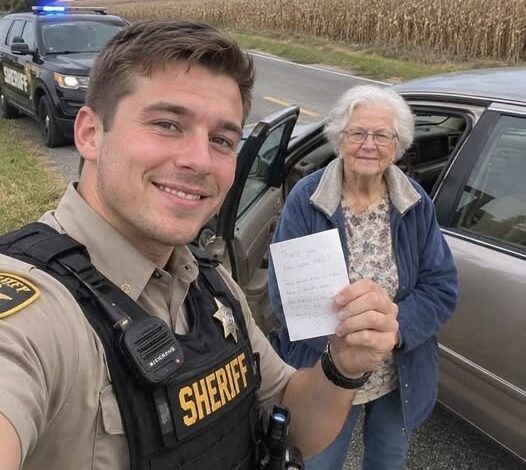
The deputy held my mother’s yellow temporary license up to the light, with his thumb beside a dark mark near her address.
“Did they tell you what this meant at the license office?” he asked.
“No,” Shirley said. “They gave me the paper and said my new card would come in the mail.”
I had the lemon bar pan balanced against my hip. Its lid shifted when I leaned forward to see the mark, and I caught the edge before it could slide off.
“Is there a problem?” I asked.
“I can’t make out the notation.” The deputy lowered the paper. “I’d like to check it before I send you on your way.”
Shirley looked toward the Buick. “That’s fine. Is there somewhere I should wait?”
“Right here for now, ma’am. I’ll need a few details first.”
His name tag said Allen. He looked about the age of the younger salesmen in my office, though he spoke with a careful slowness that made me want to answer for my mother.
Instead I looked at my watch. It was 1:11, and the church ice cream social opened at 2:30. Shirley had promised to bring the lemon bars before the serving table got crowded.
“We have a church social,” I said. “Would it be possible to check it quickly?”
“Quickly,” Allen repeated. He tapped his pen against his notebook before writing. “I’ll do what I can.”
Shirley held out her hand for the pan, but I kept it. Powdered sugar clung to the rim under the clear lid, and the pan was still warm from her kitchen.
“I can hold this,” I said.
“I know you can. You’re tipping it.”
I leveled the pan. Allen asked Shirley for her date of birth, then wrote it down. He checked the address against what she told him, but his pen stopped beside the mark on the yellow paper.
“Did you renew in person?” he asked.
“Yes. At the licensing office in Benton, last Tuesday.”
“Last Tuesday.” He wrote that down too. “And this is the paper they gave you there?”
“It is. You’re welcome to look at it as long as you need.”
I shifted the pan to my other hand. “The road is right there,” I said. “Could we wait by the car?”
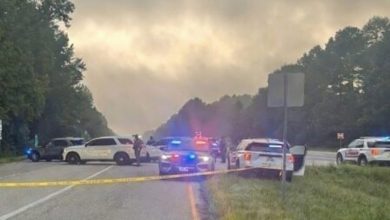
Allen glanced toward the traffic on County Road 6. “Yes. Stay on the shoulder, please. I’ll come over when I’ve made the inquiry.”
Shirley walked around to the passenger side, and I followed her. The Buick’s open door gave us a narrow patch of shade, though the cloth seat still held the afternoon heat.
“I should have put the pan in the trunk,” I said.
“And had it slide from one side to the other?” She reached over and pushed the lid down at one corner. “Keep it level, Jeffrey.”
“Would it be possible for me to carry it out of the sun?”
“You can carry it over here. I’ll carry it into church myself.”
“You’ve already carried it from your kitchen to the car.”
“And I expect to make it from the parking lot to the table.” She gave the lid another pat. “Thank you for offering.”
I moved closer to the open door, holding the pan where the shade covered most of it. Shirley leaned against the Buick and looked back at Allen, who stood beside his patrol vehicle with her license in one hand.
“He didn’t say how long,” I said.
“No. He didn’t have an answer yet.”
“The ladies setting up will wonder where your bars are.”
“They’ll have ice cream. Nobody has to wait for my bars to start.”
She had paid three dollars for each of our social tickets and tucked them into her handbag that morning. I had told her she could save my ticket until I was sure I could get away from work. She had bought it anyway.
“I could call the church,” I said.
“There’s no need yet. We have more than an hour.”
She rested her hand on the edge of the door. “Did you remember the serving knife?”
I looked down at the lid. A knife lay beneath it, wrapped in a paper napkin, right where she had placed it.
“You put it in.”
“I did. I wanted to hear you say you saw it.”
Allen approached before I could answer. He had the yellow paper and his notebook together in one hand.
“Mrs. Hagen, may I see your registration?” he asked.
“Yes. Give me a minute, please.”
I set the pan on the passenger seat while she opened her handbag. The lid rattled against the metal rim, and I steadied it before it could move again.
“I’ll get it from the glove box,” I said.
“No, it’s in here.”
She pulled out her wallet, the social tickets, and a folded receipt. The receipt had four dollars written across the top beside the word milk. She put it back and reached into a narrow pocket along the lining.
Allen waited by the front fender. He tapped his pen against the notebook, then held it still.
“Do you keep a copy somewhere else?” I asked.
“I keep the registration in my bag.” She separated two envelopes with her thumb. “The insurance card is with it.”
“You don’t have to find the insurance card for me,” Allen said. “I only need the registration.”
“Registration,” Shirley said. “I’ve nearly got it.”
I watched her take out a small packet held by a rubber band. She slipped the band off, sorted through the papers, and handed Allen a folded sheet.
“Here you are. The registration.”
“Thank you, ma’am.”
I had been reaching for the glove box latch when she found it. There were other papers in her packet, their corners softened from being handled, and she tucked them back before I could see what they were.
Allen unfolded the registration beside the yellow license. “Same address,” he said, and copied a line into his notebook.
“Has she done something wrong?” I asked.
“I haven’t said that. I need to check the notation and verify the license.”
Shirley put the rubber band around her remaining papers. “I renewed because my old card was about to expire,” she said. “I didn’t want to wait until the last day.”
“Last day,” Allen repeated. “No, ma’am, that’s sensible.”
He handed the registration back. She put it into the handbag pocket by itself, then closed the clasp.
“Can I keep this with me?” she asked, touching the yellow paper.
“I need it for the check, if that’s all right.”
“All right. Thank you for asking.”
The pan sat on the passenger seat, with one corner of the lid raised again. I pressed it down and lifted the pan before Shirley could reach for it. She moved toward the open doorway, and I stepped aside.
“I can put it back on the floor,” I said.
“Not yet. There might be grit from my shoes.”
I held it while she sat on the edge of the seat. She smoothed her dress over one knee, then drew her feet back onto the gravel. The clock on the Buick dashboard read 1:20.
“We’re still early,” she said.
“For now.”
“You sound like you did when you missed the turn for the high school.”
“I didn’t miss it.”
“You took the long way, then.”
I gave her a look, and she smiled. We had taken that road for years when I played football. Most Fridays she had been at work, and I had gone home with somebody else’s parents or waited for her to pick me up afterward.
“The home game against Mill Creek,” I said. “You were working that night too.”
She looked up at me. “Yes, I was.”
“We won by two points. I kept looking toward the gate because you said you might make it.”
“I remember that game.”
“You weren’t there.”
“No. I wasn’t.” She touched the edge of the pan, keeping it steady against my arm. “I remember more of those Fridays than you think.”
I waited for her to say how. A car passed us on the road, and Shirley turned her face away from the dust it left.
“What do you remember?” I asked.
She reached into her handbag and took out the two church tickets. She checked that they were still together, then slipped them back into the pocket.
“More than whether you won,” she said.
I had spent years telling myself that the games hadn’t mattered much to her. When I asked what else she knew, she looked past me toward Allen.
He had opened his notebook again. “Mrs. Hagen, I’m going to check with dispatch now.”
“All right,” she said. “We’ll be here.”
I set the pan back on the seat and put one hand over its lid. Shirley rose and stood beside me, close enough that our sleeves touched.
“Would it be possible to tell us when you hear back?” I called.
“Yes, sir. I’ll come right over.”
Allen carried the yellow paper toward his patrol vehicle.
Shirley touched the corner of her eye and asked if I had a tissue. I had a clean handkerchief at home, but that did her no good beside County Road 6.
“There might be one in the glove box,” she said. “If it has not turned to dust.”
I opened the passenger door and pulled the latch. The box dropped against my knee, showing a stack of napkins, a tire gauge, and an envelope with a corner folded under.
“Do you want a napkin?” I asked.
“That will do. Pick one from the middle.”
The first two had a gray line across them where the latch had caught. I pulled a clean one free and handed it to her. Underneath was a thin yellowed sheet, folded twice.
I opened it enough to see the name of my high school and a column of dates. The ink had faded, but the word FOOTBALL was still clear across the top.
“Where did you get this?” I asked.
Shirley took the napkin and touched it to her eye. “From your school. They gave them out at the start of the season.”
I turned the paper over. On the back, in her handwriting, were milk, eggs, and coffee. Farther down she had written butter, then crossed it out.
“You used it for a grocery list.”
“Yes. I did not have another piece of paper handy.”
I held it by the fold. One corner had gone soft from rubbing against the other papers in the box. There was a faint circle around one of the Friday dates on the front.
“Did you know it was still in here?” I asked.
“I did. Please do not throw it away.”
“I was only looking at it.”
“I know. You have a way of clearing out a car when you get started.”
I set the schedule on the passenger seat. She had kept it even after the groceries were bought, and I could not see why.
Allen came back with the registration in one hand and the temporary license in the other. He stood where Shirley could see both papers.
“The addresses match,” he said. “I compared the street and the number.”
“That is my address,” Shirley said. “Thank you for checking it.”
He placed the registration against his notebook. “The mark beside it on the temporary license still has not been clarified through the records system.”
“Has not been clarified?” I asked.
He tapped his pen against the notebook before writing. “The inquiry went through. I have not received an answer about that mark.”
Shirley held out her hand for the registration. Allen passed it to her, and she returned it to her handbag, fitting it behind a small zippered pocket.
“Do you need that again?” she asked him.
“I may. Could you keep it handy for now?”
“Yes. I know where it is.”
She closed the clasp but kept the bag on her arm. I looked toward the patrol vehicle, where the screen was visible through the open window.
“Is there someone you can call?” I asked.
“I sent the inquiry through our system,” Allen said. “I will follow up if I need to.”
“Would it be possible to see what it says?”
“See what it says.” He glanced toward his vehicle. “Yes, come over to the window.”
I started to follow him, then looked back at Shirley. The pan was still where I had left it, and the lid had slipped a fraction to one side.
“I will stay right here,” she said. “Go ahead.”
At the patrol vehicle, Allen moved his notebook off the passenger side so I could lean close enough to read the screen. The letters were small, and he pointed to a line near the bottom.
“That is the request I sent,” he said.
The line showed her name and a status. Pending.
“Does a simple renewal normally take this long?” I asked.
“Sometimes a response comes back quickly. Sometimes it takes longer.”
“How much longer?”
“I cannot give you a time.”
He tapped the screen with his pen, then pulled his hand away without touching it again. There was no answer under the request, only a space where one could appear.
“Could the mark be holding it up?” I asked.
“It could be part of what they are checking. I do not want to guess before they answer.”
I read the line again. The word was still there, small and unchanged.
“Does this mean her license is all right?” I asked.
“It means the inquiry is pending. I still need the response.”
He turned the screen slightly toward himself and checked the date on his notebook. Shirley was watching us from the Buick, her handbag tucked close to her side.
“We have to get to church,” I said. “The social opens at two thirty.”
“Two thirty.” Allen wrote the time beneath his notes. “I understand you have somewhere to be. I will let you know as soon as I have an answer.”
“Could you ask them to hurry?”
“I can check on the inquiry. I cannot promise that will make the response come sooner.”
He set the pen across his notebook. I had expected to see an error message or a blank field he could fill in. There was neither.
Back at the Buick, Shirley had picked up the schedule. She held it open with both hands, keeping the thin fold from splitting.
“Did you find out anything?” she asked.
“The request is in. It says pending.”
“And the mark?”
“He is still waiting on that too.”
She folded the schedule along the old lines and handed it to me. “Put it somewhere safe, please. It has lasted this long.”
I laid it across the seat again, away from the open door. She looked down at the pan, then at the strip of sun reaching across its lid.
“Those bars are getting warm,” she said.
“I could move them into the car.”
“Yes, if you can find a flat place. I do not want lemon filling on the upholstery.”
The cloth seat held the afternoon heat when I pressed my palm against it. I crouched and looked into the passenger footwell. The floor mat lay level, and the space was out of the direct sun.
“Here?” I asked.
Shirley bent to look. “The footwell will be fine. Make sure the pan is not sitting on that buckle.”
I moved the loose seat belt buckle to the side, then lifted the pan with both hands. The metal was warm at the rim, and powdered sugar clung there where the lid did not quite cover it.
“Watch that corner,” she said.
“I have it.”
“You said that when you carried my birthday cake.”
“The cake made it to the table.”
“Most of it did. Your uncle got a very large slice from the lid.”
I lowered the pan onto the mat. Shirley checked it from the doorway while I pressed lightly on each side.
“It is flat,” she said. “Thank you.”
The lid rattled once as I settled it. I left it closed and pulled my hands back so I would not tip the pan trying to improve its position.
“I will bring it in when we get there,” I said.
“No, I will carry it. You can open the door for me.”
“That sounds like a fair division of labor.”
“It does to me.” She rested one hand on the door frame. “Did the screen say what the delay was?”
“No. But it has to be a computer error. They would have answered by now if the system were working.”
“Has to be?”
I looked toward Allen. He had returned to his seat and was writing something in his notebook before checking the screen again.
“The addresses match,” I said. “The renewal is right there on the paper. What else could it be?”
“I do not know, Jeffrey.”
“Neither does he, apparently.”
“No. A screen saying pending is not the same as an answer.”
I reached for the passenger door, then stopped before closing it. The pan was safe on the floor, but the schedule lay across the seat, where someone could sit on it or it could slide out.
“Did you circle this date?” I asked, opening the paper again.
Shirley came closer and looked at the faded mark. “I may have. I do not remember making that circle.”
There were other dates printed below it, some close together. I tried to place the season, but the grocery list showed through the thin paper and made the numbers hard to read.
“You could have written the list on anything,” I said.
“I could have. That was what I had.”
She took the napkin from her hand and tucked it into her handbag. Across the road, a truck passed, and I waited until we could hear each other again.
“You really want to keep it?” I asked.
“Yes, I do. Thank you for asking.”
The glove box still hung open. I picked up the schedule, folded it on its old creases, and put it back.
Shirley reached past me and pressed the glove box shut.
“The map is in the back,” she said. “Under the blanket.”
I opened the rear door and found a folded county road map beneath a thin blue blanket. The Buick’s cloth seat held the afternoon heat, and the paper had softened along its creases.
“Are you planning another way to church?” I asked.
“I thought we might need one. Bring it over here.”
She sat sideways on the back seat with her feet on the gravel. I stood beside her and opened the map across the cushion. One corner caught under my hand, and the paper folded in on itself.
“Which way is north?” I asked.
“Turn it once to the left.”
I did, but before I found County Road 6, she had put her finger on a narrow line near the center.
“There’s the courthouse road,” she said. “We could take that down to Main, then turn by the bank.”
“You found it before I even got the map open.”
“Yes. You had it upside down, honey.”
I looked at the print again. She was right. I had been trying to read the river as a road.
The corner near the courthouse was creased more heavily than the rest. A little square had been marked in pencil, though I could not tell whether it was the building or the block around it.
“Did you draw that?” I asked.
“I may have. It’s been there a long time.”
She traced the road from the courthouse toward the church with one finger. I watched her pass over two intersections without stopping to read their names.
“Would that save us much?” I asked.
“Maybe a few minutes. Not enough to make up for standing here.”
The social opened at 2:30. The women at the serving table would be setting out the desserts before then, making room for cakes and pies and Shirley’s lemon bars. She had told them she would bring a full pan.
I pointed to another road. “This one looks shorter.”
“It does on paper. There’s a stop sign at each end, and you have to cross Main twice.”
“All right. Courthouse road.”
“If Allen lets us go in time to use it.”
She lifted the map closer to her glasses and checked the turn again. Her nail stopped beside a bend I had missed.
“How did you find that so fast?” I asked.
She glanced up at Allen’s patrol vehicle. “I’ve looked at this county a few times.”
Allen came around the back of the Buick with the yellow paper in his hand. He kept it clear of the gravel as Shirley stood, and I took the map before it slipped from her lap.
“There’s a number beside that mark,” he said. “I’m going to ask dispatch what it refers to.”
“Is that all you need?” I asked.
“The number first. Then I still need the records response.”
Shirley stepped over to the trunk, and I followed with the map folded loosely in my hands. Allen held the paper where he could read it and called Kim on his radio.
“Kim, I have a notation next to the address on a temporary renewal,” he said. “Can you check the number for me?”
“Allen, go ahead with the number.”
He read the digits slowly. Shirley leaned against the trunk, keeping one hand on the metal edge. I looked toward the open passenger door, where the pan sat in the footwell.
“Did you get all of that?” Allen asked.
“The last digit again, please.”
He repeated it. There was a pause, and he checked the paper while we waited.
“Could it be a seven?” I asked. “That print is small.”
Allen turned the page toward us. “It looks like a one to me.”
Shirley bent closer. “It’s a one. There’s no line across the top.”
“One,” Allen said. He tapped his pen against his notebook and wrote it down.
I wanted Kim to answer before he closed the notebook. A truck passed on the road, and I waited for its noise to fade. Allen kept the radio near his shoulder.
“Kim, I want to make sure I gave you the right sequence,” he said.
“Allen, you did. I’m checking the notation now.”
Shirley moved her hand from the trunk to the edge of the map I was holding. “Don’t fold that part backward,” she said. “It’ll tear.”
I eased the paper open. The courthouse corner had nearly separated at one crease, and I held the two sides together while Allen waited for Kim.
“Kim, is that number for the renewal office?” he asked.
“Allen, yes. It’s a routine licensing office notation. The mark beside the address is part of their processing.”
“So the mark is all right?” I asked.
“The notation is ordinary,” she said. “The full license status still has to come back through records.”
Allen looked at Shirley. “That gives me an answer on the mark. I can’t finish until the other response comes in.”
“All right,” Shirley said. “Thank you for checking it.”
She did not ask him how much longer. I did, but the radio sounded again before he could answer.
“Allen, the records request is still pending,” Kim said.
He acknowledged her and lowered the radio. Shirley looked at the map in my hands, then toward the church road beyond the patrol car.
“Would it be possible for us to use the car while you wait?” I asked. “We could get the bars there and come right back.”
“I need you to stay here until the check is complete,” Allen said.
Shirley reached for the map. “I don’t want those bars riding around without me, either.”
“You think I’d eat them?”
“I know you’d test one. You always ask whether the corner pieces are spoken for.”
“The corner pieces have more crust.”
“They do,” she said. “That’s why they’re mine.”
I gave her the map. Allen went back to the patrol vehicle, and I followed him to the open window. His notebook lay on the seat beside him, open to a page with the address and a line of numbers.
At 1:39, he checked the yellow paper against what he had written. He tapped his pen once against the notebook before adding Kim’s answer.
“What does that say?” I asked.
“Routine office notation.” He turned the notebook a little so I could see. “I’m keeping the number with the rest of the inquiry.”
I read the words, then looked at the screen inside the car. The inquiry was still there.
“Kim knows what the mark means,” I said. “What is the separate response for?”
“The license status. The notation doesn’t tell me whether the renewal is valid.”
“Didn’t the office issue the paper?”
“Yes. But I have to complete the records check.”
He laid the pen across the notebook and checked the screen again. I kept my hand on the window frame, waiting for him to say it had changed.
“Would it be possible to call the licensing office directly?” I asked.
“The request goes through records. Kim is checking it through the proper channel.”
“Can you see how many requests are ahead of ours?”
“No. I can see that ours is pending.”
He picked up his pen and drew a line beneath the notation. I glanced at my watch. Eleven minutes had passed since I had asked him about the renewal at this same window.
“The social starts at 2:30,” I said.
“Two thirty,” he repeated. “I’m sorry I can’t give you a time.”
A strip of receipt paper lay on the seat beside his notebook. I picked it up, aligned its curled edge with the notebook, and put it back down.
“That mark is ordinary, but I still need the status,” he said. “As soon as I get it, I’ll let you know.”
Behind me, Shirley had moved to the Buick’s open front door. She was trying to fold the map against the steering wheel without letting it touch the floor.
“I should help her,” I said.
Allen nodded, but his eyes went back to the screen. I crossed the gravel, taking care not to catch my shoe on the edge of the shoulder.
At 1:42, Shirley handed me one end of the map. She had managed the first two folds, but the courthouse corner kept opening.
“Hold this side even,” she said. “Not too tight.”
I took the paper between my fingers. The old creases guided most of it, though one section wanted to turn the wrong way.
“Is it the left fold first?” I asked.
“Yes. Then the bottom comes up.”
The pan had shifted in the footwell. One end rested against the raised edge of the floor mat, and the lid sat higher on that side.
“Jeffrey, set the pan flat again, please.”
I crouched beside the door. “I thought the mat was level.”
“It was until I moved my feet.”
I lifted the pan with both hands and slid the mat back. Powdered sugar clung to the rim of the metal pan beneath the lid.
“Can you see under that end?” I asked.
“Move it toward me an inch.”
I did, and she leaned down to look. She put her hand on the lid while I shifted the pan clear of the mat. It settled flat against the floor.
“That’s better,” she said. “Thank you.”
I touched the lid to make sure it had not slid off. “We’ll still have something to put on the table.”
“Of course we will. They may have to use a spoon on the first row.”
“Then I’ll take a spoon.”
“You can wait until everybody else has had one.”
She held out the map again. I took the end she offered, and she tucked a narrow strip inward along its crease.
“Did you mark the church on here too?” I asked.
“No. I know where the church is.”
“I thought you knew where the courthouse was.”
“I do. A mark can help somebody else find it.”
She pressed the folded sections together. The pencil square remained visible near the worn corner, separate from the printed streets around it.
“Who needed the mark?” I asked.
She glanced toward Allen, who had stepped out of the patrol vehicle with his notebook. “Let me get this folded first.”
I held the last flap while she brought the two sides together. The map closed with the courthouse square exposed at the fold.
Shirley tucked the map beside her purse. Allen was coming back across the shoulder, his notebook open in one hand.
“Would it be possible for her to wait in the Buick?” I asked. “She could sit down while you finish.”
Allen looked through the open door, then at Shirley. “I have a few questions first. I need to hear her clearly, and the radio is easier to use out here.”
“She can hear you from the seat.”
“I can, Jeffrey,” Shirley said. “But let him ask.”
Allen tapped his pen against the notebook. “I won’t keep you standing longer than I have to.”
The cloth seat was right behind her. I put my hand on the door frame and moved it again.
“Are these questions about the mark?” I asked.
“No. That part has been explained. I’m checking the information on the renewal.”
He turned a page in his notebook. The corners had curled where he held them, and he pressed one down with his thumb.
“Is your current address the same one printed on the yellow paper?” he asked Shirley.
“Yes, it is.”
“And there hasn’t been a recent move?”
“No. I’ve been there a good many years.” She tipped her head toward me. “Jeffrey can tell you how long. He still brings his mail there by mistake.”
“Once,” I said.
“Twice. One was a catalog.”
Allen gave a brief smile and wrote down her answer. I could have corrected her about the catalog, but she was watching him work, not me.
“Can she sit now?” I asked.
“I have another question for the records check. Then I’ll see where we are.” He closed the notebook around his pen. “I need to speak with dispatch first.”
He walked back toward the patrol vehicle. Shirley rested her hand on the open driver door and waited until he was out of earshot.
“Jeffrey, would you come over here a minute?”
I stepped beside her. The door gave us a little cover from the road, though we could still see Allen at his window.
“You don’t have to argue every question for me,” she said.
“I asked if you could sit.”
“I heard you, and I appreciate it. But he’s checking the paper. Let’s keep our voices level while he does.”
I looked down at the gravel caught along the edge of the door. “I wasn’t raising mine.”
“No, but you were getting ready to.”
She reached past me and took the football schedule from the glove box. One corner had caught under the latch when I put it back. She freed it and held the sheet by its fold.
“I didn’t mean to leave this sticking out,” I said.
“You didn’t. The corner has been like that for years.”
The old list faced me when she turned it over. Milk was near the top, followed by eggs and a word she had crossed out so heavily I couldn’t read it.
“What was that supposed to be?” I asked.
“Mustard. I bought it before I made the rest of the list.”
“You kept a grocery list all this time?”
“I used the blank back because it was handy. Then I left it in the glove box.”
She turned it again, so the printed games showed. The paper had gone soft along the fold.
“And I liked having a reminder of your school days,” she said.
I took the schedule when she offered it. A few dates had small pencil marks beside them, but the grocery list had been written over part of the print on the other side.
“You could have kept a picture,” I said.
“I had pictures. This was already in the car.” She held out her hand. “May I have it back?”
I gave it to her. She slid it into the glove box without trying to smooth the corner.
I wanted to ask about the marks, but Allen was standing by the patrol vehicle with the radio in his hand. He put it down and looked at us through the window.
“Do you need her again?” I called.
“In a minute. I’m waiting for Kim to get back to me.”
Shirley closed the glove box. “You can ask about the schedule later.”
I went over to Allen while she stayed beside the Buick. He had laid the yellow paper on his notebook, with his pen across the top so the breeze wouldn’t lift it.
“Would it be possible to use the registration for the address?” I asked. “You’ve already compared them.”
“I have. I still need to document her answer.”
“She gave it to you.”
“She answered whether it was current. I need her to tell me the address.”
I looked back at Shirley. She was checking the Buick door, pushing it until the latch caught, then leaving it open a few inches.
“She knows her address,” I said.
“I expect she does.”
“Then why not ask her and let her sit down?”
“I will ask her. I was waiting until I could hear the radio response before I took another answer.”
He lifted the pen and turned the yellow paper toward himself. I could see the office mark beside her address, the one Kim had already explained.
“My mother is careful with information,” I said. “She worked for the county, answering phones.”
Allen paused with his pen above the notebook.
“She worked for the county,” he repeated.
“At the sheriff’s office. For years. If she gives you an address, you can rely on it.”
“The same check applies to everyone, sir.”
I heard the sentence before I noticed Shirley had come up behind me. She had shut the Buick door after all, and the keys were in her hand.
“I can tell him my own address,” she said.
“I know you can.”
“You’ve always had trouble remembering my ZIP code, though.”
“I know the first three numbers.”
“That leaves two.”
Allen lowered his head over the notebook, but I saw the corner of his mouth move. He tapped the pen once against the paper and wrote down the date.
I wished I had kept my mouth closed. I had meant to help, and the sentence I had used was still there between the three of us.
“Did you need the ZIP code now?” Shirley asked him.
“I’ll need the full address in a moment. Kim may want to hear it too.”
The radio made a short sound, and Allen picked up the microphone. He answered, then listened with his head turned toward the speaker.
“Kim, I have the document here,” he said. “I’m ready when you are.”
A voice came through, too low for me to make out the first few words. Allen adjusted the volume and glanced at his notes.
“Same address on the registration,” he said. “She confirmed it’s current.”
He listened again, then set his pen against the notebook.
“She would like you to say the address yourself,” he told Shirley.
“Of course.” Shirley moved closer to the open window. “Do you want the ZIP code too?”
Allen lifted the microphone. “Full address, including the ZIP.”
She gave it clearly, from the house number through the last two digits I had claimed I could remember. Allen wrote while she spoke, stopping her once to check the street name.
“That’s right,” she said when he read it back. “Thank you.”
He repeated the address over the radio. I stayed where I was, near the back edge of the window, with no question left to ask about it.
Kim answered him, then stopped. The speaker was quiet long enough that Allen looked down at the microphone as if he might have missed a button.
“Allen,” she said, “who gave you that address?”
“The driver. Mrs. Hagen.”
“Mrs. Hagen.” Kim left a small space after the name. “I thought I recognized that voice.”
Shirley leaned toward the window. “Kim?”
Allen looked from her to the speaker. “You know each other?”
Shirley opened her mouth, but Kim came back over the radio before she could answer.
“Allen, would you let her come close enough to say hello?”
Allen stepped aside, and Mom moved up to the open window. He held the microphone toward her, then waited until she had a hand on the door to steady herself.
“Shirley,” Kim said, “is that really you?”
“Yes, Kim. It’s good to hear you.”
“You sound exactly the same.”
“Well, I hope you don’t mean I still sound tired.”
Kim laughed. “No. I meant you sound like Shirley.”
Allen looked from Mom to the radio. “Shirley Hagen,” he said, and tapped his pen against his notebook.
“That’s right,” Mom said. “Kim, I hope we aren’t keeping you from something.”
“Shirley, I can do this while I’m on duty. I’ve sent the renewal inquiry through the licensing records channel. We still have to wait for their answer.”
I leaned closer to the window. “Would it be possible to find out how much longer they expect it to take?”
“Jeffrey,” Kim said, “I can ask, but they haven’t given me a time yet.”
Mom turned toward me. “She’ll tell us when she hears.”
I stepped back, leaving room for her at the window. Allen kept the microphone where she could reach it, though he still had the yellow paper in his other hand.
“Kim, do you need anything else from me?” Mom asked.
“I might. Keep the document nearby, Allen. I want to check the numbers before I send another message.”
Allen laid his notebook open on the edge of the window. A corner of the yellow paper stuck out beneath it, and he moved it clear of the glass.
Mom glanced toward the Buick. “Jeffrey, would you make sure that pan is still flat?”
“I set it in the footwell.”
“I know where you set it. I asked if it was flat.”
I went around the patrol vehicle and looked through the Buick’s open doorway. The pan had stayed where I put it, with one end of the lid close to the seat rail. I slid it an inch toward the middle.
When I came back, Mom was standing on the verge, waiting while Allen spoke to Kim. She rubbed the back of her neck, and I remembered the bottle of water in the Buick.
“Would you like some?” I asked.
“Yes, please. There’s one in my handbag if you can reach it.”
The bag was on the passenger seat. I found the bottle in a side pocket, beside a packet of tissues and a pen with no cap. The water was warmer than I would have liked.
“Sorry,” I said, handing it to her. “It’s not cold.”
“It’s wet. That’s the important part.”
She twisted the cap and took a drink. Then she held the bottle out to me.
“You have some too.”
“I’m all right.”
“Take it, Jeffrey. You’ve been talking more than I have.”
I drank and handed it back. She put the cap on without tightening it all the way, ready for another swallow.
From the patrol window, Allen said, “Renewal date?”
Mom started toward him, but I reached the window first. “She renewed it at the licensing office. It should be right there on the paper.”
“Jeffrey,” Kim said over the radio, “Shirley, tell me the renewal date yourself.”
Mom came up beside me. Allen shifted the notebook so she could see the yellow document beneath it.
“June twelfth,” she said.
“June twelfth,” Allen repeated. He tapped his pen once, then wrote it down.
“I went in the morning,” Mom added. “The woman there told me the card would come by mail.”
“Shirley, that fits with what you have,” Kim said. “I still need the records response to confirm the status.”
I had opened my mouth to offer the registration again. Mom was looking at the yellow paper, so I closed it and moved a step away.
Allen checked his notes. “The registration address matches the address on the temporary paper. I wrote that down earlier.”
“Allen, thank you,” Kim said. “Let me see what else they need from us.”
Mom took another drink. She had a small spot of powdered sugar on the front of her blouse, just below the buttons. I pointed it out, and she brushed at it with the side of her hand.
“That will be from the pan,” she said.
“From carrying it through your kitchen, you mean.”
“Yes. I was there. I remember.”
The corner of her mouth lifted. I took the bottle when she offered it again and set it on the Buick’s passenger seat, where she could reach it.
By two o’clock, Allen had his notebook open against the patrol window. Kim asked him for the renewal date and the document number together.
He did not answer at once. He turned back a page, checked his entry, and tapped his pen before reading the date.
“June twelfth,” he said. “The document number is here too. I want to make sure I copied it correctly.”
He lifted the yellow paper into the light and compared it with the notebook. I stood close enough to see the columns he had made, one for the question and one for the answer.
“Did you get all of it?” I asked.
“Yes,” he said. “I’m checking the last two digits.”
Mom watched him without reaching for the paper. The folded county map was visible on the Buick’s front seat, its courthouse corner showing beside the water bottle.
“Allen,” Kim said, “read the number from the document to me, please.”
He did, slowly enough for her to write it down. Then he read the number from his notebook and compared the two.
“They match,” he said.
“Good. I’ll put them with the date in the request.”
I looked at my watch. The social would open at two thirty, and we still had to get the pan onto the serving table. Mom had bought our tickets in advance and put them in her purse with the registration.
“Would it be possible for me to take the pan on ahead?” I asked.
Mom looked toward the Buick. “How would you get there?”
I looked at the empty road in both directions. “I hadn’t worked that part out.”
“You could carry it,” she said. “It would be a long walk.”
Allen tucked his pen into the spiral of his notebook. “I’ll let you know as soon as we have an answer.”
“I appreciate that,” Mom said. “And the bars will get there when they get there.”
I wanted to tell her that people would be waiting for them. Instead I went back to the Buick and checked the lid without lifting the pan. One corner sat a little higher than the others, but the cover stayed on when I touched it.
Mom followed me as far as the open doorway. She rested her hand against the roof and looked into the footwell.
“Still level?” she asked.
“Yes.”
“Then leave it alone for a minute.”
I moved my hand away. The map had slipped against the water bottle, so I picked it up and placed it on the rear seat. The creases opened slightly as I set it down.
From the patrol vehicle, Kim called, “Shirley, are you still there?”
“Yes, I am.” Mom turned toward the open window. “I was checking on my lemon bars.”
“Lemon bars?”
“For the church social. Jeffrey has inspected them several times.”
“I have not inspected them,” I said. “I’ve been trying to keep them from sliding.”
“Shirley,” Kim said, “save me one if I get there in time.”
“I’ll try. You know how that table looks once people start through.”
“I do. Put one under a napkin for me.”
Mom shook her head. “I’m not hiding food at a church social, Kim.”
“Then I’ll take my chances.”
Allen stepped away from the radio while Kim worked. He looked toward the Buick’s passenger side, where the open door cast a narrow patch of shade on the gravel.
“Would you rather wait over there?” he asked.
“We can stand here a little longer,” Mom said. “Thank you for asking.”
He nodded and returned to his notes. I stayed beside Mom, close enough to hear the radio without leaning into the patrol vehicle.
Kim came back a minute later. “Shirley, I nearly forgot. I found an old photograph when I was looking through a drawer last week.”
“Did you?” Mom asked. “I thought you had put all your photographs in albums.”
“I meant to. This one never made it that far.”
“What photograph?” I asked.
Kim did not answer me at once. There was a sound of paper moving near her microphone, followed by her voice again.
“I’ve kept it for years, Shirley. I’ll bring it when I see you next.”
“You don’t have to go hunting for it,” Mom said.
“It’s already out of the drawer.”
Mom leaned a little closer to the radio. “Am I going to wish you’d left it there?”
“I don’t think so.”
“That is not a yes or a no.”
Kim laughed. “No, Shirley. You won’t have to hide it under a napkin.”
Mom gave me a brief look, but she did not explain the photograph. I had seen the albums she kept at home, with school pictures and weddings fitted into clear sleeves. I could not think which picture Kim might have kept.
“Can you tell us when you’ll be at the social?” I asked.
“Jeffrey, I’ll come after my shift if there’s still time. First I need to finish this check.”
Allen put his pen against the notebook again. “Do you need the number once more?”
“I do. I want to compare it with what I wrote before I send it.”
Mom moved back toward the Buick doorway, and I followed her. She picked up the water bottle from the seat and took another drink while Allen read from the yellow paper.
“Is that the same as your notes?” Kim asked him.
“It is.”
I could hear him turn a page. Mom held the bottle by its middle, the loose cap resting in her palm, while we waited for Kim to answer.
“Allen,” Kim said, “I have the document number. Keep the radio clear while I check.”
Allen lowered the radio handset and looked toward the Buick. The passenger door was still open, and the seat was shaded now.
“Mrs. Hagen, would you rather sit down while we wait?” he asked. “I can come over there if I need to ask you anything else.”
“Yes, thank you,” Mom said. “I brought the chair with me, so I might as well use it.”
He stepped aside, and I held the door while she eased herself onto the passenger seat. She smoothed her dress over one knee and set the water bottle upright beside her.
“The seat’s cooler than it was,” she said. “That’s a welcome change.”
Allen leaned down enough to see her without making her turn. “Do you have enough water?”
“I do. Jeffrey made sure of that.”
I picked up the cap she had set on the sill and handed it to her. She screwed it onto the bottle and looked down at the pan in the footwell.
“Don’t put your shoes against that lid,” she said. “I don’t want you wearing lemon to church.”
“I thought it might improve my suit.”
“It might improve the shoes. I’m not sure about the suit.”
Allen smiled, then glanced toward his vehicle. “I’ll be close by. If Kim needs anything, I’ll bring the radio over.”
“Would it be possible,” I asked, “for us to leave as soon as she answers?”
“As soon as the status is confirmed and I finish my notes,” he said. “Yes.”
That sounded close enough to a plan that I looked at my watch. There were twenty-five minutes until the social opened.
Mom noticed me looking. “They won’t shut the doors at two thirty.”
“I know. You promised to have the bars there when they opened.”
“I promised to bring them. The bars weren’t given an appointment.”
I reached into the footwell and nudged the pan a little farther from her feet. The lid shifted under my fingers, though I could not see which corner had lifted.
Allen had returned to the open driver door. “Mrs. Hagen, could I ask you one more question?”
Mom turned toward him. “Of course.”
He held his notebook against the roof of the Buick. “Would it help to have the license in front of you for your address?”
“No, thank you. I can tell you.”
He nodded and waited, his pen poised over the page. She gave him her street address and Benton, Ohio, without reaching for her handbag.
“Ohio,” he repeated. He tapped his pen against the notebook before he wrote.
I kept one hand on the passenger door. “The address is on the registration, isn’t it?”
“It is,” Allen said. “I wanted to hear it from her, too.”
Mom took a drink of water. “Did you get the house number?”
“I did. I wrote it down earlier, but I want to make sure I copy it correctly for the inquiry.”
She leaned toward him across the front seat. “Would you like me to spell the street name?”
“Yes, please.”
She spelled it, and he checked each letter against the registration. A corner of the yellow paper showed beneath it on the roof, held down by the heel of his hand.
“That matches,” he said.
“Good,” Mom said. “You have enough to do without looking for a house on the wrong street.”
He gave her a brief nod, then picked up both papers. I followed him a few steps toward the patrol vehicle.
“Is there another problem with the address?” I asked.
“No. The address matches. I just want my notes to match the records request.”
He rested the notebook on the open window ledge and turned back a page. The lines were crowded, but he had left a space beside the renewal date.
“I wrote the document number here,” he said, pointing. “The address goes below it. Then the date.”
He tapped the pen once before copying the address. When he came to the house number, he checked the registration again instead of trusting the first entry.
“Does Kim need all of that again?” I asked.
“She may not. If the records office asks, I’ll have it ready.”
He wrote the renewal date, paused, and compared it with the yellow paper. Then he drew a small line under the entry and closed the notebook over his finger.
“I don’t want to send her a wrong number and start the wait over,” he said.
I looked through the Buick’s open door. Mom had turned the water bottle in her hands so the label faced her. She was reading it as if it had news on it.
“You’ve been careful,” I said. “Can you tell me whether Kim is nearly finished?”
“Nearly finished?” Allen repeated. He took his finger out of the notebook and closed it. “I can’t see where the request is now.”
“But she’s checking it herself.”
“She is. The reply still has to come from records.”
I watched him set the yellow paper back on the window ledge. “You offered Mom the seat. I thought that meant you were about to let us go.”
“I should have explained that better.” He glanced toward her. “I can make her comfortable while we wait, but I can’t give you a time yet.”
“Not even a rough idea?”
“No, sir. If I guessed, you might count on it.”
He slid the registration beneath the yellow paper and kept both within reach. The radio stayed quiet.
“Do you need anything else from her right now?” I asked.
“Not right now. I’ll tell her if I do.”
I went back to the Buick, leaving Allen beside the patrol window with his notebook in one hand.
Mom had lowered her window a little more. A strip of the folded county map stuck out beside her handbag, with the penciled courthouse corner showing.
“Did he say how much longer?” she asked.
“He can’t tell us.”
She tucked the map farther into the bag. “All right. Did he get the address written down?”
“He checked it twice.”
“That’s better than putting the wrong one down once.”
I leaned against the door frame. “He asked if you needed the paper to remember it.”
“He did.”
“I could have told him you didn’t.”
“You could have,” she said. “I was there, though.”
I moved my hand off the door frame so she could see past me. Allen had opened his notebook again and was reading the line he had written.
“Was that unkind?” I asked.
“I don’t think he meant it that way. He could have asked me for the address first.”
She put the water bottle in her handbag, then shifted the bag against her leg. The map slipped halfway out again.
“I’ll put that in the back,” I said.
“Leave it there. We may want it when we can go.”
I glanced at my watch. It was twelve minutes after two. The second hand moved past the six while I did the arithmetic.
“Eighteen minutes,” I said.
“Until the social opens?”
Mom looked at the pan. “Could you check the lid before we make any more plans about when we’ll arrive?”
I crouched beside the open door. One corner of the lid sat above the rim, leaving a narrow gap.
“Did it come loose when you moved the pan?” she asked.
“It might have. I didn’t hear it.”
“Well, don’t take it off to look. The sugar will end up on your sleeve.”
I put my thumb on the raised corner and pressed. The metal rim caught under the lid with a small click.
“Is it secure now?” she asked.
“Yes. That corner was loose, but it’s fastened.”
“Thank you. That’s one question answered.”
I checked the opposite edge without lifting the pan. Powdered sugar clung to the metal rim beneath the lid, and a little had collected near the handle.
“I could take it out and carry it for you,” I said. “Then you wouldn’t have to reach down for it when we get there.”
“You could take it out,” she said. “I’ll carry it in.”
“I could at least open the church door.”
“I’ll allow that.”
I stood up, and she tipped her head back to look at me. Her hair had shifted where it touched the seat, and she patted it once.
“Do I look ready for a social?” she asked.
“You look ready to tell me what to do at one.”
“Then I look like myself.”
Allen came back around the Buick with his notebook open. He stopped at the passenger door instead of asking her to get out.
“Mrs. Hagen, would you mind giving me the address once more? I want to check my copy against what you say.”
Mom held out her hand. “Would you like me to look at it with you?”
He turned the notebook so she could see. The address sat below the document number in small, neat letters, with the renewal date on the next line.
“The street is right,” she said. “You have the house number right, too.”
“Thank you. I wrote it quickly the first time.”
“Do you need me to say it for your notes?”
“Yes, please. I want to be certain I haven’t missed a digit.”
She glanced at me, then settled back against the seat. The yellow paper was still at the patrol window, well out of her reach.
She gave him her full address without looking at it.
Allen tapped his pen against his notebook. “Thank you, Mrs. Hagen. I have what I need for now.”
“Good,” Mom said. “You have better handwriting than I do, too.”
He looked down at the page. “My instructor might disagree with you.”
From the patrol window, Kim asked, “Allen, can Shirley hear me?”
He leaned toward the speaker. “She can hear you. The records response is still pending.”
“I know. I sent another inquiry.” Kim paused. “Shirley, Dennis is here. He asked me to tell you hello.”
Mom sat forward. “Dennis is there? Ask him if he ever found his good cap.”
Allen glanced at me. “His cap?”
“He had one he saved for occasions,” Mom said. “He kept the old one in his car and spent half his time looking for the good one.”
Kim laughed over the speaker. “Shirley, he says the good one is on his head.”
“That settles it,” Mom said. “Tell him I hope it fits.”
Allen looked toward the county road, where a truck passed without slowing. “Dennis knows Mrs. Hagen?”
“Allen, Shirley and I worked together in dispatch,” Kim said. “Dennis worked with both of us when he was on the road.”
He tapped his pen again. “In dispatch. How long were you there together?”
“Long enough for her to tell me when I was writing too fast,” Kim said. “Shirley, remember my first week?”
“You made your sevens look like ones,” Mom said. “I made you put a line through them.”
“That was the second week. The first week I could hardly find my notebook.”
“You found it under your lunch.”
Allen smiled, then glanced at the screen in his car. “Did you work the same shift?”
“Some days,” Kim said. “Other days I came in while Shirley was finishing. She would leave me the notes I needed before she went home.”
I stood beside Mom’s open door with the bottle of water in my hand. I had called her work answering phones, and Kim was talking about notes passed between shifts.
“Can Dennis hear us?” Mom asked.
“He can now,” Kim said. “Hold on a second.”
There was a faint sound of someone moving near the radio at the county office. Allen reached inside his car and adjusted the volume.
“Shirley?” Dennis said. “I hear you’re keeping Allen company.”
“I am,” Mom said. “He has been very particular about my address.”
“Your address,” Allen repeated. “I needed to make sure my notes matched.”
“You did,” Mom said. “There’s nothing wrong with being particular.”
Dennis gave a short laugh. “She’s the one who taught me to listen for the whole address.”
Mom raised her eyebrows. “I remember you listening.”
“Not that night on County Road 6,” he said. “I got the road number wrong and started toward the courthouse.”
“The courthouse?” I said.
Dennis answered me. “I thought the call was near the square. Shirley asked me to read back what I had heard.”
Mom reached across the seat for the folded map. “You said the road went past a feed store.”
“That’s right,” Dennis said. “She asked which side of the road the store was on. Then she asked whether I had passed the old bridge.”
“I hadn’t,” Mom said.
“You hadn’t either,” he said, and she laughed………………CONTINUED ON NEXT PAGE