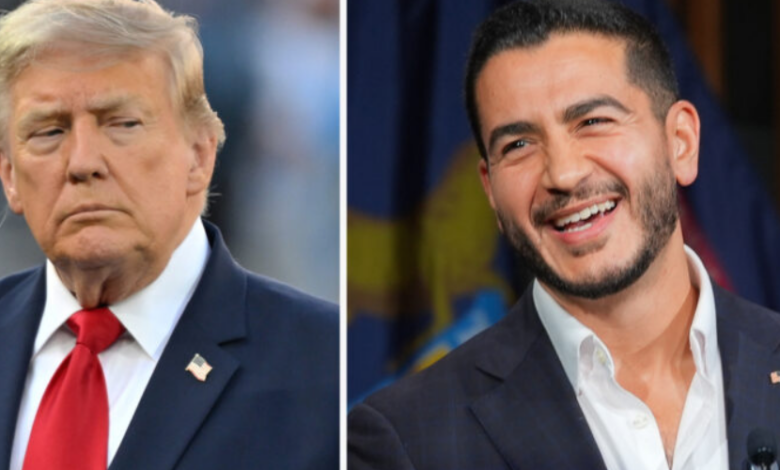
Michigan Senate Victory Puts Abdul El-Sayed in the Spotlight After Remarks About Trump
Abdul El-Sayed celebrated a historic political victory in Michigan after winning a closely watched Senate race, using his victory speech to deliver a pointed message to President Donald Trump and Vice President JD Vance. His remarks quickly attracted attention, particularly because they addressed the criticism he had faced throughout his campaign and highlighted his determination to focus on representation, inclusion, and the everyday concerns of American voters.
During his speech before supporters, El-Sayed thanked the people who had supported his campaign and welcomed him into their communities. He reflected on the trust voters had placed in him, saying, “You took a chance on the unlikeliest of candidates. You welcomed me in your homes, your churches, your synagogues.”
The remarks reflected the broad coalition he had worked to build throughout the campaign. His message emphasized that people with different backgrounds and beliefs could come together around shared priorities and a common vision for the country’s future.
A Historic Moment for Michigan Politics
El-Sayed’s victory marked an important moment in Michigan’s political history. His campaign had attracted considerable attention, with voters closely following the contest because of its potential implications for the balance of political power in Washington.
The race also placed a spotlight on questions surrounding representation and the importance of welcoming candidates from different communities into public office.
Throughout the campaign, El-Sayed faced criticism from political opponents. Some of the comments focused on his background and Muslim identity, creating additional attention around his candidacy.
Rather than allowing those disagreements to define his entire campaign, El-Sayed frequently returned to issues he believed were important to ordinary Americans. These included the rising cost of groceries, household expenses, employment opportunities, and the financial pressures experienced by families.
He argued that political leaders should spend more time addressing these practical concerns and less time encouraging divisions among voters.
Trump’s Campaign Remarks Became Part of the Political Debate
President Donald Trump also made several critical comments about El-Sayed during the campaign.
At an event in Iowa, Trump used particularly harsh language when discussing the Michigan candidate. He questioned El-Sayed’s political positions and made remarks about his religious background that became part of the wider campaign discussion.
Trump also criticized El-Sayed’s views, describing him with labels that reflected their political disagreements.
El-Sayed responded by emphasizing that Americans should be judged by their ideas, actions, and contributions rather than their names or religious identities.
He also argued that the country should remain open to people from different backgrounds, pointing to the importance of equal participation in public life.
One of his memorable statements captured that message: “They want an America that is too small for some of us. We know that America is big enough for all of us.”
El-Sayed Responds to the Metal Detector Comment
Another exchange attracted attention after Trump suggested that El-Sayed should have to pass through a metal detector before entering the Senate.
During a campaign appearance at Western Michigan University, El-Sayed addressed the comment with a humorous response.
“He said that I should have to go through a metal detector. That’s all right, man, he took that Wolverine thing seriously. He knows I got claws,” he told the audience.
He then turned the discussion toward questions about honesty and accountability in public office.
“I’ll go through a metal detector if you’ll sit for a lie detector. Simple. I got nothing to hide. You’ve got so much to hide,” El-Sayed said.
He followed the remark with questions concerning the 2020 presidential election and Trump’s connections to Jeffrey Epstein, whose criminal history and associations have remained subjects of public discussion.
The exchange demonstrated how El-Sayed used humor and direct language to respond to criticism while keeping the audience engaged.
His Victory Speech Included a Message for JD Vance
One of the most memorable moments of El-Sayed’s victory speech came when he addressed Vice President JD Vance.
“Habibi, there is this delicious irony in the fact that you’re constitutionally obligated to swear me in, in January,” El-Sayed said.
He then directed his attention toward Trump, referring to the president’s previous difficulty pronouncing his name.
“Donald, I know you struggled with my name. So after JD swears me in in January, you can just go on and call me ‘Senator,’” he said.
The comment quickly became a memorable part of his victory remarks, combining humor with a clear response to the criticism he had experienced.
Ultimately, El-Sayed’s message centered on representation, political participation, and the importance of allowing Americans from different backgrounds to contribute to public life. His victory speech offered supporters a moment to celebrate while also reminding political opponents that disagreements over identity and background should not overshadow the issues voters expect their elected representatives to address.