The Odd Backyard Scene That Had a Very Simple Explanation
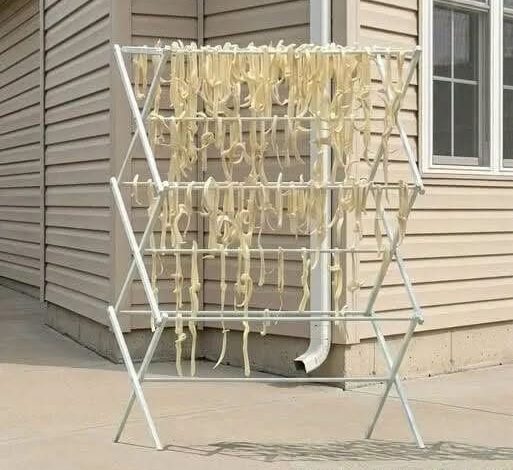
From a distance, it looked like something had been carefully strung across the backyard for a reason nobody could quite guess. Long, pale strands hung in neat rows, lifting slightly in the breeze and turning an ordinary outdoor space into a small mystery.
The setup was unusual enough to make people stop and look twice. It did not resemble laundry, garden supplies, decorations, or anything else normally seen behind a house.
But the explanation was far more familiar than the scene first suggested.
A Backyard Mystery With a Kitchen Answer
The pale strands were homemade pasta set out to dry.
Anyone who has made fresh pasta knows that once the dough is rolled and cut, the strands need space. If they are left in a pile, they can stick together, clump, or lose the texture the cook is trying to achieve.
In many kitchens, people use pasta drying racks, clean rods, or other supports to keep the pieces separated. The same basic idea can look much stranger when it moves outside, where rows of pasta can appear more like an art installation than dinner in progress.
That change in setting is what made the backyard display feel puzzling. Nothing about the pasta itself was mysterious. It was simply being prepared in a place where most people would not expect to see it.
Why Pasta Is Dried in the First Place
Fresh pasta contains moisture from its ingredients. Drying helps remove some of that moisture and can change how the pasta handles before cooking or storage.
For home cooks, keeping the strands apart is one of the practical reasons for hanging them. It helps reduce sticking and makes the pasta easier to manage.
However, drying homemade pasta is not automatically the same as making it safe for long-term storage. Food safety depends on several factors, including ingredients, cleanliness, temperature, humidity, and how the pasta will be stored afterward.
Anyone planning to preserve homemade pasta should rely on trusted food-safety guidance rather than judging by appearance alone. A batch may look dry on the outside while still needing proper handling.
Still, the basic method connects to a much older tradition. Long before modern refrigeration and packaged foods became common, people dried foods to help make them last longer. Fruits, vegetables, herbs, grains, meats, and other ingredients have all been preserved this way in different cultures.
Pasta fits into that broader history of practical food preparation. Modern commercial pasta production is far more controlled, but the home version still reflects a simple idea: reduce moisture, separate the food properly, and prepare it for the next step.
What Readers Should Know
The most interesting part of the backyard scene may be how quickly it changed once the explanation was known. Before that, the hanging strands seemed strange. Afterward, they became completely ordinary.
That happens often with unfamiliar objects seen out of context. A tool can look complicated until someone shows how it works. A sound can seem concerning until its source is identified. Even a common household item can feel confusing when it appears somewhere unexpected.
In this case, the location did most of the work. A kitchen full of hanging pasta would make sense to many people. A backyard filled with the same pale strands created a very different first impression.
It is a useful reminder that not every odd-looking scene has an elaborate explanation. Sometimes the answer is simple, practical, and rooted in everyday routines.
What looked at first like a strange backyard display turned out to be a quiet glimpse of homemade cooking tradition.