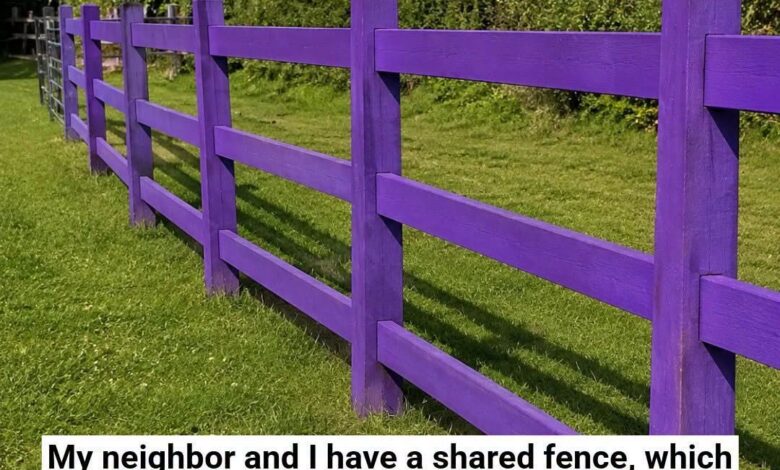
If You Spot a Painted Purple Fence, Here’s What It Could Mean
If you notice a purple stripe painted on a fence post, tree, or piece of land, you might stop for a moment and wonder what it means. At first glance, it may seem like an unusual choice of color, but in many parts of the United States, purple paint can carry an important message about property boundaries.
In several states, landowners use purple paint markings as a way to indicate that an area is private property. These markings are often recognized as a legal alternative to traditional “No Trespassing” signs. Instead of relying only on posted signs, some property owners use paint because it can remain visible for a long period of time, even when signs become damaged, fall down, or are affected by changing weather conditions.
The purpose behind the purple paint system is to create a simple and recognizable way to communicate boundaries. A painted mark on a tree, fence, or post can help people understand that they may be approaching land that is not open for public access. It is a small detail, but it can help prevent confusion between private property and areas where visitors are welcome.
However, the meaning of purple paint is not exactly the same everywhere. Laws and regulations vary from state to state. Some locations have specific rules about where the paint should be placed, how large the markings should be, and how visible they need to remain. Because of these differences, people should always consider local regulations when they encounter purple markings.
For anyone enjoying outdoor activities such as hiking, hunting, camping, or exploring rural areas, seeing purple paint is a good reminder to be aware of surroundings and respect property lines. When there is uncertainty about whether an area is accessible, checking for additional information, staying on public trails, or asking for permission can help avoid misunderstandings.
The use of purple paint is an example of how a simple visual symbol can communicate a message without words. A single painted line may not look significant, but it can represent a property owner’s effort to clearly mark an important boundary.
The next time you see a purple mark on a fence or tree, you will know that it may be more than just a random splash of color. It can be a practical tool used to provide information, encourage respect for private land, and create clearer boundaries between public spaces and personal property.