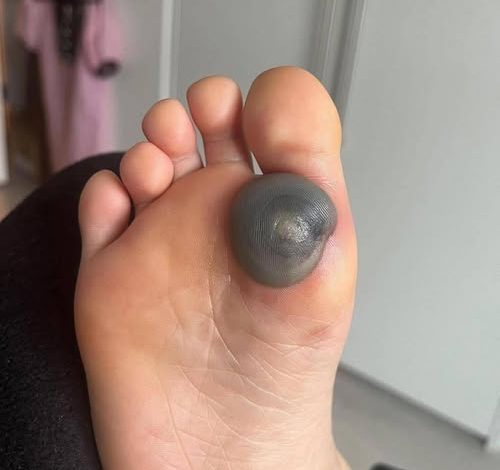
A Painful Dark Spot on the Foot: When to Worry
A large dark spot on a child’s foot can be alarming, especially when it appears suddenly and the pain is strong enough that they do not want to move the foot. One possible explanation is a blood blister, but pain, swelling, and loss of movement are signs that should be taken seriously rather than guessed at from a photo alone.
A blood blister forms when tiny blood vessels break beneath the surface of the skin while the top layer stays intact. Instead of clear fluid, blood collects under the skin, creating a dark red, purple, or almost black raised area. This can happen after pressure, pinching, rubbing shoes, a stubbed toe, sports activity, or another minor injury.
What a Blood Blister Usually Does
Many blood blisters look worse than they are. If the skin stays closed and the area is protected from more rubbing or pressure, the blister often dries out, flattens, and heals as new skin forms underneath. This process can take about a week or two.
Basic care usually means keeping the area clean, avoiding tight shoes or repeated friction, and not popping the blister. Opening it can increase the risk of infection, especially on the foot, where skin is exposed to sweat, socks, shoes, and everyday bacteria.
When It Needs Medical Attention
The situation changes when the pain is severe, the child cannot move the foot normally, or the spot appeared without a clear cause. A healthcare professional should evaluate it promptly, because not every painful dark spot is a simple blister.
Medical care is especially important if the area becomes hot, more swollen, increasingly painful, filled with pus, or surrounded by spreading redness or red streaks. Repeated blood blisters, slow healing, or blisters that appear without injury can also be linked to underlying issues such as diabetes, circulation problems, or clotting disorders.
What Readers Should Know
For a child who is in pain and cannot move the foot, it is safest to contact a doctor, urgent care clinic, or another qualified healthcare provider. Until then, avoid squeezing, cutting, or draining the spot. Keep the foot protected and reduce pressure on the area as much as possible.
Most blood blisters are harmless and heal on their own, but symptoms that “break the usual rules” deserve attention. When pain and movement are involved, getting proper medical guidance is the right next step.