You Pulled Beef From The Slow Cooker And Found White Strings Here Is Why You Should Not Panic
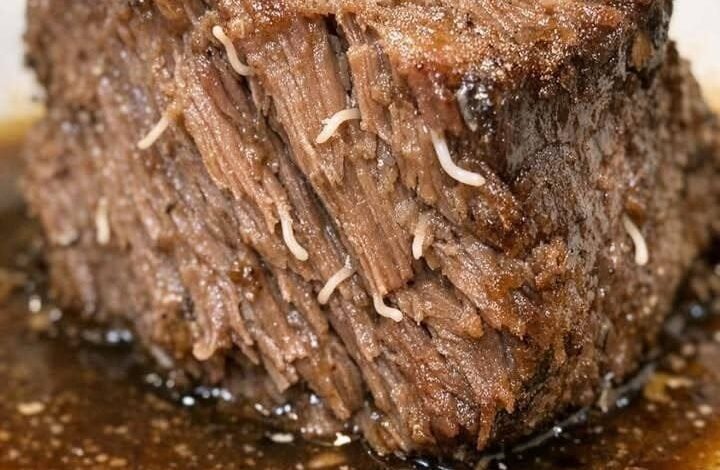
The aroma of a slow-cooked beef roast is usually one of the most comforting and mouth-watering scents you can bring into your home. After hours of waiting, the anticipation of a tender, savory meal reaches its peak when you finally lift the heavy lid of the slow cooker. Steam billows out, carrying the rich fragrance of garlic, herbs, and slow-roasted meat. But what happens when that moment of culinary bliss turns into a moment of pure panic? Imagine pulling the large, heavy roast out of the pot, only to discover a bizarre network of pale, white stringy things poking out of the surface and winding between the muscle fibers. Your stomach drops. You might immediately wonder if the meat is infested with worms or parasites. The sudden urge to throw the entire meal into the trash can is overwhelming.
Finding what appears to be parasites in your dinner is a terrifying experience that can ruin an evening in seconds. The immediate reaction is to question the quality of the meat you purchased, the safety standards of the grocery store, and whether you have just prepared something dangerous for yourself and your family. It is entirely normal for your mind to jump to the worst possible conclusions when confronted with something so unexpected. However, before you panic and discard a perfectly good dinner, it is important to take a deep breath and understand the fascinating and entirely harmless science behind what is actually happening in your slow cooker.
To get to the bottom of this culinary mystery, we must look at the anatomy of the meat itself. Beef roasts, especially cuts like chuck roast, brisket, or rump roast, are not just solid blocks of muscle. They are complex structures made up of muscle fibers, fat, and a dense network of connective tissue. This connective tissue is largely made up of a protein called collagen. Collagen is the structural glue that holds the animal together, providing strength and flexibility to the muscles, tendons, and bones. It is incredibly tough and rubbery in its raw state, which is precisely why cuts of meat used for slow cooking require hours of low heat to become palatable.
When you place a tough cut of beef into a slow cooker and subject it to hours of low, sustained heat, a magical transformation occurs at the molecular level. The high temperature and moisture cause the rigid collagen to break down and melt. As the protein denatures, it transforms into a soft, gelatinous substance. This process is the secret behind the melt-in-your-mouth tenderness of a great pot roast. However, as this connective tissue melts and softens, it does not just disappear into thin air. Instead, it can contract, unravel, and poke out from between the muscle fibers, taking on the appearance of pale, thread-like strands or small, whitish stringy bits.
To the untrained eye, these strands look almost identical to small worms or parasites. They have a tubular, stringy appearance that can easily trigger a visceral response of disgust. But there is a massive difference in both texture and composition between melted collagen and a real parasite. If you take a closer look and gently prod the stringy material with a fork, you will notice a distinct difference in how it behaves. Connective tissue is incredibly soft, slick, and easy to pull apart with the slightest pressure. It yields immediately and feels smooth, sometimes even dissolving or melting further under the touch.
On the other hand, real parasites or worms would be completely different in structure. They would appear as distinct, firm, and uniform structures that do not melt, dissolve, or yield to gentle pressure. Furthermore, the likelihood of encountering live parasites or worms in commercially purchased beef in countries with modern, rigorous agricultural inspection systems is exceptionally low. Strict health and safety regulations, combined with widespread meat inspection protocols, ensure that contaminated meat rarely makes it to the supermarket shelves.
Furthermore, the temperature at which you cook a beef roast in a slow cooker is more than enough to destroy any potential pathogens. Slow cookers generally operate at temperatures between 170 and 200 degrees Fahrenheit. For a beef roast to become tender, the internal temperature of the meat usually needs to reach at least 190 to 205 degrees Fahrenheit. These high, prolonged cooking temperatures are well beyond the thermal death point for any common parasites or bacteria. If a parasite were somehow present, it would be completely neutralized long before you opened the lid.
Before letting fear ruin your dinner, there are a few simple steps you can take to reassure yourself. First, evaluate the overall condition of the meat. Did it smell fresh and normal before it went into the slow cooker? Was it stored properly in the refrigerator before preparation? A normal, pleasant, savory aroma is a strong indicator that the meat is safe. Second, observe the texture and the environment inside the pot. If the stringy parts are soft, slick, and surrounded by tender, easily shredded meat, you are looking at nothing more than the natural collagen breaking down.
Understanding the science of slow cooking can transform a moment of panic into a moment of culinary education. Cooking tough cuts of meat is a delicate balance of chemistry and patience, and the appearance of white strings is the ultimate proof that the process worked exactly as intended. It means the collagen has done its job of tenderizing the meat, turning a cheap and tough cut into a luxurious, mouth-watering feast.
The next time you pull a roast from the slow cooker and see those white, thread-like strands, you can cast your worries aside. Instead of seeing a threat to your health, you can see the visible evidence of the long, slow cooking process that has unlocked the full flavor and tenderness of the beef. It is simply the science of slow cooking on your plate, ready to be enjoyed with family and friends.