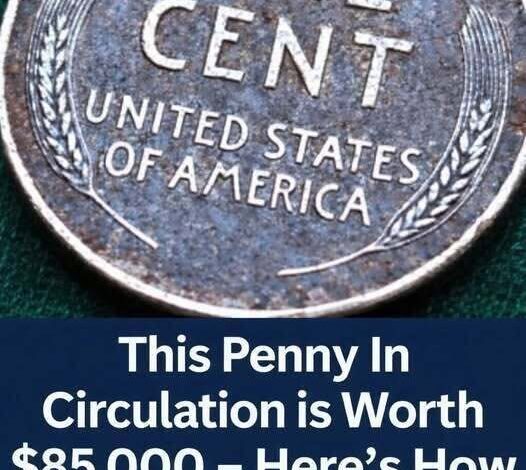
You Could Be Sitting On A Massive Fortune Hiding In Your Kitchen Coin Jar
That dusty, forgotten jar of spare change collecting cobwebs in your kitchen cabinet might actually be a hidden goldmine. Most of us toss pennies aside without a second thought, viewing them as nothing more than a nuisance or a bit of pocket clutter. But tucked away among those ordinary, tarnished copper discs could be a single, rare coin worth thousands of dollars. The difference between a worthless scrap of metal and a life-changing financial windfall often comes down to one microscopic detail that the average person would overlook. Stop ignoring your change and start checking, because your next big paycheck might be hiding right under your nose.
It is a scenario that sounds like a urban legend: someone pulls an old penny from a glass jar, takes it to a coin dealer, and walks out with a check for a small fortune. While it is true that not every vintage coin is a treasure, the reality of numismatics—the study and collection of currency—is that significant value is often found in the most mundane places. We are conditioned to think of money as having a fixed, stated value, but in the world of collectors, a penny is never just a penny. Its worth is dictated by a complex intersection of history, rarity, and the specific circumstances of its creation.
The journey to identifying a valuable coin begins with a shift in perspective. Instead of looking at a penny as a tool for buying gum or paying tax, you must begin to look at it as a historical artifact. The date stamped on the face is only the beginning. Behind that date lies a story: perhaps a specific minting error during a chaotic production year, a unique alloy composition necessitated by a national crisis, or a limited design trial that never reached mass distribution. These variables turn a mass-produced object into a unique piece of history, and it is that scarcity that drives the astronomical prices seen at auctions.
One of the most compelling reasons for the existence of rare coins is the impact of major global events, particularly wartime. During periods of conflict, the manufacturing requirements of a nation often shift drastically. Metals like copper and nickel, which are essential for military equipment and ammunition, have frequently been diverted away from the mints. This forced coin producers to experiment with alternative materials, such as steel, zinc, or even plastic in some historical instances. These experimental or limited-run materials created variations that deviate from the standard coinage we are accustomed to seeing today. For the eagle-eyed collector, these wartime irregularities are the holy grail of spare change.
For enthusiasts, the thrill of the hunt is not strictly limited to the potential for profit. While the idea of a financial windfall is undeniably appealing, there is a profound intellectual satisfaction found in the process of discovery. Holding an old coin in your palm provides a tactile connection to the economic and cultural atmosphere of a bygone era. You are holding a piece of the past that traveled through countless hands, survived revolutions, recessions, and shifts in power, only to end up in your possession. This deep engagement with history encourages a level of patience and observational skill that is rarely practiced in our fast-paced, digital world.
However, it is essential to temper this excitement with a dose of realism. The overwhelming majority of the coins you will find in your jars, drawers, and car cup holders are, unfortunately, common issues. They were produced in the millions or billions, designed for daily circulation, and they lack the specific markers that command high value. Many coins that appear “old” to the untrained eye are simply worn-down versions of everyday currency. It is easy to fall into the trap of wishful thinking, but understanding that genuine rarity is the exception, not the rule, is crucial to avoiding disappointment during your search.
If you believe you have stumbled upon a true rarity, the path forward is through diligent research. Before you assume you are holding a fortune, consult reputable numismatic resources, such as official grading guides or established coin databases. The internet has made this research easier than ever, but it has also facilitated the spread of misinformation regarding coin values. Always prioritize information from verified experts, professional associations, or established auction houses over speculative posts on social media. Engaging with experienced collectors or visiting a trusted local coin shop can provide you with the professional insight necessary to determine if your find has genuine significance or if it is merely a curiosity.
Even if your search does not result in finding a hidden treasure, the process itself offers benefits that go beyond a potential payday. Turning the hunt for rare coins into a hobby encourages a slowing down of the mind. It trains you to observe the details that others skip over. In a culture that prioritizes efficiency, there is something deeply rewarding about taking the time to carefully examine the mint marks, the wear patterns, and the historical context of a humble penny. It turns a chore—clearing out old change—into a small, engaging adventure.
Whether you are looking for a financial miracle or simply an educational pastime, the forgotten change in your house offers a unique opportunity to interact with the world around you in a new way. Each coin has its own journey, and every jar has the potential to be a repository of stories. Even if you never find that one-in-a-million rarity, the act of looking reminds us that value is often found in the things we are most prone to overlook. The next time you are tempted to dump that jar of pennies into a self-checkout machine, take a moment to look closer. You might not find a fortune, but you will certainly find a story, and that, in its own right, is a form of wealth that never depreciates.