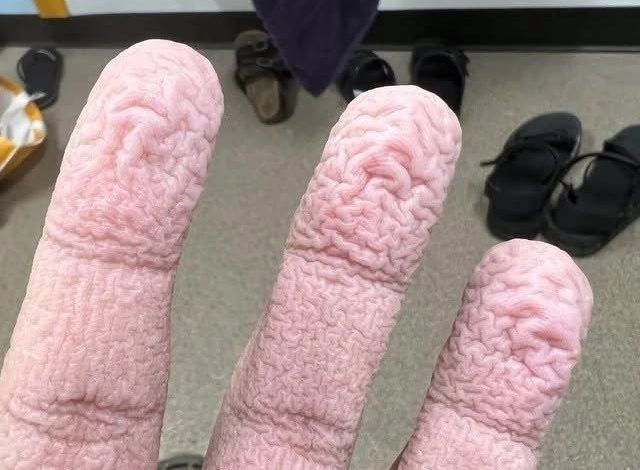
Why Your Fingers Wrinkle in Water Is Stranger Than It Looks
It is one of those small body changes most people barely question: spend a few minutes in the bath, pool, or sink, and your fingertips start to look crinkled. For years, the easy explanation was that the skin simply soaked up water. But researchers have found that the real reason is more active, and more interesting, than that.
Water does affect the outer layer of skin, but the deep, familiar wrinkling on fingers and toes is not just a case of swelling. The process is closely tied to the nervous system and changes in blood flow beneath the skin.
What Really Happens Under the Skin
After your hands or feet stay in water for several minutes, small blood vessels in the fingertips begin to narrow. This is called vasoconstriction.
As those tiny vessels constrict, the volume under the skin decreases slightly. The skin surface then folds into the wrinkle pattern most people recognize after swimming, bathing, or washing dishes for a while.
This effect often becomes noticeable after about five to ten minutes in water, though the timing can vary from person to person. Once the skin dries and normal blood flow returns, the wrinkles usually fade on their own.
Why the Body May Do This
Researchers believe water-induced finger wrinkles may help improve grip in wet conditions. The folds can help move water away from the fingertips, somewhat like tire tread helps with traction on a wet road.
That may make it easier to hold damp or slippery objects. The same idea may also apply to toes, which are important for balance and contact with wet surfaces.
This is one reason the wrinkles appear most clearly on fingers and toes rather than across the whole body. These areas have specialized skin and play a major role in gripping, balance, and touch.
What Readers Should Know
For most people, wrinkled fingertips after water exposure are completely normal and do not require treatment. They are temporary and typically disappear after the skin dries.
Still, it can be worth paying attention if the wrinkling seems unusual. If your fingers wrinkle very quickly, wrinkle without being in water, or the change comes with numbness, pain, or color changes, a healthcare professional can help decide whether further evaluation is needed.
Most of the time, though, this everyday effect is simply a reminder that the body is constantly adjusting to its environment in ways we rarely notice.
The next time your hands wrinkle after a long soak, it may be less about soggy skin and more about a built-in system designed to help you handle the wet world around you.