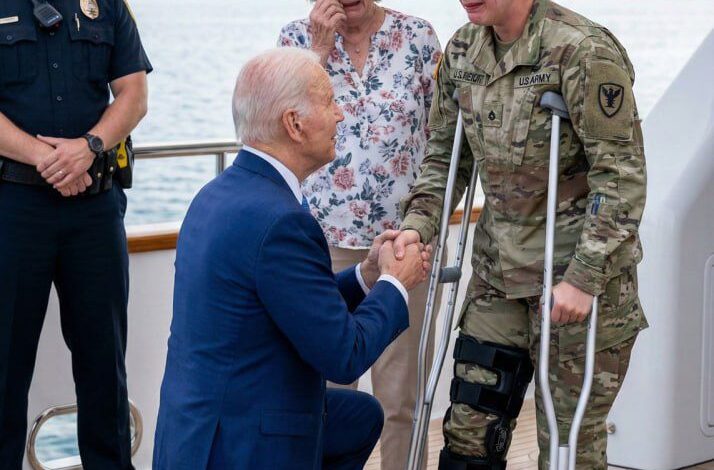
When Family Chose a Boat Over My Future! A Military Daughters Journey to Independence
The call I made from the military base that day changed everything. I was still in uniform, my knee swollen beyond recognition, when the doctor used a word that made my heart stop: disability. It wasn’t a distant possibility; it was a medical reality if I didn’t get surgery within seven days. When I reached out to my parents for help with the $5,000 procedure, the lesson I learned about family was more profound than a lifetime of holidays could ever teach.
The Injury and the Diagnosis
Military training is designed to push limits, but this wasn’t about mental toughness. During a routine exercise just two hours from home, a sharp, unnatural pop echoed from deep inside my knee, followed by a rush of heat and the ground meeting me faster than I could process. When I tried to stand, my leg simply gave out.
Under the harsh fluorescent lights of the base clinic, the Physician’s Assistant pulled up my MRI. The ghostly gray images showed significant ligament damage.
“You need surgery. This week,” she said. “If you wait, you’re looking at long-term impairment. Permanent limited mobility.”
In the military, the waiting game is a legendary hurdle. Forms require signatures that require reviews, and the system couldn’t authorize my procedure for weeks. “If you can do this off-base,” the PA whispered, “you should.” She slid a scrap of paper across the metal tray: $5,000. That was the down payment on my ability to walk normally again.
The Phone Call That Revealed Everything
That night in the barracks, I sat on my bunk and called home. My father answered cheerfully, the sound of television in the background. I laid out the facts: the injury, the surgeon’s timeline, and the cost. I promised to pay back every penny.
Silence stretched across the line. Then came the familiar exhale he always made before saying no. “We just bought the boat,” he said. “The timing is terrible.”
“It’s my leg, Dad,” I said quietly.
“Well,” he replied casually, “you’re young. You’ll adapt.”
My mother picked up the extension, her voice soft but cutting. “Honey, maybe this is a lesson. You chose this career. A limp will teach you responsibility.” My sister’s voice cut in next, bright and amused. “Relax, you’re the tough one, remember?” She actually laughed while I sat there bleeding through my bandages.
The Pattern of the “Reliable One”
I didn’t cry. I hung up and felt something inside me shift into a cold, absolute clarity. Growing up, my sister was the “Investment.” When her first boutique burned through $15,000, my father wrote a check without blinking. When her second venture collapsed, they refinanced the house to keep it alive.
I was the “Reliable One.” I was the one who didn’t ask, the one who made do. When my car’s transmission failed years ago, they lent me money only after making me sign a notarized contract with 5% interest to “build character.” Now, looking at my leg, I realized this wasn’t about money—they had it. They just didn’t have it for me.
A Brother’s Sacrifice and a Stroke of Luck
Two days before the surgery, my brother showed up at my tiny apartment. His jacket was stained with grease from sixty-hour weeks at the mechanic shop. He didn’t ask questions; he just looked at my leg and swore. He pressed a wad of crumpled bills into my hand—$800.
“I sold my tools,” he said. “All of them. I need you walking. I’ll figure the rest out.”
I took the money because I needed to remember who showed up when I was bleeding. To cover the rest, I took a high-interest predatory loan from an office that smelled of cheap coffee and desperation. The morning of the procedure, as the anesthesia took hold, my last thought was of my father’s voice: We just bought a boat.
The surgery was a success, but the recovery was a financial gauntlet. Then, a miracle of the mundane occurred. I checked a lottery ticket I’d bought on a whim while picking up pain meds. It wasn’t millions, but it was enough to breathe. Enough to stop being desperate.
The Strategic Counterstrike
I didn’t tell my family about the money. Instead, I hired a high-end attorney. I wanted my assets protected, but more importantly, I wanted to understand my parents’ finances better than they did. The folder my lawyer produced days later unraveled the myth of their wealth.
The “nest egg” house was leveraged to the breaking point, and the boat wasn’t even paid for—the down payment sat on a high-interest credit card. They were hemorrhaging cash to keep up appearances. “They’re not wealthy,” my lawyer said. “They’re pretending.”
I didn’t run from their debt. I bought it. Through a shell company, I purchased their notes from the banks at a discount. Within forty-eight hours, I became the entity that owned their house and their lifestyle.
An intermediary with a polished accent approached them with a “sale-and-leaseback” arrangement. It offered immediate relief and a line of credit. My father, eager to feel important again, signed the fifty-page contract without reading the fine print. Buried inside was a “sharp” clause: any late payment resulted in immediate termination of the lease and possession of the property. No grace periods. No second chances.
The Final Reckoning
Three weeks after Thanksgiving, the trap snapped shut. My father missed a payment. At 12:01 AM, the lease terminated. By 8:00 AM, legal notices were filed.
I called a meeting at my lawyer’s office. My parents arrived late and arrogant, demanding coffee and complaining about “junior staff.” I turned my chair to face them, and the color drained from my mother’s face.
“Hello, Mom. Dad,” I said evenly. “I’ll be handling this meeting. I’m the owner.”
I laid out the reality: the debt purchase, the missed payment, and the fact that I had already reported their undisclosed offshore accounts to federal authorities. My mother whispered that I had tricked them. I told her she had simply failed to read. My father’s rage-filled threats only confirmed the existence of the very accounts the feds were now investigating.
Standing Tall
After the meeting, I stood up without crutches. My leg held steady. I called my brother and told him I had bought the mechanic shop where he worked; it was now his. He wouldn’t have to sell his tools ever again.
My parents and sister were left with the silence of their own making. The locks on the house were changed, and the “savvy” facade they had built collapsed under the weight of their own arrogance. I didn’t feel triumph, only the quiet resolution of someone who had finally recalibrated their life.
I returned to active duty, walking with a gait that finally matched my internal strength. I had learned that family isn’t defined by who raised you, but by who refuses to let you suffer alone. I was no longer the “Reliable One” who made do; I was the one who stood on my own two feet.