What Those Small Lower-Back Dimples May Indicate About Your Body
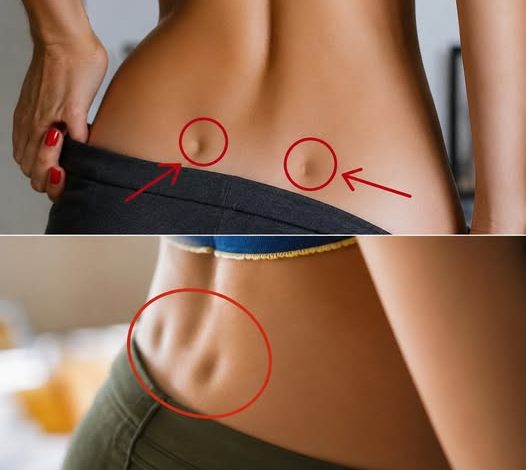
Have you ever noticed the pair of small, symmetrical indentations on the lower back, just above the buttocks? These are commonly known as Venus dimples, a feature that has intrigued people for generations due to their distinct and natural appearance. They are sometimes referred to by other names as well, but “Venus dimples” is the most widely used term, inspired by Venus, the Roman goddess associated with beauty and physical harmony.
While they are often noticed for their aesthetic appeal, these dimples are not a result of exercise, weight loss, or lifestyle choices. Instead, they are primarily determined by anatomy and genetics. Venus dimples form where a short ligament connects the skin to the posterior superior iliac spine, a part of the pelvic bone. This creates a natural inward pull that produces the visible indentation.
Because this structure is anatomical, it is important to understand that these dimples cannot be created through training or physical activity. A person either naturally has them or does not, based on their skeletal structure. In men, similar indentations are sometimes called Apollo dimples, but medically both are considered normal anatomical variations without any inherent health advantage or disadvantage.
From a medical standpoint, Venus dimples are generally harmless and are not classified as a medical condition. They are simply one of many normal variations in human body structure. Some discussions suggest possible associations between these dimples and underlying pelvic anatomy, but there is no strong scientific evidence linking them directly to specific health outcomes.
What is known is that they are more visible in individuals with lower levels of body fat, as less tissue covers the natural indentation formed by the ligament and bone structure. However, their presence or absence should not be interpreted as a measure of fitness, health status, or physical strength. They are purely anatomical features. Genetics plays the most important role in whether a person has Venus dimples.
If they are present, they are inherited and remain visible throughout life regardless of age or lifestyle changes. Unlike skin features such as wrinkles or pigmentation, Venus dimples do not develop or disappear over time. They remain consistent because they are tied to bone and connective tissue structure. Some people mistakenly believe these dimples reflect circulation quality or internal health, but current medical understanding does not support a direct link between them and blood flow efficiency.
Similarly, there is no confirmed evidence that Venus dimples indicate stronger back muscles, improved posture, or reduced risk of back problems. The human body does show many external signs that reflect health, such as skin condition, posture, and mobility, but Venus dimples are not considered one of those diagnostic indicators. Instead, they are best understood as a neutral anatomical trait, similar to wrist shape, ear structure, or facial bone symmetry.
Despite the lack of medical significance, Venus dimples have long been associated with beauty ideals in various cultures due to their symmetrical and visually appealing placement. In art and sculpture throughout history, especially in classical depictions of the human form, lower back contours have often been emphasized as symbols of physical harmony. This cultural association has contributed to the idea that Venus dimples represent youth or attractiveness, although these perceptions are aesthetic rather than scientific.
From a health perspective, what matters far more than the presence of such features is overall lifestyle, including movement, nutrition, and cardiovascular well-being. Regular physical activity such as walking, stretching, and strength training supports spinal health and circulation far more than any external anatomical trait. As people age, maintaining mobility and core strength becomes increasingly important for preventing stiffness and supporting long-term independence.
Venus dimples do not change with aging, meaning they remain visible in the same way throughout life if they are genetically present. This consistency is one reason they often attract attention, as many other physical features naturally change over time. However, any changes in the appearance of the lower back, such as pain, swelling, or structural discomfort, should not be attributed to Venus dimples themselves.
Those symptoms are unrelated and may require medical evaluation if persistent or severe. Understanding the difference between anatomical features and medical conditions helps reduce unnecessary concern and confusion about normal body variations. For many older adults, noticing small body features can lead to questions about health, but Venus dimples are not considered a warning sign of any disease.
Instead, they serve as a reminder of how diverse and unique human anatomy can be from person to person. Some individuals may have very pronounced dimples, while others may have faint or no visible indentation at all, both of which are completely normal. This variation is part of the natural diversity in skeletal structure and connective tissue formation among humans.
Ultimately, Venus dimples should be viewed as a harmless and interesting anatomical detail rather than a marker of health or medical concern. They highlight how subtle differences in bone structure and tissue attachment can create visible variations in the human body.
While they may be admired for their appearance, their true significance lies in anatomy, not in health status or physical performance. The most important aspect of wellness remains consistent care for the body as a whole, including heart health, muscle strength, and overall mobility. When viewed in that context, Venus dimples are simply one small detail in the broader complexity of human biology.
They do not define health, fitness, or beauty on their own, but they do reflect the intricate design of the human skeletal system. In the end, whether present or not, they are just one of many natural variations that make every human body unique and scientifically fascinating.