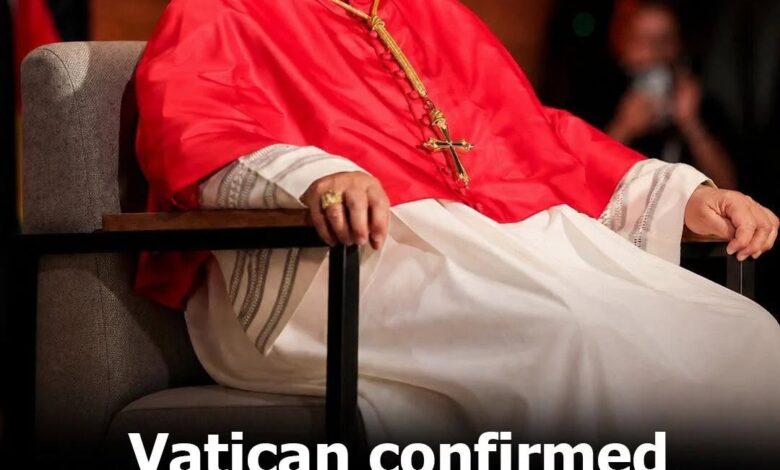
Vatican confirmed bad news about Pope Leo XIV
Before becoming pontiff, Prevost developed an international religious career that included extensive missionary and pastoral service in Peru.
His experiences across North and South America helped shape a perspective that combined familiarity with the United States and deep engagement with Latin American communities.
He also served in leadership roles within the Augustinian religious order and later undertook major responsibilities within the Vatican.
These experiences introduced him to different aspects of church life.
Missionary service involves close contact with local communities, often including people facing poverty, limited access to resources, or social hardship.
Religious leadership requires administration, pastoral judgment, and collaboration across diverse cultures.
Work within the Roman Curia brings additional responsibilities concerning the organization and governance of the wider Church.
By the time of his election, Prevost had developed a background spanning local pastoral ministry and international ecclesiastical administration.
His selection as pope attracted particular attention in the United States because of his Chicago origins.
It also resonated strongly in Peru, where he had spent significant portions of his ministry.
For many observers, his biography reflected the increasingly international character of the Catholic Church.
His papacy has been shaped by the responsibilities of guiding a global religious institution during a period of complex social and geopolitical challenges.
The unexpected cancer diagnosis therefore interrupted a pontificate still in a relatively early stage.
It presented an intensely personal medical challenge while also requiring careful management of public responsibilities.
Why the Memory of Pope Francis Matters
Concerns about Pope Leo XIV’s health have also been influenced by recent memories of Pope Francis.
Francis experienced a number of significant health problems during the later years of his life, including respiratory difficulties and repeated hospitalizations.
His medical circumstances frequently required adjustments to public engagements and travel plans.
As those episodes unfolded, Catholics became accustomed to watching Vatican announcements for information about their spiritual leader’s condition.
The experience highlighted how the physical demands of the papacy can become more challenging when a pontiff faces illness.
It also showed the importance of communicating medical developments clearly.
The situations involving Francis and Leo XIV should not be treated as medically equivalent.
Different diagnoses, procedures, and underlying conditions produce different recovery patterns.
Pope Leo’s operation involved removal of a localized cancerous lesion from the right lung, followed by reports that further cancer treatment was unnecessary.
That specific medical information should remain central to any discussion of his health.
Still, the broader historical context helps explain the intensity of public interest.
Catholics who followed the difficult medical experiences of Pope Francis naturally recognize the seriousness of respiratory illness in an aging religious leader.
At the same time, responsible reporting requires avoiding assumptions that one pontiff’s medical history predicts another’s.
The present evidence concerning Leo XIV indicates successful surgery and favorable post-operative findings.
Those are the facts on which public understanding should be based.
The Medical Meaning of Removing a Lung Lobe
For readers unfamiliar with thoracic surgery, the removal of an entire lung lobe may sound particularly alarming.
Understanding the procedure helps explain why doctors sometimes recommend it.
The lungs contain branching airways that transport air into smaller structures where oxygen enters the bloodstream and carbon dioxide is removed.
Although each lobe contributes to breathing, lung tissue is organized so that a person can often continue breathing adequately after one lobe has been removed.
The degree of remaining respiratory capacity depends on several factors.
These include the condition of the remaining lung tissue, cardiovascular health, preoperative lung function, and the patient’s overall physical fitness.
Before recommending a lobectomy, surgeons typically assess whether the patient is likely to tolerate the procedure.
They consider both the expected cancer-related benefit and the potential effect on breathing.
For localized lung cancer, removal of an affected lobe has long been an established treatment option.
In some clinical situations, smaller surgical resections may be appropriate.
In others, a lobectomy offers a better approach to ensuring sufficient removal of the cancerous area.
The specific choice depends on individual medical findings.
Following surgery, patients may initially notice changes in breathing, physical endurance, or comfort during movement.
The remaining lung tissue and respiratory muscles can adapt over time.
Rehabilitation may include walking, breathing exercises, and gradual increases in activity.
The body’s adaptation should not be confused with regeneration of the removed lobe.
The missing portion does not simply grow back to its original structure.
Instead, the remaining respiratory system adjusts to the altered anatomy.
Modern surgical techniques and rehabilitation methods have improved the recovery experience for many patients.
Nevertheless, the procedure remains significant and requires appropriate follow-up.
For Pope Leo XIV, the favorable recovery updates indicated that his immediate postoperative progress was proceeding as expected.
The Importance of Postoperative Monitoring
When the Pope returned to the Vatican, he entered a stage of recovery that would continue outside the hospital.
This period remains important even when the operation has been successful.
A patient recovering from lung surgery may require periodic medical assessments to evaluate breathing, wound healing, physical endurance, and overall well-being.
Doctors may also monitor for symptoms that could indicate complications.
The recovery process can vary considerably.
Some patients regain everyday independence relatively quickly, while others require a longer period of rehabilitation.
Factors such as age, general physical condition, other illnesses, and the extent of surgery can influence progress.
It is therefore difficult to predict an individual’s complete recovery timeline from the name of the procedure alone.
In the Pope’s case, the Vatican’s medical updates indicated that the early results were reassuring.
His blood tests and chest imaging supported discharge, and he was able to resume selected activities.
Those observations provide information about his immediate recovery.
They do not establish that every aspect of healing has already concluded.
Another important distinction concerns cancer surveillance.
Even after a tumor has been successfully removed, patients may receive ongoing follow-up to monitor their long-term health.
The absence of a recommendation for additional oncology treatment does not necessarily mean that no future medical examinations will be necessary.
Rather, it indicates that the available evidence did not justify further treatment at the time of the assessment.
This approach is common in medicine.
Doctors aim to provide sufficient treatment while avoiding interventions that offer little additional benefit.
For a patient whose cancer was localized and completely removed, surveillance may be more appropriate than immediate chemotherapy or radiation.
The details of Pope Leo XIV’s future monitoring remain matters for his medical team.
A Planned Journey to South America Raises New Questions
One of the practical issues arising from the Pope’s surgery involves international travel.
Leo XIV has a scheduled journey to Uruguay, Argentina, and Peru from November 6 through November 17.
The itinerary carries particular significance because of his longstanding connections to Latin America, especially Peru.
A papal journey of this kind involves substantial logistical preparation.
Organizers must coordinate transportation, public events, security, meetings with local church leaders, and official ceremonies.
Such visits can also involve multiple flights and changes in altitude.
For a patient recovering from lung surgery, the physical demands of travel require careful medical consideration.
Air travel can introduce particular concerns because of changes in cabin pressure, prolonged periods of sitting, fatigue, and the overall demands of movement.
However, the medical implications depend on the patient’s individual condition and the time elapsed since surgery.
Professor Stefano Margaritora addressed the question publicly after the Pope’s operation.
He indicated that the Pope’s recovery was proceeding well and that he saw no clinical reason preventing the planned South American journey.
This was an encouraging assessment from the physician directly involved in the surgical procedure.
Nevertheless, the final management of a demanding travel schedule remains dependent on medical follow-up and practical planning.
It would be premature to assume that every activity will necessarily proceed without adjustment.
Equally, there is no basis for claiming that the planned trip has been canceled because of the cancer diagnosis.
The available information supports a more balanced conclusion: the Pope’s doctors have reported favorable recovery and have not identified a medical reason requiring cancellation.
For Catholic communities expecting his visit, that assessment provides grounds for optimism.
The Emotional Weight of a Cancer Diagnosis
Cancer is not solely a medical event.
It often brings uncertainty, fear, questions about the future, and difficult conversations among family members and caregivers.
Even when a tumor is detected early, the diagnosis can have a profound emotional impact.
Patients may experience anxiety while awaiting surgery, pathology reports, or decisions about additional treatment.
A successful operation can bring relief, but the adjustment to illness does not always end immediately afterward.
The experience can also change how people think about health, vulnerability, and ordinary daily life.
Pope Leo XIV occupies an unusual position because his personal medical condition became a matter of international attention.
Most patients experience their diagnosis within the relative privacy of family, friends, and healthcare professionals.
The Pope faced his illness while millions of people followed the news.
The pressure associated with that visibility should not be exaggerated without evidence about his personal feelings.
Nevertheless, the situation illustrates the tension between public responsibilities and individual medical privacy.
As a religious leader, he has reasons to communicate about matters affecting his work.
As a patient, he also retains legitimate interests in confidentiality and personal dignity.
The Vatican’s public updates attempted to address essential questions while leaving detailed medical decisions to specialists.
His public remarks after surgery focused on gratitude and solidarity.
He used his recovery to acknowledge people experiencing illness and the professionals responsible for their care.
That response allowed a personal medical event to become a moment of broader reflection.
It also emphasized something that remains true regardless of religious belief: serious illness can remind people of their dependence on others.
The Role of Medical Teams Behind a Successful Operation
The attention surrounding Pope Leo XIV’s surgery naturally centered on the pontiff.
Yet the event also highlights the complexity of modern healthcare.
A major thoracic operation depends on collaboration among multiple medical specialties.
Radiologists help identify and characterize suspicious abnormalities.
Surgeons evaluate whether an operation is appropriate and determine the most suitable technique.
Anesthesiologists manage anesthesia and monitor patients during surgery.
Nurses prepare the operating environment, assist with procedures, and provide care during recovery.
Pathologists examine tissue to establish diagnoses and evaluate disease characteristics.
Respiratory therapists and rehabilitation professionals support breathing and mobility after surgery.
Oncology specialists assess whether additional cancer treatment is indicated.
Each contribution forms part of a larger medical process.
In this case, the Pope’s medical team also needed to communicate findings to Vatican officials, who then conveyed relevant information to the public.
The combination of clinical care and public communication created an additional layer of responsibility.
Medical professionals had to explain complex findings without reducing them to misleading headlines.
The difference between a suspicious lung nodule, a confirmed cancer diagnosis, successful surgical removal, and a final determination that no further treatment was needed is medically important.
Each stage represents new information.
The Pope’s case demonstrates why accurate reporting requires attention to the sequence of events.
A headline based solely on the original surgical announcement may no longer describe the situation completely several days later.
The most responsible account includes both the seriousness of the diagnosis and the favorable findings that followed.
What the Pope’s Case Teaches About Lung Cancer Awareness
Although the circumstances surrounding Pope Leo XIV’s illness are unusual, the underlying medical lessons are relevant to a much wider audience.
Lung cancer remains a major global health concern.
Its impact is influenced by the fact that some cases are diagnosed only after symptoms have developed or the disease has advanced.
The Pope’s tumor was detected incidentally while doctors were examining another area of his body.
This does not mean that everyone should undergo unrestricted medical scanning in the hope of finding hidden disease.
Medical tests have benefits, limitations, and potential risks.
Unnecessary imaging can lead to false alarms, additional procedures, radiation exposure, and anxiety.
Evidence-based lung cancer screening is therefore generally directed toward people who meet defined risk criteria rather than the entire population.
In countries where low-dose CT screening programs are available, eligibility commonly considers factors such as age and smoking history.
Guidelines vary between countries and medical organizations.
People concerned about their risk should discuss appropriate screening and prevention strategies with qualified healthcare professionals.
Several broader health principles remain important.
Avoiding tobacco use is one of the strongest measures available for reducing lung cancer risk.
People who smoke can benefit from evidence-based support for quitting.
Reducing exposure to secondhand smoke and recognized environmental hazards can also help.
Awareness of persistent respiratory symptoms is useful, although symptoms alone cannot reliably determine whether cancer is present.
Ongoing coughing, unexplained shortness of breath, coughing up blood, or other concerning changes warrant medical attention.
At the same time, these symptoms can have many causes unrelated to cancer.
The appropriate response is evaluation rather than self-diagnosis.
The Pope’s experience also illustrates why routine medical care can matter even when a person feels well.
In his case, an unexpected finding led to timely investigation and treatment.
That outcome reflects the importance of clinical judgment and access to appropriate medical services.
Why Accurate Health Reporting Matters
Public figures often become the subjects of dramatic headlines when they experience serious illness.
The temptation to emphasize frightening details can be especially strong when the individual is internationally recognized.
A diagnosis of cancer naturally attracts attention.
So does the removal of a portion of the lung.
But an accurate account must place these facts within the full medical timeline.
The original announcement established that Pope Leo XIV had undergone surgery and that tissue examination confirmed adenocarcinoma.
At that moment, questions about additional treatment remained unresolved.
Subsequent medical updates established that his early recovery was progressing well.
His discharge on October 17 confirmed that doctors considered him sufficiently stable to return to the Vatican.
His public appearances on October 18 and October 21 demonstrated that he had begun resuming some responsibilities.
Finally, the oncology announcement on October 21 clarified that further cancer treatment was not required.
These developments do not erase the seriousness of the original diagnosis.
They do, however, significantly change the overall picture.
A headline suggesting that the Pope remains hospitalized or faces an unresolved cancer treatment plan would now be incomplete.
Similarly, describing the operation as an emergency without acknowledging that it had been scheduled following earlier examinations would create a misleading impression.
The facts support a more precise account.
Doctors discovered a suspicious lung nodule, recommended an operation, and removed the affected lobe.
The procedure confirmed lung adenocarcinoma.
The Pope recovered sufficiently to leave the hospital within days.
Final testing found no spread of the cancer, and specialists concluded that additional oncology treatment was unnecessary.
This is a serious medical story with a substantially encouraging development.
Both parts deserve attention.
A Moment of Reflection for the Global Catholic Community
The Pope’s hospitalization prompted concern among Catholics in many parts of the world.
For believers, the Bishop of Rome represents spiritual unity and continuity.
His illness therefore carries emotional meaning beyond the medical facts.
The request for prayers made during his October 11 Angelus gave communities a clear way to express support.
Such responses are part of a longstanding religious tradition in which illness is met with prayer, companionship, and practical care.
The experience also connects with a central theme in Christian teaching: the dignity of people who are sick, elderly, or vulnerable.
Religious communities have historically played important roles in establishing hospitals, providing charitable healthcare, and supporting people facing illness.
The relationship between faith and medicine is sometimes discussed as though the two must be opposed.
Yet many religious patients and caregivers understand medical treatment and spiritual support as complementary aspects of care.
In the Pope’s case, surgery, clinical monitoring, pathology, and oncology assessments formed the basis of his medical treatment.
Prayer and expressions of solidarity provided spiritual and emotional support.
Recognizing this distinction respects both medical evidence and religious practice.
The Pope’s appreciation for healthcare workers also reinforced the importance of professional care.
His recovery was not presented as a replacement for medicine.
Instead, he publicly acknowledged the people whose expertise and dedication helped him through surgery.
For Catholic communities, this combination of faith, gratitude, and medical responsibility carries an understandable resonance.
Looking Ahead: Recovery, Leadership, and Continuing Medical Care
As of October 22, 2026, the publicly available information concerning Pope Leo XIV’s health is substantially more reassuring than the initial surgical announcement suggested.
Doctors have confirmed successful removal of the affected lung lobe.
The operation was completed without reported complications.
His early postoperative recovery proceeded normally.
He was discharged from Gemelli Hospital on October 17.
He subsequently returned to public appearances, beginning with the Sunday Angelus and followed by his general audience on October 21.
Most importantly, the final medical assessments established that the cancer was localized and that no additional cancer therapy was required at that time.
These findings provide a clearer understanding of the pontiff’s medical situation.
They also make it possible to distinguish what is known from what remains uncertain.
His medical team has provided reassuring information about the operation and the tumor.
The exact details of future surveillance and the full pace of physical recovery have not all been publicly specified.
That is not unusual.
Medical care continues after hospitalization, and some details appropriately remain between the patient and his physicians.
The Pope’s public responsibilities will likely continue to be organized with attention to his recovery.
Planned international engagements, including the journey to South America, remain subjects of practical and medical preparation.
His surgeon’s favorable assessment of his ability to travel is encouraging, but ongoing medical judgment remains essential.
For now, the most significant development is that the Pope has moved beyond the immediate surgical crisis and begun returning to his duties.
A Serious Diagnosis Followed by Encouraging News
The story of Pope Leo XIV’s lung cancer operation is ultimately one of a serious medical diagnosis, timely intervention, and a favorable early treatment outcome.
The discovery began unexpectedly during routine medical examinations.
The Pope publicly disclosed the suspicious nodule and explained his decision to undergo surgery.
On October 13, a specialist team removed the lower lobe of his right lung.
The procedure confirmed adenocarcinoma, a form of non-small cell lung cancer.
Although the diagnosis initially raised questions about his future health and responsibilities, the following days brought a series of encouraging developments.
Doctors reported an uncomplicated recovery.
The pontiff began walking, eating, and participating in respiratory rehabilitation.
He returned to the Vatican after four days in the hospital.
He thanked medical workers and those who had prayed for him.
And after final pathological evaluation, his medical team confirmed that the cancer had not spread and that additional oncology treatment was not necessary.
For a man whose office carries immense spiritual and international responsibilities, the experience has been a reminder of an essential human truth: leadership does not eliminate vulnerability.
Like millions of other people facing medical uncertainty, the Pope depended on careful diagnosis, skilled healthcare professionals, and the support of those around him.
His experience also illustrates the importance of giving serious health stories their full context.
A cancer diagnosis deserves attention, but so do the findings that follow treatment.
An operation may be frightening, but its outcome cannot be understood from the procedure alone.
And while recovery requires patience, encouraging medical evidence should be reported with the same accuracy as the initial diagnosis.
For now, Pope Leo XIV is continuing his recovery in the Vatican, gradually returning to public responsibilities, and doing so with an outlook that his doctors have described in reassuring terms.
The broader significance of his experience extends beyond the walls of the Vatican.
It is a story about the value of attentive medical care, the possibilities created by early detection, the skill of modern surgical teams, and the resilience that people can demonstrate while confronting serious illness.
Above all, it is a reminder that even amid uncertainty, responsible medicine and timely treatment can sometimes bring genuinely hopeful news.
Sources and Further Reading
Vatican News — October 11, 2026: Pope Leo XIV publicly announces surgery to remove a localized lung nodule.https://www.vaticannews.va/en/pope/news/2026-10/pope-leo-xiv-to-undergo-surgery-remove-nodule-lung.html
Vatican News — October 13, 2026: Official reporting on the Pope’s successful lung operation at Gemelli Hospital.https://www.vaticannews.va/en/pope/news/2026-10/pope-leo-surgery-gemelli-hospital-successful.html
Vatican News — October 14, 2026: Details of the surgical procedure, confirmed adenocarcinoma diagnosis, and immediate recovery.https://www.vaticannews.va/en/pope/news/2026-10/pope-leo-gemelli-hospital-holy-see-press-office-update-14-0ctobe.html
Vatican News — October 17, 2026: Confirmation of the Pope’s discharge from hospital.https://www.vaticannews.va/en/pope/news/2026-10/pope-leo-xiv-discharged-from-hospital-lung-surgery.html
Vatican News — October 18, 2026: The Pope thanks those who supported him during hospitalization.https://www.vaticannews.va/en/pope/news/2026-10/pope-at-angelus-i-have-truly-felt-your-support.html
Associated Press — October 21, 2026: Doctors confirm that the cancer was localized and no additional treatment is necessary.https://apnews.com/article/pope-leo-lung-cancer-operation-c03a9973ecd529a17193c23ac7585050
Vatican News: Interview with Professor Stefano Margaritora discussing the incidental discovery and the Pope’s recovery.https://www.vaticannews.va/en/pope/news/2026-10/pope-leo-xiv-interview-surgeon-stefano-margaritora.html
Medical information in this article is provided for general educational purposes. Individual cancer diagnosis, treatment, and recovery depend on personal clinical circumstances.