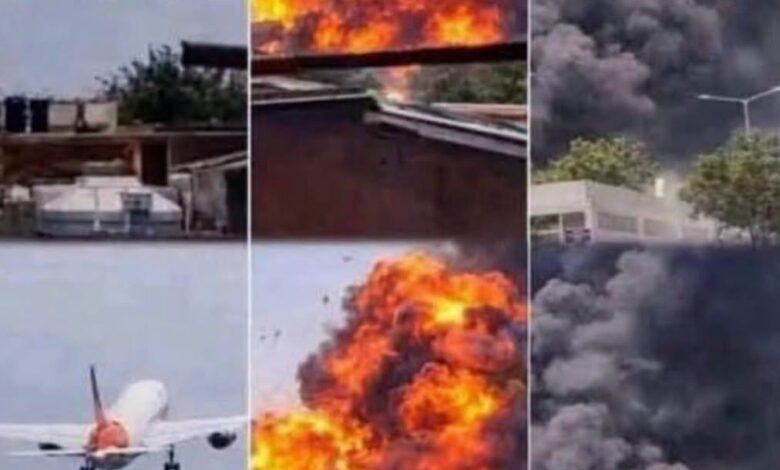
Tomblaine Plane Crash Smoke Inside the Cabin the Final Flight and the Questions Behind the Tragedy
The flight was not a long-distance journey. It was a specialized operation that depended on repeated take-offs and landings, with the aircraft returning to the same airport after each jump.
That routine is important because the aircraft had already completed several rotations before the fatal flight.
According to the BEA preliminary report, the pilot lined up on runway 21 from taxiway B2 and prepared for the sixth rotation of the day. Ten parachutists were on board.
The aircraft had completed an earlier block of three rotations. The accident occurred during the third flight of the second block, meaning the aircraft had already made five trips before beginning the fatal one.
This was not an unusual kind of schedule for a parachuting operation. The aircraft had been used for repeated flights, and the operation was planned around groups of passengers and instructors.
The previous day, the pilot had completed 15 rotations with the same aircraft for Tandemotion Parachutisme. The company had planned another 15 rotations on June 28, although the schedule included a break during the hottest part of the afternoon because of the forecast high temperatures.
The fact that the aircraft had completed several flights earlier in the day does not, by itself, establish that fatigue or accumulated mechanical stress played a role. It does, however, make the maintenance history, operating schedule, fuel records, and technical condition of the aircraft important parts of the investigation.
There were 11 people aboard: the pilot and ten parachutists.
The ten passengers included five instructors and five people who had come to experience tandem skydiving. Reports identified the five novice participants as nursing students. The flight was intended to provide them with a parachuting experience, not to transport them to another destination.
For those on board, the journey was supposed to be a short and exciting part of a planned activity. The passengers had prepared for a jump, while the instructors were responsible for helping ensure that the operation was carried out safely.
The aircraft’s cabin was arranged for parachuting. The occupants wore equipment associated with the activity, and the instructors were positioned in different parts of the cabin.
The preliminary report specifically refers to one instructor seated toward the rear and another seated in the middle. Their positions would become important because both independently reported seeing smoke in the forward-right area of the cabin.