The Tiny Dusty Tube on the Floor Had a Hidden Purpose
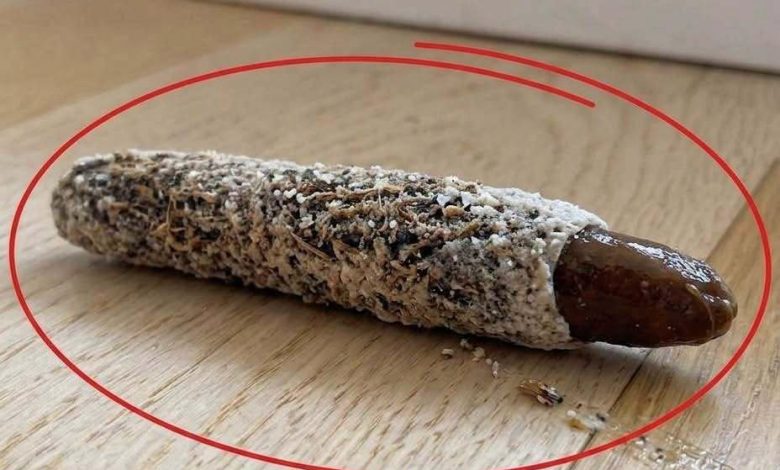
At first glance, it looked like something that belonged in the vacuum: a small, dusty tube sitting on the floor, easy to mistake for lint or a bit of dried debris. But its shape was too neat to ignore. It seemed assembled, not accidental, and that was what made the discovery so strange.
The object was narrow, textured, and covered in tiny fibers. It did not look like a manufactured item, but it also did not look like ordinary dust. For anyone who has ever found something unfamiliar near a bedroom door, baseboard, closet, or wall, the first question is simple: what exactly is this?
The Small Case That Looks Like Household Debris
The answer is often a case-bearing moth larva, commonly known as a plaster bagworm. What people usually notice is not the larva itself, but the protective case it builds and carries around.
The larva creates this tiny portable shelter using silk and materials from its surroundings. Dust, lint, hair, dead insects, and other small household particles can become part of the case. That is why it can blend so easily into the corners and edges of a room.
The case has openings that allow the larva to extend its head and legs, move along floors or walls, and pull back inside when disturbed. What looks like an abandoned speck of dirt may actually be a small mobile shelter built for protection.
Plaster bagworms are often noticed in warm, humid indoor areas. They can appear near baseboards, in closets, along walls, under furniture, or in quiet corners where dust and fibers collect. Because their cases match the environment so well, many people do not spot them until one ends up in a more visible place.
Should Homeowners Be Concerned?
Finding one case can feel unsettling, especially in a bedroom or living space. Still, it is not a sign of a large or dangerous animal in the home. The larva is small, and the case is simply part of how it survives.
That said, repeated sightings are worth paying attention to. Case-bearing moth larvae may feed on spiderwebs, shed hair, dead insects, wool, and other natural fibers. In some situations, they can damage fabrics, although a single case does not automatically mean there is a serious infestation.
For homeowners and renters, the practical concern is usually prevention. Natural-fiber clothing, stored textiles, and quiet storage areas can be more vulnerable if dust, lint, and humidity are allowed to build up. A little routine maintenance can help reduce the conditions that attract them.
What Readers Should Know
If you find one of these small cases, it can usually be removed carefully, followed by cleaning the nearby area. Vacuuming along baseboards, corners, closets, and behind furniture can remove both the cases and the materials larvae use for food and shelter.
It can also help to clear spiderwebs, reduce lint, keep closets tidy, and store wool or other natural-fiber items properly. In homes where humidity is consistently high, improving ventilation or using humidity control may make the space less inviting to them.
If many cases keep appearing, a closer inspection may be needed to find where they are collecting. The goal is not to panic, but to remove the conditions that allow them to thrive.
What makes the discovery memorable is the construction itself. A creature small enough to go unnoticed can gather fragments from its surroundings and turn them into a protective home. Each case is slightly different because it is made from whatever material is available nearby.
So the strange little tube on the floor was not random trash after all. It was a reminder that even the cleanest, most familiar rooms can contain tiny hidden ecosystems operating just out of sight.
The next time an odd speck near the wall catches your eye, it may be worth looking closer before sweeping it away.