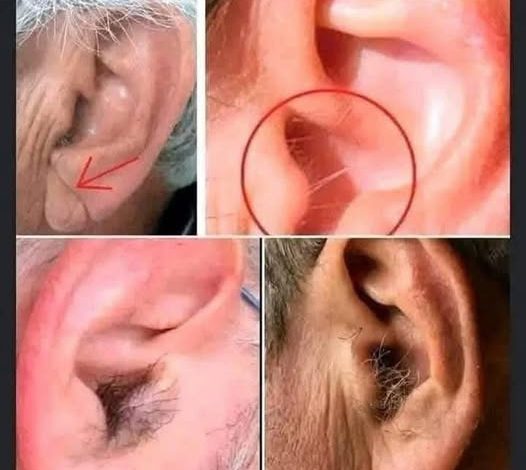
The Quiet Reason Ear Hair Shows Up Later in Life-
Not every sign of aging arrives in a dramatic way. Sometimes it is a gray hair, a new wrinkle, or a few coarse hairs around the ears that seem to appear out of nowhere. For many adults, that small grooming surprise is both common and usually harmless.
Ear hair can become more noticeable as the body changes with age. While it may feel embarrassing or unexpected, it is often tied to normal shifts in hair follicles, hormones, and family traits rather than a sign that something is wrong.
Why Ear Hair Can Increase With Age
Hair growth is strongly influenced by hormones, especially a group called androgens, which includes testosterone. Both men and women have androgens, though men typically have higher levels.
As people get older, some hair follicles can become more sensitive to these hormones. That does not always mean hormone levels are increasing. In many cases, the follicles simply respond differently than they did earlier in life.
This is one reason hair may become thicker or more visible in places such as the ears, nose, and eyebrows. Someone who had very little visible ear hair in their younger years may gradually notice more of it later on.
Genetics also matters. If close relatives developed noticeable ear hair as they aged, there may be a higher chance of seeing the same change. For many people, it is simply an inherited pattern.
Ear Hair Has a Purpose
Although visible ear hair is often treated as a grooming issue, it is not useless. Tiny hairs inside the ear help protect the ear canal by catching dust, dirt, and small particles before they move deeper inside.
In that sense, ear hair works like a small natural filter. It may help reduce irritation and keep debris away from more sensitive parts of the ear.
That does not mean everyone wants it to be visible. Many people trim or manage ear hair for appearance and comfort. The key is to be gentle and avoid pushing tools deep into the ear canal, where injury or irritation can occur.
What Readers Should Know
Most age-related ear hair develops slowly and is not a health concern on its own. Gradual changes around the ears, nose, or eyebrows are common as follicles respond differently over time.
However, sudden or extreme hair growth should not be ignored. If hair starts growing very quickly, becomes unusually thick in a short period, or appears along with other symptoms, it may be worth speaking with a healthcare professional.
In rare cases, unusual hair growth can be linked to conditions such as hypertrichosis, which causes abnormal hair growth in areas where it is not typically expected. This is different from ordinary age-related ear hair because it is usually more noticeable, widespread, or unusual.
Some research has looked at whether heavy ear hair may be connected to heart disease risk, but the evidence is not clear enough to treat ear hair alone as a reliable warning sign. People should not panic simply because they notice more hair around their ears.
Still, symptoms such as chest pain, shortness of breath, dizziness, or unexplained fatigue should be taken seriously, whether or not ear hair is present. In those cases, getting medical advice is the safer choice.
For most people, ear hair is just another normal change that comes with aging. Paying attention to what is gradual versus sudden can help you know when it is simply grooming and when it may be worth asking a doctor.