Popes one-word message to the United States goes viral!
In the hallowed halls of the Vatican, where tradition often dictates a slow and measured pace of communication, the emergence of Pope Leo XIV has already begun to redefine the intersection of the papacy and the digital age. Just days into his historic tenure, the Chicago-born pontiff has managed to capture the global imagination with a brevity that is as intentional as it is impactful.
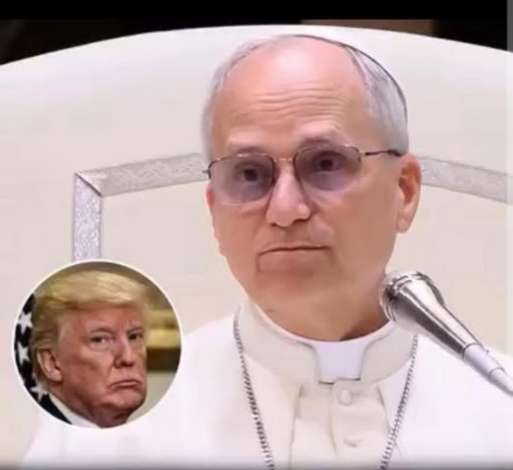
On May 12, during an eagerly anticipated press conference that drew members of the international press corps, a journalist posed a question that many in the United States had been waiting to hear: did the new Holy Father have a specific message for the American people? The Pope, known for his charismatic yet thoughtful presence, took a moment to reflect. He looked out at the gathered crowd with a knowing smile before uttering a single, resonant word: “Many.” He followed this brief declaration with a gentle, traditional benediction: “God bless you all.”
This one-word response did not merely satisfy the room; it ignited a firestorm across the digital landscape, trending within minutes and sparking a global conversation about the power of language and the future of the Catholic Church’s relationship with the United States. In an era where public figures are often criticized for long-winded, scripted rhetoric that avoids directness, Leo XIV’s choice to use a single word was perceived by many as a masterstroke of modern communication. However, the interpretation of that word—”Many”—has become a Rorschach test for observers across the political and social spectrum. For some, the response felt cryptic, perhaps even chilling in its ambiguity. For others, it was a subtle and sophisticated acknowledgment of the multifaceted challenges and opportunities currently facing the American nation.
To understand the weight behind this one word, one must look at the man who now wears the Fisherman’s Ring. As a native of Chicago, Pope Leo XIV brings a distinctly American perspective to the Holy See, combined with a deep-seated commitment to the universal values of the Church. His prior career was marked by a tireless advocacy for the marginalized, and he has been a vocal critic of modern immigration policies that he views as being at odds with the fundamental dignity of the human person. His choice of the papal name Leo is itself a significant signal of his intended direction. It pays homage to Pope Leo XIII, the author of the landmark 1891 encyclical “Rerum Novarum,” which addressed the rights and duties of capital and labor and laid the foundation for modern Catholic social teaching. By aligning himself with this legacy, Pope Leo XIV has signaled that his papacy will be defined by a focus on economic fairness, workers’ rights, and the pursuit of social justice.
The complexity of the word “Many” lies in its potential to address a vast array of topics simultaneously. It could refer to the “many” blessings the United States has to offer the world, or the “many” responsibilities it carries as a global superpower. Conversely, it could be an allusion to the “many” divisions currently fracturing American society, or the “many” marginalized voices that the Pope believes are being ignored in the halls of power. By refusing to elaborate in that specific moment, Leo XIV invited the world to look closer at his record and the tenets of his faith to find the answers. This approach marks a departure from the more defensive posturing sometimes seen in institutional leadership, moving instead toward a style that encourages contemplation and dialogue.
In the United States, a country deeply polarized by political and cultural debates, the Pope’s nonpartisan stance offers a challenging yet potentially healing alternative. Throughout his time as a bishop and cardinal, he was known for questioning the status quo on both sides of the political aisle. While he has been a staunch defender of the rights of immigrants and the poor—positions that often align with more progressive agendas—he has also been equally vocal in his defense of traditional moral values and the sanctity of life, which are hallmarks of the conservative platform. His central thesis has always been that compassion and human dignity must transcend partisan labels. In “Many,” he may be suggesting that the solutions to the country’s woes are not to be found in a single platform, but in a multifaceted approach that prioritizes the common good over political victory.
The viral nature of the comment also highlights the unique position of Pope Leo XIV as a bridge between the ancient traditions of the Vatican and the fast-paced world of social media. He understands that in a world of short attention spans, a single word can often carry more weight than a ten-page encyclical. By creating a “viral moment,” he has ensured that his message—whatever one interprets it to be—reaches a demographic that might otherwise be disconnected from the Church’s teachings. This savvy use of modern media suggests a papacy that will be highly engaged with the world, using every tool at its disposal to advocate for the poor and the forgotten.
As theologians and political analysts continue to dissect the May 12 press conference, the consensus is that Pope Leo XIV is a leader who values the power of the unspoken as much as the spoken. The word “Many” serves as a container for the vast expectations placed upon him by the American public. There are many who hope he will be a revolutionary for social change; there are many who look to him to preserve the core of the faith; and there are many who are simply curious to see how a son of the American Midwest will navigate the complexities of the Roman Curia.
In the weeks and months ahead, the “Many” messages the Pope alluded to will undoubtedly begin to take clearer shape through his actions, his appointments, and his formal writings. Whether he is addressing the climate crisis, economic inequality, or the spiritual health of a secularizing West, it is clear that Leo XIV will not be a pontiff who shies away from the big questions. He has started his journey with a smile and a single word, but that word has opened a door to a million different conversations. As the United States looks toward Rome, the American Pope has made one thing abundantly clear: he has a great deal on his mind, and he is only just beginning to speak his truth. The world is now listening with bated breath, waiting for the “many” ways he will seek to bless, challenge, and inspire a nation—and a world—in desperate need of a unifying voice.