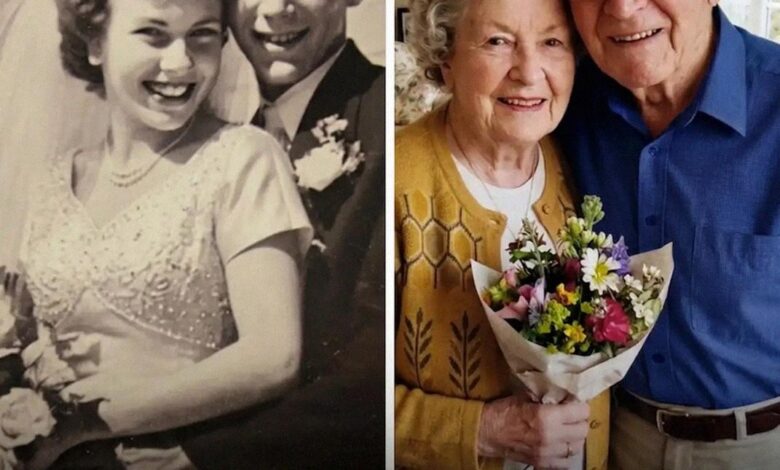
My Late Husband Sent Me Valentine Flowers and a Hidden Key to the Secret Life He Kept for Decades
My name is Daisy, and at eighty-three years old, I have learned that time is both a thief and a poet. For sixty-three years, my husband Robert was the rhythm of my heart. He proposed to me on Valentine’s Day in 1962 in a cramped college dorm kitchen over burnt garlic bread and cheap spaghetti sauce. He didn’t have much then—just a small bouquet of roses wrapped in old newspaper and a silver ring funded by weeks of washing dishes—but he gave me his word. He promised that no matter where life took us, he would always find his way back to me with flowers.
He kept that promise through six decades of life’s turbulent weather. He brought me wildflowers when we were young and struggling, long-stemmed roses when his career flourished, and simple daisies during the year we lost our second child and the world felt too heavy to endure. The flowers were his language, a silent recurring testimony that he was present, even when words failed. Robert died four months ago, taking the music of our home with him. The house became a hollow shell of slippers by the bed and an unused coffee mug hanging on a kitchen hook. I spent my days talking to his photograph, narrating the mundane details of a life that felt like it had stopped moving.
When the first Valentine’s Day without him arrived, the silence of the house felt suffocating. I sat at the kitchen table, nursing a cup of tea and staring at his empty chair, waiting for the ghost of a knock that I knew would never come. But then, a sharp, physical rap at the door startled me. I hurried to the entrance, but the porch was empty. There, resting on the doormat, was a bouquet of fresh roses wrapped in brown paper and twine—the exact style of that first bouquet from 1962. Tucked into the blooms was an envelope containing a heavy brass key and a letter in Robert’s unmistakable, sloping handwriting.
My heart hammered against my ribs as I read his words. He told me that if I was reading this, he was gone, but that he had been keeping a secret from me for nearly thirty years. He provided an address in a part of town I had never visited and urged me to go. A cold dread settled in my stomach. I thought of his late nights at the office and the hushed phone calls from years ago. I feared I was about to discover a betrayal that would rewrite our entire history. I hailed a taxi, my mind racing with images of a second family or a hidden life that would shatter the memory of the man I loved.
The taxi dropped me in front of an unassuming brick building with a weathered green door. My hands shook as I turned the key in the lock. Expecting the worst, I stepped inside, only to be hit by a scent that transported me back to my youth: the sharp, sweet aroma of lemon oil, old paper, and polished wood. I flicked the light switch, and the breath left my lungs.
It wasn’t an apartment for a mistress or a hidden family. It was a music studio. In the center of the room sat a magnificent upright piano made of dark, gleaming mahogany. The walls were lined with shelves reaching toward the ceiling, overflowing with sheet music, recordings, and textbooks on music theory. On the piano bench lay a stack of scores: Debussy, Chopin, and Beethoven. These were my favorites—the pieces I used to play when I was a young woman dreaming of the concert stage before the responsibilities of motherhood and a growing family required me to put my aspirations in a box in the garage.
On a small side table, I found a collection of medical records dated six months before his passing. Robert had known his heart was failing long before he told me. Beside the reports was a legal contract with a caretaker, ensuring that the flowers and the key reached me on this specific day. But the most precious discovery was a journal resting on the piano’s lid.
I sat on the bench and began to read. The first entry was dated twenty-five years ago. Robert wrote about the day we were cleaning the garage and he saw me looking at my old sheet music. He noticed the flash of grief in my eyes for the talent I had let wither away for the sake of our life together. That day, he made a secret vow to give that dream back to me. He had rented this space and spent twenty-five years taking secret piano lessons, struggling with stiff fingers and the frustrations of learning a complex art form in his fifties.
He wrote about his failures, his cramped hands, and his determination. He didn’t want to just buy me a piano; he wanted to understand the language I had loved so much. He wanted to surprise me by playing my favorite pieces. As the entries progressed toward the end of his life, his writing became frantic and frail. He knew he was running out of time. He spent his final months attempting to compose an original piece for me—a song that captured sixty-three years of devotion.
The last entry, written only a week before his heart attack, broke me. He apologized for running out of time. He told me he couldn’t finish the song. I looked at the music stand and saw the handwritten score titled “For My Daisy.” The notes were beautiful and complex, but the ink trailed off halfway through the second page, leaving the rest of the staff hauntingly blank.
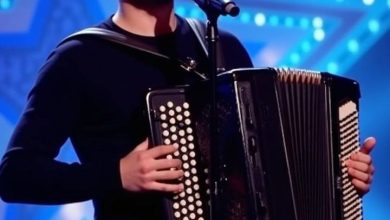
I sat in that sun-drenched studio for a long time, the silence no longer feeling empty, but expectant. I placed my hands on the keys. I hadn’t played seriously in decades, but as I looked at Robert’s unfinished work, the muscle memory of my soul took over. I played the melody he had written—a tender, yearning sequence of chords that felt like his arms around me. When I reached the point where his ink stopped, I didn’t stop. I let my own grief and love flow through my fingertips, composing the conclusion he hadn’t been able to reach. I finished the song for both of us.
Underneath the music stand, I found one final note. Robert told me that this studio was mine now. He had pre-paid the lease for years and left a fund to maintain it. He begged me to play again, telling me that even though he was gone, he would live in every note and every chord I struck. He reminded me that he had loved me from the moment he saw me as a twenty-year-old girl with sheet music tucked under her arm, and that he would love me forever.
I visit that green door twice a week now. I have reclaimed the part of myself I thought was lost to history. I record my own sessions and place them on the shelf next to the recordings he made for me. My hands are no longer as nimble as they once were, and sometimes I miss a beat, but it doesn’t matter. In that secret room, the music never ends. Robert kept his promise. He found his way back to me one last time, and in doing so, he taught me that true love doesn’t just hold on—it sets you free to become who you were always meant to be.