My Daughter’s Future In-Laws Mocked Her, But My Unexpected Response Changed the Dinner Conversation
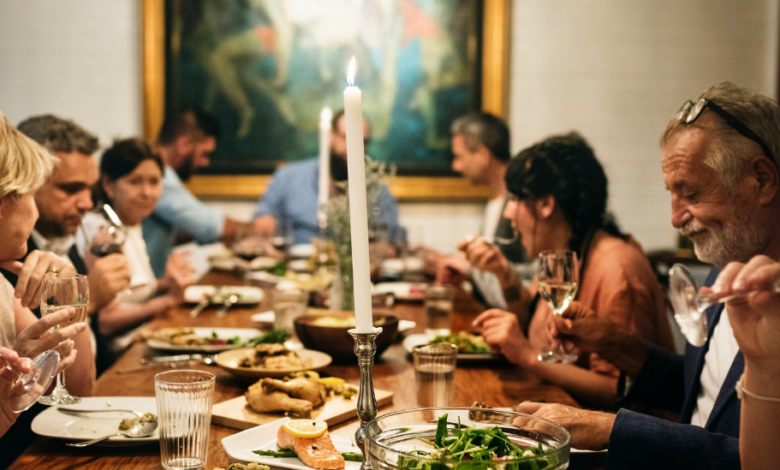
The evening was meant to bring two families closer together. Soft candlelight reflected against the windows of the lake house, and my daughter Claire’s carefully prepared beef bourguignon filled the room with the comforting smell of herbs, onions, and slow-cooked flavors. Everyone had gathered to celebrate her engagement to Luca, a kind engineer who had grown up in Brussels.
During dinner, I noticed something unusual. Luca’s parents, Hélène and Philippe, were speaking French whenever Claire looked away. At first, I assumed they were simply enjoying their native language. But as the conversation continued, I realized they were making comments about Claire’s background and wondering whether she was “worldly enough” for their family.
Claire noticed my expression and quietly asked if I was okay. I placed my fork beside my plate and looked across the table. They had no idea that the quiet woman sitting beside them understood every sentence.
My name is Margaret Doyle, and at sixty-three years old, I had become someone people often underestimated. After years of marriage, raising a family, and focusing on others, I had grown comfortable staying in the background. I was the person who brought the extra dish, helped organize gatherings, and made sure everyone else felt welcome.
But before I became a wife and mother, I had lived a very different life.
In my twenties, I spent eight years in Lyon, France. I learned the language, built friendships, worked different jobs, and learned how to navigate a completely new culture on my own. Those years shaped me in ways I never forgot.
That was the part of my story Hélène and Philippe did not know.
Earlier that evening, their questions about Claire’s career and upbringing had felt uncomfortable. They seemed to believe that because Claire and I lived a quieter life, we had experienced less of the world. They did not see the years of hard work behind my daughter’s success or the courage it took for her to build her own career.
When Philippe made another comment about Claire needing more “cultural experience,” I decided it was time to speak.
I answered him calmly in French.
The room became silent.
I explained that I had understood their conversation from the beginning. I told them that Claire had worked hard, created a successful career, and welcomed them into our home with kindness. I also reminded them that true confidence does not come from judging others, but from respecting them.
I did not raise my voice. I did not try to embarrass them. I simply wanted them to understand that every person at the table deserved to be valued.
Philippe looked surprised, then apologized. He admitted that he had made assumptions without knowing my daughter or my story. Hélène also shared that she had been struggling with the changes that come when children begin their own families.
Their apology did not erase the uncomfortable moment, but it opened the door for a more honest conversation.
Later that night, Philippe and I discovered that we had both spent time in Lyon during similar years. We talked about old neighborhoods, favorite cafés, and memories from a city that had shaped us both. The conversation reminded me that people are often more complicated than first impressions suggest.
When Claire and Luca married the following year, both families came together with a better understanding of each other. The experience changed more than just one dinner—it changed the way we all saw one another.
Years later, what I remember most is not the surprise on Philippe’s face when I answered in French. I remember the feeling of finding a part of myself that I thought had disappeared.
For many years, I had allowed myself to become invisible. I had forgotten the confident young woman who once moved across the world and created a life for herself.
That evening reminded me that she was still there.
Today, I speak French with my granddaughter Margaux because I want her to understand that language is a bridge between people. It should bring curiosity, friendship, and connection—not distance.
Philippe still writes to me, and sometimes he ends his messages with a simple sentence:
“To the woman who understood every word.”
But the most important thing I understood that night was not the French language.
It was that my voice had always mattered.