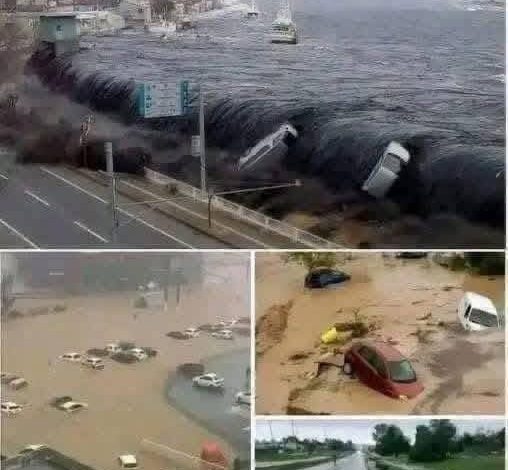
Massive 8,2 Earthquake Hits Alaska, Tsunami Alerts Trigger Panic Across the Pacific
A powerful earthquake measuring 8.2 on the Richter scale struck the Alaskan Peninsula late Wednesday, sending immediate shockwaves through monitoring agencies and coastal communities across the Pacific. The seismic event, which occurred at a depth of approximately 35 kilometers, was located about 91 kilometers east-southeast of Perryville—an area known for its seismic activity but rarely associated with quakes of this magnitude.
The tremor was strong enough to trigger widespread concern within minutes.
Emergency systems activated rapidly. Tsunami warnings were issued, sirens sounded in vulnerable regions, and authorities began coordinating responses to assess potential risks. While initial reports indicated no immediate casualties or significant structural damage, the scale of the earthquake prompted heightened vigilance across multiple countries.
In Kodiak and other coastal areas of Alaska, residents reported hearing tsunami sirens shortly after the quake. Video footage captured the urgency of the moment—alarms echoing across communities as people moved quickly to follow safety protocols. The activation of these systems reflected the seriousness with which such seismic events are treated, even before the full scope of their impact is understood.
The U.S. National Tsunami Warning Center (NTWC) issued alerts covering a wide stretch of southern Alaska, including coastal regions from Hinchinbrook Entrance to Unimak Pass. These warnings are designed to provide early notice of potential wave activity that could threaten shorelines, giving communities crucial time to respond.
At the same time, monitoring extended far beyond Alaska.
The Pacific Tsunami Warning Center began evaluating data to determine whether the quake could generate waves capable of affecting distant regions. Early advisories were issued for locations including Hawaii and Guam, where residents were briefly placed on alert as authorities analyzed incoming information.
Within hours, those areas were declared safe.
The situation remained dynamic, however. Tsunami threats are complex and can evolve based on factors such as underwater displacement, ocean depth, and the structure of the seismic event itself. Even when initial warnings are lifted, monitoring continues to ensure that no delayed impacts occur.
Alaska Governor Mike Dunleavy confirmed that the state’s emergency operations center had been activated immediately following the quake. This step ensures coordination between local, state, and federal agencies, allowing for rapid response if conditions change.
Emergency preparedness in Alaska is a critical component of disaster management, given the region’s position along the Pacific Ring of Fire—a zone characterized by intense geological activity. Earthquakes of varying magnitudes occur regularly, but events exceeding magnitude 8.0 remain relatively rare and demand heightened attention.
International agencies also moved quickly.
Organizations in countries such as Japan and New Zealand, both of which have extensive experience with seismic and tsunami events, began their own assessments. These nations maintain advanced monitoring systems and often collaborate with global networks to track potential threats across ocean basins.
Their involvement highlights the interconnected nature of seismic risk in the Pacific region.
An event in one area can have implications thousands of miles away.
The United States Geological Survey (USGS) reported that the initial quake was followed by a series of aftershocks. At least eight were recorded in the hours following the main event, with two exceeding magnitude 6.0. Aftershocks are a common occurrence after large earthquakes, as the Earth’s crust adjusts to the sudden release of energy.
While typically smaller than the main quake, aftershocks can still pose risks, particularly in areas where structures may already be weakened.
For residents in affected regions, the hours following the earthquake were marked by uncertainty. Even in the absence of immediate damage, the possibility of aftershocks and delayed tsunami activity created an atmosphere of caution. Authorities advised people to remain alert, follow official guidance, and avoid coastal areas until further notice.
Communication played a central role in managing the situation.
Emergency alerts, official statements, and updates from monitoring agencies helped provide clarity as information developed. In events like this, timely and accurate communication is essential—not only to ensure safety but also to prevent unnecessary panic.
Despite the intensity of the earthquake, the lack of immediate reports of casualties or major destruction offered a measure of relief. However, officials emphasized that assessments were still ongoing. Remote locations, limited infrastructure, and challenging terrain can delay the full understanding of an event’s impact.
Search and evaluation efforts continued as teams worked to confirm conditions in all affected areas.
The broader significance of this earthquake lies not only in its magnitude but in what it represents. Large seismic events serve as reminders of the dynamic nature of the planet. They highlight the importance of preparedness, monitoring, and international cooperation in responding to natural disasters.
In regions like Alaska, where earthquakes are part of the environment, systems have been developed to minimize risk and improve response times. Early warning systems, evacuation protocols, and public awareness campaigns all contribute to reducing potential harm.
Still, events of this scale test those systems.
They challenge assumptions, reveal vulnerabilities, and reinforce the need for constant vigilance.
For now, the situation remains under control.
Tsunami warnings have been adjusted as more data becomes available, and no widespread damage has been confirmed. But monitoring continues, and authorities remain prepared to act if conditions change.
The earthquake has once again demonstrated how quickly circumstances can shift—and how critical it is to respond with both speed and precision.
As the Pacific region returns to a state of cautious normalcy, the focus remains on observation, readiness, and ensuring that communities remain informed.
Because when the ground moves with that kind of force, the effects don’t end when the shaking stops.
They continue—in the systems activated, the responses coordinated, and the lessons carried forward long after the initial impact has passe