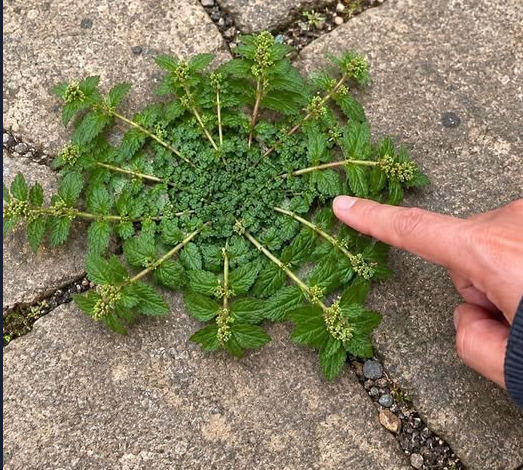
Just one leaf of this humble plant may be more interesting than it looks
Many people see this tiny green herb growing beside sidewalks, in flowerpots, cracks in garden soil, or along the edges of their yards—and pull it out without a second thought.
But what if that little plant has a story worth knowing?
Known in some traditions as Santa Lucía herb and botanically as Euphorbia hirta, this modest plant has been used in traditional herbal practices for generations. When its stem or leaves are damaged, it can release a milky white latex, a characteristic that makes it especially recognizable to people familiar with the plant.
To one person, it may look like nothing more than an unwanted weed.
To another, it can represent something much deeper: the knowledge passed down from grandparents, parents, and generations before them.
In various traditional practices, Euphorbia hirta has been prepared in simple ways, including teas and infusions. It has been associated with traditional approaches to digestive comfort, breathing-related discomfort, and general fluid balance. In some households, preparing a warm herbal drink was never simply about the plant itself—it was part of a familiar ritual of slowing down, resting, and caring for someone who wasn’t feeling their best.
And that may be why these ordinary-looking plants continue to attract so much attention.
They grow quietly in places most people overlook.
They don’t come in expensive packaging.
They don’t need a beautiful garden to survive.
Yet for generations, people have observed them, learned their characteristics, experimented cautiously with traditional preparations, and passed their knowledge along.
There is something fascinating about that connection between nature and inherited wisdom.
A plant that looks insignificant today may have been recognized by someone’s grandmother decades ago. A simple cup of herbal tea may carry a memory of childhood, family, and traditional ways of caring for one another.
But there is an important side to this story that shouldn’t be ignored: natural does not automatically mean safe.
Correct identification is essential. Wild plants can resemble one another, and mistaking one species for another can have serious consequences. Plants collected from roadsides, heavily treated gardens, polluted areas, or contaminated soil may also carry unwanted chemicals or other contaminants.
And because traditional use is not the same thing as proven medical treatment, herbal preparations should not be treated as replacements for professional medical care.
Extra caution is especially important for children, pregnant or breastfeeding people, older adults, and anyone taking medication or living with a chronic health condition. Even plants that have been used traditionally for generations can interact with medicines or cause unwanted effects.
So perhaps the most interesting lesson isn’t simply that an overlooked plant might have traditional uses.
It’s that the natural world is full of stories we often walk past without noticing.
The next time you see a tiny herb growing quietly between stones or at the edge of a garden, you might pause for a moment before calling it “just a weed.”
It may have a long history.
It may have cultural significance.
And it may remind us that some of the oldest forms of traditional knowledge began with something as simple as paying attention to the plants growing around us. 
Nature, tradition, and caution can exist side by side.
The key is knowing the plant, respecting its limits, and never confusing