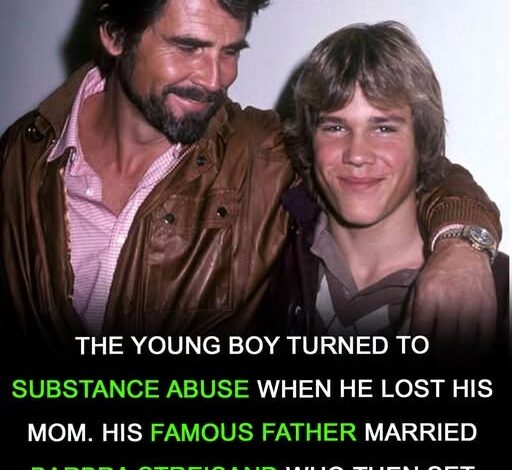
Josh Brolins childhood actor tells all in autobiography
Josh Brolin’s career spans acclaimed dramas, action blockbusters, and some of modern cinema’s most recognizable villains. His autobiography looks beyond the filmography and describes a childhood and early adulthood shaped by risk, substance use, family conflict, and the long process of becoming sober.
Brolin grew up partly on a California ranch, the son of actor James Brolin. His parents separated when he was young, and he has described an upbringing that combined freedom, instability, and exposure to adult experiences far too early. Acting eventually gave him direction, beginning with The Goonies and developing into roles that earned major awards attention.
Success did not remove the underlying struggle
On screen, Brolin built a reputation for intensity and control. Off screen, alcohol and drugs remained part of his life for years. In the memoir, he recalls trying marijuana at nine and LSD at thirteen. Those details are not presented as glamorous rites of passage. They illustrate how early dangerous habits became normalized.
Fame can hide a problem by making chaotic behavior look eccentric or manageable. Work continued, and major roles arrived, but professional momentum did not mean Brolin was healthy. Addiction affected decisions, relationships, and the way he showed up for people who mattered.
Tough conversations with family
Brolin has spoken candidly about difficult exchanges with his stepmother, Barbra Streisand. She challenged him directly about drinking rather than softening the message to protect his feelings. He remembers the bluntness with a degree of affection because it came from someone unwilling to pretend that self-destructive behavior was harmless.
Family pressure alone cannot create lasting sobriety. A person must reach the point of recognizing what the substance is costing and decide to accept help or change direction. For Brolin, that realization became unavoidable during a visit to his grandmother near the end of her life.
The day that became a boundary
He arrived at his ninety-nine-year-old grandmother’s bedside smelling of alcohol after waking with a hangover. Seeing himself in that moment, beside someone whose life was ending, made the distance between the man he was and the man he wanted to become impossible to ignore. He decided it would be the last time he drank.
That decision came in 2013. More than a decade later, Brolin describes sobriety not as a deprivation but as a condition that allows him to enjoy life more fully. Problems do not disappear, but he believes nothing difficult would be improved by drinking. Sobriety gives him the chance to experience the problem clearly and respond without adding another layer of damage.
Growing older without constantly spinning
Brolin also writes about age as a form of permission. Youth and fame encouraged constant motion, but getting older allowed him to slow down and stop proving himself through every impulse. He now speaks about mellowing out with relief rather than embarrassment.
His story does not suggest that one dramatic realization makes recovery simple. Addiction can require daily attention, support, honesty, and accountability. The importance of the hospital-room moment lies in what followed: he treated the decision as a beginning and continued living it.
The autobiography places the celebrated roles beside the experiences that audiences never saw. It shows that a person can be successful and still profoundly unwell, and that recovery does not erase the past. Brolin’s willingness to describe his early exposure, failures, and turning point gives the achievements that followed a different context. The most significant role was not a character. It was learning to remain present in his own life.
That candor is what gives the memoir its weight. Brolin does not present a polished victory speech or blame one person for every wrong turn. He describes the environment that shaped him, the choices that remained his own, and the relationships affected along the way. The result is less a collection of Hollywood anecdotes than an account of accountability: an actor looking back without pretending that fame protected him from consequences.