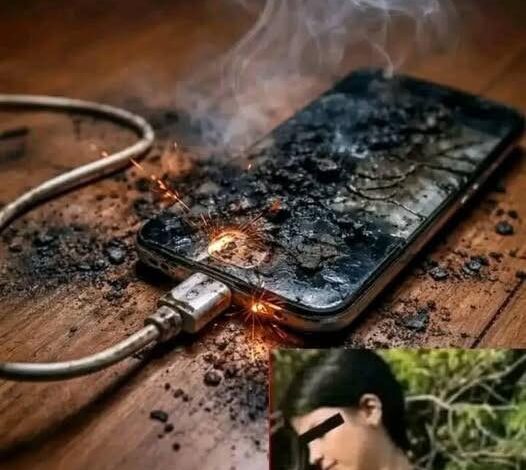
IS YOUR PHONE A FIRE HAZARD? The Silent Charging Mistakes That Could Destroy Your Home Tonight
In our hyper-connected modern era, the act of charging a smartphone or laptop has become as instinctive as breathing. We plug in our devices beside our beds, under our pillows, and into crowded power strips without a second thought. However, experts are now sounding the alarm on “charging complacency,” a growing phenomenon where convenience is prioritized over basic electrical physics—often with devastating consequences. While charging technology is generally designed to be safe, poor habits and faulty equipment are turning everyday gadgets into ticking time bombs.
The danger often begins with the “bargain” charger. We’ve all been there: your original manufacturer cable frays, and instead of spending $30 on a certified replacement, you pick up a $5 knock-off at a gas station or through an unverified online third party. These uncertified chargers frequently lack the essential internal voltage regulators and heat-sink components required to manage the flow of electricity safely. Without these “brain” components, a charger can easily provide too much current, leading to a catastrophic short circuit or a thermal runaway event within the device’s lithium-ion battery.
The physical environment of your charging station is equally critical. One of the most common—and dangerous—mistakes is charging a device on a soft surface, such as a bed, sofa, or thick carpet. These materials act as insulators, trapping the natural heat generated during the charging process. When a phone is tucked under a pillow while connected to a high-speed charger, the temperature can skyrocket within minutes. Without proper airflow, that excess heat has nowhere to go, rapidly reaching the ignition point of synthetic fabrics.
Furthermore, the “octopus” effect—plugging multiple high-draw devices into a single power strip or extension cord—creates a massive strain on home wiring. Overloading an outlet generates heat behind the walls, often before a circuit breaker can even trip. When you combine an overloaded outlet with a frayed or bent cable, you create the perfect conditions for an electrical arc. These arcs can reach temperatures of several thousand degrees Celsius, instantly igniting nearby curtains or furniture.
To protect your home and family, safety experts urge a “maintenance-first” mindset. Start by performing a regular audit of your charging cables. If you see exposed wires, “kinks” in the plastic, or if the connector feels loose when plugged in, discard the cable immediately. Never ignore the warning signs: if a charger is too hot to touch, emits a faint humming sound, or produces a slight “electronic” burning smell, it has already failed internally and poses an immediate fire risk.
Ultimately, the gold standard for electrical safety is simple: use only manufacturer-certified (UL or MFi) chargers and cables, and ensure your devices are charged on hard, flat surfaces with plenty of ventilation. Whenever possible, unplug chargers when they aren’t in use, as “vampire” draw can still cause internal components to wear down over time. By shifting your habits from convenience-focused to safety-conscious, you ensure that your technology remains a tool for your life, rather than a threat to your home. Remember, a fully charged battery is never worth the price of a house fire. Prioritize your safety today, because once a short circuit begins, you may only have seconds to react.