I Made Bikers Pay Before They Ate Because I Didn’t Trust Them But They Made Me Cry With Their Action
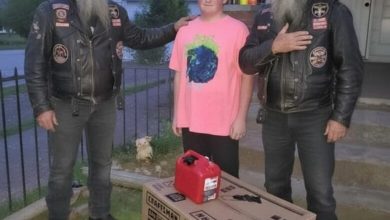
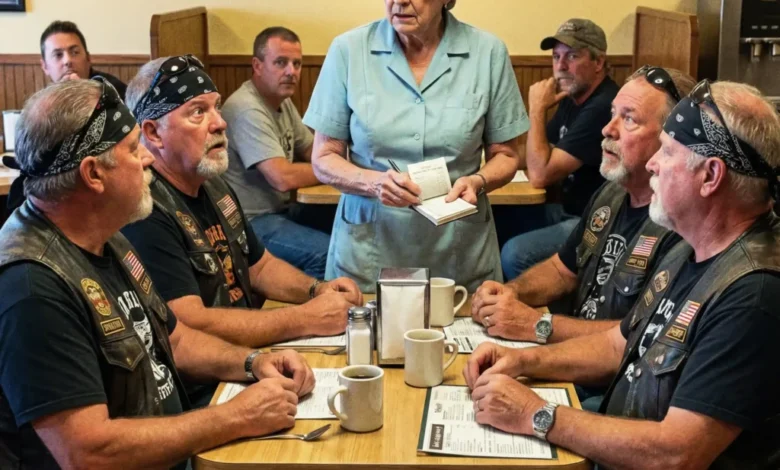
I made the bikers pay before they ate because I didn’t trust them. Fifteen of them walked into my diner at 9 PM on a Tuesday night, leather vests covered in patches, beards down to their chests, tattoos crawling up their necks.
I’d been running Maggie’s Diner for thirty-two years and I knew trouble when I saw it.
“Payment upfront,” I told them. “All of you. Before you sit down.”
The one in front—biggest of them all, gray hair pulled back in a ponytail—raised his eyebrows. “Ma’am?”
“You heard me. I’ve had your type in here before. Eat a hundred dollars worth of food and disappear out the back. Not tonight. You pay first or you leave.”
The other customers were staring. A family with two small kids. An elderly couple celebrating their anniversary. A young woman studying with her laptop. All of them watching me humiliate these men.
The big biker looked at his brothers. Something passed between them. A look I couldn’t read.
“Yes ma’am,” he said quietly. “Whatever makes you comfortable.”
He pulled out his wallet and handed me three hundred-dollar bills. “That should cover all of us with tip. Keep the change.”
I felt a small flicker of shame but I pushed it down. I was protecting my business. Protecting my customers. I wasn’t wrong to be cautious.
I seated them in the back corner, far from the family and the elderly couple. Gave them menus and water and tried to ignore them for the rest of the night.
But I couldn’t help watching.
They were quiet. Polite. Said please and thank you to my waitress, a nineteen-year-old girl named Lily who usually got nervous around big groups of men. But she came back from their table smiling.
“They’re really nice, Maggie. One of them asked about my college plans.”
I frowned. “Just be careful.”
An hour passed. They ate their food, talked among themselves, laughed occasionally but never too loud. Nobody complained. Nobody caused problems. Nobody made the other customers uncomfortable.
At 10, they stood up to leave. The big one approached me at the register.
“Thank you for the meal, ma’am. Best meatloaf I’ve had in years.”
I nodded stiffly. “You’re welcome.”
He paused like he wanted to say something else. Then he just smiled sadly and walked out. Fifteen bikers filed past me one by one. A few of them nodded. One said “God bless you, ma’am.” Another said “Have a good night.”
Then they were gone. The rumble of motorcycles faded into the distance.
Lily went to clean their table. I heard her gasp.
“Maggie. Maggie, come here. You need to see this.”
I walked over, expecting the worst. Trash everywhere. Something broken. Some crude message left behind.
Instead I found the table spotless. Plates stacked neatly. Napkins folded. Glasses arranged in a row for easy cleanup.
And in the center of the table was an envelope.
My name was written on the front. “Maggie.”
“How did they know my name?” I whispered.
“It’s on the sign outside,” Lily said. “Maggie’s Diner.”
My hands trembled as I opened the envelope. Inside was a stack of cash. I counted it twice. Five hundred dollars. And there was a note written on diner napkin.
The note was written in careful handwriting, like someone who’d taken their time:
“Dear Maggie, We understand why you asked us to pay upfront. We know how we look. We know what people assume. We’ve been getting those looks our whole lives. We’re not angry. We’re not offended. You were protecting your business and your customers. We respect that.
But we wanted you to know who we are.
We’re the Iron Guardians MC. Every man who walked into your diner tonight is a military veteran. Together we served 347 years in the United States Armed Forces. Three Purple Hearts. Two Bronze Stars. One Silver Star. We fought for this country because we believed in it.
Tonight we were on our way home from a funeral. Our brother Jimmy passed away last week. Lung cancer. He was 64. He served three tours in Vietnam and never complained about anything except the coffee at the VA hospital.
Jimmy’s last wish was to be buried in his hometown, 400 miles from where most of us live. So we rode out here together to say goodbye. Fifteen men on fifteen motorcycles crossing three states to honor our brother.
We stopped at your diner because we saw the American flag in your window. We thought this would be a safe place. A place that might understand who we are beneath the leather and tattoos.
We were wrong. But that’s okay. We’re used to being wrong about.
The extra money is for you and your staff. Please use it however you need. We believe in taking care of people, even people who don’t trust us.
And Maggie—we noticed the ‘Help Wanted’ sign in your window. We noticed you’re the only one working the register. We noticed your hands shaking when you took our money. We noticed the photo behind the counter of you and a man in an Army uniform.
We see more than people think we do.
If that man was your husband, we’re sorry for your loss. If he served, we thank him for his service. And we want you to know that we would have protected this diner with our lives tonight. Not because you trusted us. But because that’s who we are.
That’s who Jimmy was.
Semper Fi, Thomas Miller, President, Iron Guardians MC.”
I read the letter three times. By the second time, I couldn’t see through my tears.
The photo behind the counter. My Robert. Dead six years now. Army sergeant who served two tours in Iraq. Came home with nightmares and a heart too weak from stress. Died of a heart attack at fifty-eight years old.
I looked at that photo every single day. I’d stopped really seeing it years ago.
But those bikers saw it. They noticed.
They noticed everything.
Lily was reading over my shoulder. “Maggie, are you okay?”
I shook my head. I wasn’t okay. I’d just treated fifteen veterans like criminals. Men who’d served their country. Men who’d just buried their brother. Men who responded to my disrespect with kindness and generosity.
“I need to find them,” I said.
“What?”
“The Iron Guardians. I need to find them and apologize.”
Lily pulled out her phone. “Let me look them up.”
It took her ten minutes to find their Facebook page. A motorcycle club for veterans based three states away. Photos of charity rides, toy drives, visits to VA hospitals. Men in leather vests reading to children at libraries. Men in leather vests building wheelchair ramps for disabled veterans. Men in leather vests standing honor guard at military funerals.
Men just like the ones I’d humiliated in my diner.
I found Thomas Miller’s profile. President of the club for fifteen years. Vietnam veteran. Former POW. Married forty-three years. Four children. Nine grandchildren. Ran a mechanic shop that gave free oil changes to single mothers and veterans.
This was the man I’d demanded pay upfront because I didn’t trust him.
I sent him a message that night. Three paragraphs of apology. Told him about Robert. Told him about the fear I’d carried since he died. Told him I was ashamed of how I’d acted.
He wrote back the next morning.
“Maggie, you have nothing to apologize for. We’ve all been judged unfairly. The measure of a person isn’t whether they make mistakes. It’s whether they try to make things right. You reached out. That’s more than most people do. Jimmy would have liked you. He always said the best people are the ones who can admit when they’re wrong. Take care of yourself. And if you ever need anything, the Iron Guardians have your back. You’re family now.”
I cried for an hour after reading that.
Family now. After everything I’d done.
Two weeks later, I got a package in the mail. A framed photo of the Iron Guardians standing in front of their clubhouse, holding a banner that read “In Memory of SGT Robert Mitchell, Maggie’s Diner’s Hero.”
They’d looked him up. Found his service record. Made him an honorary member of their club.
My Robert. Honored by men I’d treated like criminals.
I hung that photo next to his. Right behind the register where everyone could see it.
A month after that, three of them rode back to my diner. Thomas and two others. They didn’t want free food. They just wanted to say hello. Wanted to check on me.
“How are you holding up, Maggie?” Thomas asked.
I poured him coffee with shaking hands. “Better. Getting better.”
He nodded. “Grief takes time. There’s no rushing it. But you don’t have to carry it alone.”
They stayed for two hours. Told me stories about their service. Asked about Robert. Listened when I cried. Didn’t try to fix anything. Just sat with me in my pain.
When they left, Thomas pressed something into my hand. A patch. Iron Guardians MC. “Friend of the Club.”
“You earned this,” he said. “Not because you trusted us from the start. But because you had the courage to change your mind.”
That was three years ago.
Today, the Iron Guardians stop at Maggie’s Diner every time they pass through town. Sometimes five of them. Sometimes twenty. They always pay—won’t let me give them free food no matter how hard I try—and they always leave the table spotless.
They’ve become my family.
When my roof needed repairs last year, twelve of them showed up with tools and materials. Wouldn’t take a penny. “Family takes care of family,” Thomas said.
When I had surgery on my hip, they organized a meal train. Different members dropping off food every night for six weeks. Homemade stuff. Good stuff. Their wives’ recipes passed down for generations.
When my grandson got bullied at school for being small, Thomas and three others showed up at his baseball game. Sat in the front row wearing their vests. Cheered louder than anyone.
The bullying stopped immediately.
I asked Thomas once why they kept coming back. Why they cared so much about an old woman who’d treated them so badly that first night.
He thought about it for a long moment.
“Because you remind us why we do this,” he finally said. “You judged us by our appearance. Most people do. But you were willing to see past it. You were willing to learn. You were willing to change.” He paused. “That’s rare, Maggie. That’s worth protecting.”
I think about that first night often. How close I came to never knowing these men. How my fear and prejudice almost cost me one of the greatest gifts of my life.
I was so sure I knew who they were. So sure I was right to distrust them.
I was wrong.
The bikers I made pay before they ate have given me more than I could ever repay. Friendship. Family. A reason to keep going after Robert died.
The five hundred dollars they left that first night is still in my register. I’ve never spent it. Never will. It’s a reminder.
A reminder that the scariest-looking people often have the gentlest hearts.
A reminder that judgment says more about the judge than the judged.
A reminder that it’s never too late to admit you were wrong.
Every time a new customer looks nervous when bikers walk in, I tell them the story. I show them the photo behind the counter. I introduce them to Thomas if he’s there.
“These men are heroes,” I tell them. “These men are family. These men are welcome in my diner anytime.”
I made the bikers pay before they ate because I didn’t trust them.
They made me family because they understood why.
That’s the difference between who I was and who they are.
And every single day, I try to be a little more like them.