I asked my wife what was for dinner 4 hours after….
I asked my wife what was for dinner four hours after she came home with seventeen stitches and our newborn son in a car seat.
I know how that sounds. You can call me whatever you want. There is probably nothing you could call me that I did not eventually call myself.
Her name is Allison. Our son, Mateo, was born on a Monday at 3:37 in the morning after twenty-two hours of labor that ended in emergency surgery.
I was there.
I watched the monitors change.
I held one of Allison’s legs while she pushed.
I saw the nurses suddenly stop smiling.
I heard a doctor say something about the baby’s heart rate.
Then everything moved fast.
A nurse pushed me toward the corner while another one put a surgical cap on Allison.
She looked terrified.
“Daniel?”
That is my name.
She reached for me.
I remember squeezing her fingers and saying, “I’m right here.”
It was probably the most useful thing I said to her that entire week.
Mateo was delivered by C-section.I cut his cord with my hands sweating inside blue gloves.
I saw Allison shaking under warm blankets afterward.
I watched nurses check her incision.
I heard them explain the medications.
I knew she had been cut open.
So I cannot pretend I did not understand what had happened.
That is the part I have to live with.
When we came home Thursday afternoon, the house smelled like trash.
I had forgotten to take the kitchen bag outside.
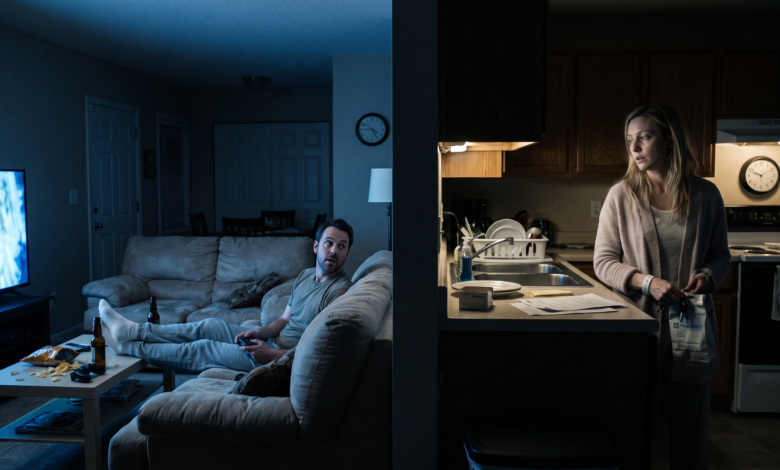
Three pizza boxes were stacked on the counter.
A load of wet towels had been sitting in the washing machine long enough to smell sour.
Allison noticed the towels first.
Of course she did.
She walked slowly from the garage, one hand underneath her stomach as though she could physically hold herself together.
Mateo was asleep in his infant seat, making those tiny goat noises newborns make.
Her mother, Teresa, had offered to come home with us.
I told her no.
“We need a little time as a family,” I said.
That sounded mature.
Responsible.
Private.
The truth was uglier.
I did not want Teresa watching me.
She made me uncomfortable because she noticed things.
She noticed when Allison was exhausted.
She noticed when I left dishes beside the sink instead of putting them in the dishwasher.
She noticed when I called watching my own child “helping.”
And she had a way of looking at me that made excuses sound stupid before I even said them.
So I told everyone we needed space.
I had been home for most of the three days Allison spent recovering in the hospital.
I told my coworkers I was preparing the house.
I told my mother I was getting everything ready for my wife and baby.
What I actually did was play Madden, answer some emails, sleep in my own bed, and complain to a friend that the chair in Allison’s hospital room had destroyed my back.
At 5:46 that Thursday evening, Allison asked whether I had picked up her pain medicine.
I had not.
“The pharmacy line is probably insane right now,” I said.
She stared at me.
“Did you call?”
“No.”
“Did you check the app?”
“No.”
She closed her eyes for a second.
Mateo started crying.
It was a thin, furious newborn scream.
Allison reached toward the car seat.
She bent halfway.
Then she flinched so violently her mouth opened without making a sound.
I saw it.
I watched my wife nearly double over from pain three days after surgery.
And somehow, what I remember feeling at that exact moment was annoyance because I was hungry.
That is the honest truth.
Not the edited version.
Not the version where I claim I was overwhelmed too.
I was hungry, and I expected her to fix it.
I grew up in a house where my mother cooked after everything.
Flu.
Migraines.
Double shifts at the nursing home.
Funerals.
Arguments.
When my younger brother was born, my mother came home from the hospital and made breakfast the next morning.
At least, that was the family story.
My father repeated it proudly.
“Your mother never stopped keeping this family running.”
I grew up believing that was praise.
I never wondered why nobody kept things running for her.
Allison put Mateo’s car seat down and leaned against the kitchen counter.
I opened the refrigerator.
There was milk.
Half a jar of salsa.
Some eggs.
A container of leftover rice.
And a casserole Allison’s sister had brought before we went to the hospital.
I did not want casserole.
So I asked, “What’s for dinner?”
Allison stared at me.
I actually remember being confused by her expression.
“You’re serious?” she whispered.
“What?”
“Daniel.”
“What? I’m just asking.”
She looked down at herself.
She was still wearing the hospital bracelet.
Then she looked back at me.
I made it worse.
“You’ve been resting for three days.”
Resting.
That was the word I used.
Three days in a hospital bed.
With a catheter.
With nurses pressing on her abdomen.
With seventeen stitches.
With a newborn waking every hour.
With blood soaking pads.
With cracked nipples because Mateo was struggling to latch.
Resting.
She did not scream.
That almost made what happened next worse.
If she had screamed, I might have gotten defensive.
I could have told myself she was hormonal.
I could have made myself the reasonable one.
Instead, Allison slowly reached into the diaper bag.
She took out the orange prescription slip.
She placed it on the counter between us.
“Go get it,” she said.
I should have grabbed my keys immediately.
Instead, I said, “You don’t have to talk to me like that.”
Her face changed.
Not anger.
Something quieter.
She picked Mateo up carefully, both hands trembling.
Then she walked down the hallway.
The bedroom door clicked shut.
I did not go to the pharmacy.
At 8:12, I texted her.
Are you seriously not making anything?
No answer.
At 9:03, I sent another one.
My mom never acted like this after babies.
Nothing.
I heated two slices of leftover pizza.
I ate them standing at the kitchen counter.
I remember feeling offended.
That detail embarrasses me now.
I thought Allison was punishing me.
At 11:58, I heard her talking quietly behind the bedroom door.
Not to Mateo.
To someone on the phone.
I walked into the hallway.
I heard Allison say my exact words.
“He told me I’ve been resting for three days.”
Then silence.
Then she whispered, “Mom, I don’t feel safe being dependent on him tonight.”
That sentence stopped me.
Not because I understood it immediately.
Because I felt accused.
Unsafe?
I had never hit her.
Never shoved her.
Never threatened her.
My first instinct was to defend myself against a charge she had not even made.
I nearly knocked on the door.
Then Mateo cried.
I heard Allison gasp as she tried to move.
Teresa’s voice came through the phone.
“Do not lift him if it hurts. I’m coming.”
Twenty minutes later, headlights swept across the living room.
Teresa walked through our front door carrying a pharmacy bag in one hand and two grocery sacks in the other.
She did not yell.
That somehow made it worse.
She looked at the pizza boxes.
The overflowing trash.
The laundry.
Then she looked at me.
“Did you feed your wife?”
“She wouldn’t come out.”
“That wasn’t my question.”
“I offered—”
“What did you offer her?”
I opened my mouth.
Nothing came out.
Teresa placed the pharmacy bag on the counter.
“You had four days to fill this prescription.”
“I forgot.”
“Yes.”
One word.
That was all.
I felt myself getting defensive.
“She’s acting like I abandoned her. I’ve been here.”
Teresa looked around the kitchen.
“Have you?”
Before I could answer, the bedroom door opened.
Allison stood in the hallway.
She looked pale.
Her hair was tangled around her face.
Mateo rested against her chest.
One hand supported his head.
The other pressed gently against her abdomen.
Teresa immediately walked toward her.
Then she asked the question that changed our marriage.
“Do you want to come home with me?”
Allison looked at me.
For one stupid second, I expected her to say no.
Of course not.
This was her house.
I was her husband.
We had just brought our son home.
Then she said, “Yes.”
My stomach dropped.
“Allison.”
She did not answer.
“Seriously?”
Teresa turned toward me.
“Daniel, not now.”
“No, I want to know what’s happening. She’s taking my son?”
Allison’s eyes finally met mine.
“I’m taking myself somewhere I can recover.”
“With my son.”
“Our son.”
“You can’t just leave.”
She stared at me so quietly that I heard the refrigerator humming behind us.
Then she said, “Watch me.”
I wish I could say that was the moment I understood.
It was not.
I helped Teresa carry the diaper bag because somewhere in my head I still believed doing one useful thing proved I was not the man they thought I was.
Allison packed almost nothing.
Two nursing gowns.
Underwear.
Mateo’s clothes.
Diapers.
Her charger.
The hospital folder.
She did not even take shampoo.
Teresa carried Mateo to the car while Allison shuffled behind her.
When Allison reached the front door, she stopped.
“Did you eat?” I asked.
I do not know why those were the words that came out.
Maybe because I finally remembered Teresa’s question.
Allison laughed once.
There was no humor in it.
“No.”
She left.
I stood inside our house and watched my wife get into her mother’s car three days after giving birth because she needed somewhere safer to recover than beside me.
I was furious.
That is another truth I am not proud of.
I called my mother.
Her name is Linda.
I expected support.
I told her Allison had “overreacted.”
I told her Teresa had interfered.
I told her all I had done was ask what was for dinner.
My mother was silent.
Then she said, “What did you just say?”
“I asked what was for dinner.”
“When?”
“Tonight.”
“She came home today?”
“Yes.”
“From the hospital?”
“Yes.”
There was another pause.
“What exactly did you say to her?”
I hesitated.
“Daniel.”
“I said she had been resting for three days.”
My mother hung up.
Actually hung up.
I stared at my screen, shocked.
Thirty seconds later, she called back.
“I had to hang up because I needed to decide whether I could speak to you without screaming.”
“Mom—”
“Do you remember when your brother was born?”
“Yeah.”
“No, you don’t.”
I frowned.
“You were five.”
“I remember you cooking breakfast.”
“You remember what your father told you.”
That silenced me.
My mother’s voice changed.
“I did not come home and happily make breakfast after having your brother.”
I sat down.
She continued.
“I had stitches. I was bleeding. I could barely sit. Your father complained there was nothing to eat, so I stood at the stove and made eggs because I knew if I didn’t, you children wouldn’t get breakfast until noon.”
I said nothing.
“He bragged about that story for years. Do you know what I remember?”
“What?”
“Crying over the frying pan because I thought if I sat down, he’d call me lazy.”
The kitchen suddenly felt different.
The old story I had carried my entire life rearranged itself.
Heroic mother.
Reliable wife.
Family tradition.
No.
A woman in pain standing at a stove because the man beside her refused to notice.
My mother said, “I stayed with your father twenty-eight years, Daniel. Do not turn my worst memories into instructions for how to treat your wife.”
I rubbed my forehead.
“I didn’t mean—”
“Stop.”
Her voice sharpened.
“Do not tell me what you meant. Tell me what you did.”
That sentence stayed with me.
Not what you meant.
What you did.
I looked around.
Pizza boxes.
Trash.
Sour towels.
An empty refrigerator.
The prescription I had not picked up.
Except Teresa had picked it up.
Because I had not.
My mother said, “When did Allison last eat?”
“I don’t know.”
“Exactly.”
After we hung up, I opened our messages.
The last texts I had sent were still there.
Are you seriously not making anything?
My mom never acted like this after babies.
I read them until I felt sick.
Then I did something that, at the time, felt productive.
I cleaned.
I took out the trash.
I threw away the pizza boxes.
I washed every dish.
I reran the towels.
I scrubbed the bathroom.
I vacuumed.
At three in the morning, the house looked better than it had in months.
I took pictures.
I almost sent them to Allison.
Look. I fixed it.
Thank God I did not.
Because cleaning the house was not the same thing as fixing what I had done.
The next morning, I drove to Teresa’s house.
Nobody invited me.
That was my next mistake.
Teresa opened the door but did not let me inside.
“I need to see my son.”
“You will.”
“I’m his father.”
“Yes.”
“Then move.”
Her face hardened.
“Your wife is asleep for the first time in almost five hours.”
I stopped.
Behind Teresa, I could hear a television playing quietly.
“I cleaned the house,” I said.
She stared at me.
I hated myself as soon as I heard it.
“Congratulations.”
“I’m trying.”
“No. You’re trying to get credit.”
That made me angry.
“I came here to apologize.”
“Then apologize.”
“I need to talk to Allison.”
“No. An apology does not require an audience.”
I did not understand that yet.
Teresa stepped onto the porch and closed the door behind her.
“Daniel, she was in pain last night. Real pain. Her medication schedule was off because you didn’t fill the prescription. She had not eaten since lunchtime. She was dehydrated. Her incision was pulling when she stood. And she was afraid to ask you for help because every time she needed something, you made her feel like a burden.”
“I didn’t know.”
“You were there.”
That phrase again.
I was there.
I had seen everything.
I had simply decided none of it required anything from me.
“Can I see Mateo?”
“When Allison wakes up, I’ll ask her.”
“What if she says no?”
“Then today you won’t.”
I wanted to argue about rights.
Fairness.
Marriage.
Fatherhood.
But something in me finally understood that forcing my way through that door would only prove Allison had been right to leave.
So I went home.
That afternoon, she texted.
You can come at six. Please do not stay longer than an hour.
I arrived at 5:52.
Teresa made me wait in the car until six.
At exactly six, she opened the door.
Allison was sitting in a recliner with pillows around her.
Mateo slept on her chest.
Her sister Rachel sat nearby folding tiny onesies.
There was soup on the table.
Water beside Allison.
Her medication lined up with times written on a piece of paper.
Everything she had needed from me was happening without me.
I sat across from her.
“I’m sorry.”
Allison looked down at Mateo.
“I know.”
“I cleaned everything.”
Her expression changed just slightly.
I immediately regretted saying it.
“I didn’t come here to talk about cleaning.”
“Then why mention it?”
“I don’t know.”
“Yes, you do.”
I waited.
She looked at me.
“You want me to know you did something so I’ll tell you you’re not a bad husband.”
That hurt because it was true.
“I don’t know what you want from me.”
“I wanted my pain medicine.”
I swallowed.
“I wanted food.”
Her eyes filled, but she did not look away.
“I wanted to sleep while somebody else held the baby for an hour. I wanted you to wash the bottles. I wanted you to ask whether I needed help getting into bed. I wanted to come home and find that you had done literally one thing to prepare for us.”
“I should’ve.”
“Yes.”
“I’m sorry.”
“I know you’re sorry now.”
That word mattered.
Now.
“When I asked you for my prescription, you were irritated. When I couldn’t bend over, you were irritated. When the baby cried, you looked at me like it was automatically my job. You didn’t become sorry until I left.”
There was no defense.
I stared at my hands.
“I don’t want to be like my dad.”
Allison’s face softened for half a second.
Then it hardened again.
“Then don’t.”
Simple.
Impossible to argue with.
For the next week, Allison stayed with Teresa.
I came every day.
Not whenever I wanted.
At agreed times.
At first I treated every visit like an audition.
I brought flowers.
The flowers were stupid.
Allison thanked me and handed them to Teresa to put in water.
The next day I brought a necklace.
Allison stared at the box.
“Daniel, I don’t need jewelry.”
“I just thought—”
“I need you to know how to sterilize pump parts.”
That was the moment something shifted.
I took the necklace back to the car.
Then I asked Teresa to show me.
She handed me a basin.
I washed pump parts.
I learned which pieces could go in the sterilizer.
I learned how long breast milk could stay at room temperature.
I learned how to swaddle Mateo without his arms escaping.
I learned that newborn diapers have a colored line.
I learned Allison’s medication schedule.
I learned how to position pillows so she could stand without pulling her incision.
None of those things were advanced.
That became embarrassing in a different way.
I had behaved like caring for my own family was specialized knowledge unavailable to me.
It was not.
I simply had not paid attention.
One evening, Mateo screamed for forty minutes.
I changed him.
Burped him.
Walked around Teresa’s living room.
Sang the only song I could remember all the words to.
Nothing worked.
Finally, Allison reached for him.
“I’ve got him,” I said.
“He might be hungry.”
“I’ll bring him to you if he is.”
She stared at me.
Then nodded.
Five minutes later, Mateo fell asleep against my chest.
Allison started crying.
Not loudly.
Just tears sliding down her cheeks.
I panicked.
“What’s wrong?”
She shook her head.
“Nothing.”
“Allison.”
She wiped her face.
“I’ve been waiting to see you act like his father without waiting for me to tell you how.”
That destroyed me.
Because until that moment, I had thought I was doing better because I was following instructions.
But she did not need another child waiting for instructions.
She needed a partner who could look around and recognize what needed to be done.
Two weeks after Mateo was born, Allison developed a fever.
Teresa called me at 2:18 in the morning.
That call showed me exactly how much had changed—or how much still needed to.
“Her incision is red,” Teresa said. “We’re going to the emergency room.”
“I’m coming.”
I was dressed in three minutes.
At the hospital, doctors diagnosed a post-surgical infection.
Nothing catastrophic because they caught it early.
But she needed antibiotics.
We sat in a curtained room while Mateo slept in his carrier.
Allison was exhausted.
Her eyes kept closing.
A nurse came in with discharge instructions.
She looked at Allison.
Before, I would have let Allison answer every question.
This time, I took out my phone.
“What time is the first dose?”
The nurse told me.
“Does she take it with food?”
“Yes.”
“Anything we should watch for?”
The nurse listed symptoms.
I wrote them down.
When we got back to Teresa’s house, Allison was shaking from exhaustion.
I made toast.
Filled her water bottle.
Set alarms for her medications.
Changed Mateo.
Then I sat in a chair beside the bed while they both slept.
Nobody praised me.
That mattered.
For the first time, I did not need anyone to.
Three weeks after Mateo was born, Allison asked me to attend marriage counseling.
I agreed.
Our therapist’s name was Dr. Bennett.
In our second session, she asked me a question.
“What did you believe being a good husband meant before Mateo was born?”
I answered quickly.
“Providing.”
“Meaning?”
“Working. Paying bills. Making sure we had a house. Insurance.”
“And Allison?”
“She worked too.”
“So if you both provided financially, what did you believe her additional role was?”
I knew where the question was going.
I hated it.
“Home stuff.”
“Which means?”
“Cooking. Cleaning. Planning things.”
“Why?”
“My mom did.”
Dr. Bennett nodded.
“And when your wife was physically unable to perform those tasks, what happened?”
I looked at Allison.
She was staring at the floor.
“I treated her like she had failed.”
That was the first time I said it that clearly.
Allison cried.
I wanted to touch her.
I did not.
Dr. Bennett asked, “What was the impact?”
Allison answered.
“I stopped trusting him.”
Three words.
I would have preferred anger.
Anger felt repairable.
Trust felt structural.
“When I was in the bedroom that night,” Allison continued, “I realized that if something happened to me, Daniel didn’t even know when Mateo had last eaten. He didn’t know where the thermometer was. He didn’t know the pediatrician’s number. He didn’t know my medication. And I thought, I cannot recover here because I am responsible for all three of us.”
All three.
Herself.
Mateo.
Me.
I looked at her.
“You shouldn’t have been.”
“No.”
“I’m sorry.”
She nodded.
But apologies had become the beginning of conversations instead of the end.
A month after Mateo’s birth, Allison came home.
Not because everything was fixed.
Because she wanted to see whether the changes I was making could survive outside Teresa’s house.
We made a schedule.
Not a schedule where I “helped.”
A schedule where we both parented.
I handled dishes, laundry, groceries, dinner, and the first night shift with bottles of pumped milk.
Allison handled what she was physically able to handle while recovering.
When she was cleared to drive and lift more weight, we divided things again.
The first night she returned, I made chicken soup.
It was not very good.
Too much pepper.
Mateo cried halfway through dinner.
I stood automatically.
“I’ve got him.”
Allison watched me pick him up.
She did not thank me.
And I learned that was okay.
Nobody thanks a mother every time she responds to her child.
Basic parenting is not a favor.
The hardest part came around six weeks later.
My father visited.
He held Mateo for twenty minutes.
Then, while Allison was feeding the baby, he looked at me standing over the stove and laughed.
“Look at you.”
I turned around.
“What?”
“Cooking dinner while your wife sits around.”
Allison went completely still.
The old version of me would have laughed.
Maybe rolled my eyes.
Maybe said something later about Dad being from another generation.
Instead, I turned off the burner.
“Don’t say that again.”
My father blinked.
“Say what?”
“That she sits around.”
He laughed.
“Come on, son. I’m joking.”
“I’m not.”
The kitchen got quiet.
My mother looked at me.
She did not say anything, but I saw something in her expression I had never noticed before.
My father shook his head.
“Women have babies. They’ve been doing it forever.”
“And men have been using that sentence to excuse being useless forever.”
His face changed.
“Watch your mouth.”
“No.”
My heart was pounding.
“I watched Mom work herself sick when we were kids because you called it normal. I almost did the same thing to Allison.”
Dad looked at my mother.
“Linda, are you hearing this?”
“Yes,” Mom said.
He waited.
She folded her hands.
Then she said, “I am.”
That evening ended early.
My father left angry.
My mother stayed.
She washed dishes beside me.
After Allison went upstairs with Mateo, Mom said, “I should have told you boys the truth earlier.”
“What truth?”
“That endurance isn’t love.”
I looked at her.
She dried a plate.
“I thought being needed made me valuable. Your father liked being taken care of. Those things fit together until I disappeared inside them.”
“I’m sorry.”
She smiled sadly.
“Just do better.”
So I did.
Not perfectly.
That distinction matters.
I still forgot things.
Once, I forgot to buy diapers and had to drive across town at eleven at night.
Another time, Allison woke me because Mateo was crying during my shift and I had somehow slept through it.
We argued.
We got tired.
I snapped once when I had a deadline at work.
Allison looked at me and said, “Do not make me manage your stress for you.”
A year earlier, that sentence would have offended me.
That night, I said, “You’re right.”
Then I went for a ten-minute walk, came back, apologized, and finished the bedtime routine.
Change turned out to be much less dramatic than guilt.
Guilt wanted speeches.
Change wanted repetition.
Bottle.
Diaper.
Laundry.
Appointment.
Dinner.
Night waking.
Grocery list.
Pediatrician.
Vaccination schedule.
Daycare forms.
The invisible things.
Especially the invisible things.
When Mateo was four months old, Allison went back to work.
Her first morning, she stood in the kitchen wearing navy slacks and holding her coffee with both hands.
She looked terrified.
“You okay?” I asked.
“What if he thinks I left him?”
“He won’t.”
“What if I miss something?”
“You will.”
Her eyes widened.
I smiled.
“So will I. That’s parenting.”
She laughed.
It was the first relaxed laugh I had heard from her in months.
I handled daycare drop-off.
Mateo cried when I buckled him into the car seat.
I nearly called Allison.
Then I stopped.
She did not need a live broadcast of every difficult moment.
She needed to be allowed to work without being mentally tethered to home.
So I handled it.
When I picked Mateo up that afternoon, his teacher handed me a sheet.
Bottles.
Naps.
Diapers.
I read every line.
That night, Allison walked in.
I expected her to ask twenty questions.
Instead, she looked at me.
“How was his day?”
“Two good naps. Four bottles. Apparently he hates tummy time unless there’s a mirror. Ms. Claire says he flirted with himself for ten minutes.”
Allison laughed.
Then she kissed Mateo.
And after a second, she kissed me too.
It was brief.
But it meant more to me than the day we came home from the hospital and I assumed marriage would continue exactly as it had before.
When Mateo was six months old, we went to Dr. Bennett again.
She asked Allison where her trust was.
Allison thought for a long time.
“Coming back.”
Not back.
Coming back.
I accepted that.
“What helps?” Dr. Bennett asked.
Allison glanced at me.
“He notices.”
That was it.
He notices.
I had once thought love was mostly intention.
I loved Allison, therefore I was a loving husband.
Simple.
But love that does not notice hunger, pain, exhaustion, fear, or need is often just a feeling somebody else has to work around.
Noticing became the thing I practiced.
When she rubbed her scar after carrying Mateo too long, I noticed.
When she fell quiet after another mother talked about an uncomplicated birth, I noticed.
When she needed twenty minutes alone more than she needed me to say, “I’ll help,” I noticed.
And sometimes she noticed me too.
That was the part I had misunderstood from the beginning.
Partnership was not one person carrying everything while the other occasionally stepped in.
It was two people paying attention.
Mateo turned one on a rainy Saturday.
We had a small birthday party.
Teresa came early.
My mother brought a cake.
Rachel decorated the kitchen with little paper stars.
My father did not come.
Our relationship had remained strained after that dinner.
At first, I blamed myself.
Then I realized boundaries often feel cruelest to the person who benefited from having none.
Around five in the afternoon, after everyone left, the house looked destroyed.
Frosting on the high chair.
Wrapping paper everywhere.
Tiny socks in the hallway.
A mountain of dishes.
Allison sat down on the couch.
“I’m exhausted.”
The old sentence flashed through my mind.
What’s for dinner?
I almost laughed.
Instead, I said, “I’ll order something.”
She looked up.
“Thai?”
“Thai.”
I picked up my phone.
Then I paused.
“You want your usual?”
She smiled.
“You remembered?”
“Pad see ew. Chicken. Medium spice. No peanuts.”
She leaned her head back against the couch.
“I love you.”
There had been a time when I expected those words because we were married.
That day, they felt earned in an entirely different way.
Not because I ordered food.
Because she could rest without wondering whether the whole house would collapse around her.
Later that night, after Mateo was asleep, we sat in the kitchen surrounded by half-cleaned birthday decorations.
Allison traced the edge of her water glass.
“Do you know when I almost decided I wasn’t coming back?”
My chest tightened.
“When?”
“The second night at Mom’s.”
I did not speak.
“You texted me.”
I remembered.
I had sent dozens of messages that week.
“What did I say?”
“You wrote, ‘How long are you going to punish me?’”
I closed my eyes.
“I remember.”
“I was sitting there with ice on my incision, nursing Mateo. And I thought, he still thinks this is about him.”
She looked at me.
“If Teresa had told me to divorce you that night, I probably would have listened.”
I swallowed.
“Why didn’t she?”
Allison smiled faintly.
“Because she said she wasn’t going to make my decisions for me.”
That sounded exactly like Teresa.
“What changed your mind?”
“You did.”
I looked at her.
“Not the cleaning. Not the flowers. Not the necklace.”
I groaned.
“The necklace was bad.”
“It was really bad.”
We both laughed.
Then she became serious.
“You kept showing up after it stopped getting you praise.”
That sentence stayed with me.
Because that was when I understood what repair actually was.
You do not repair trust by performing remorse until somebody forgives you.
You repair it by becoming trustworthy.
Again.
And again.
And again.
When Mateo was eighteen months old, my mother asked if she could stay with us for a few weeks.
She had finally left my father.
After thirty-one years.
She arrived with two suitcases and a plant she had somehow kept alive since 1998.
The first morning, I woke up at six and found her making eggs.
My stomach turned.
“Mom.”
She looked over.
“What?”
“You don’t have to cook.”
“I know.”
She smiled.
“I wanted eggs.”
It sounds ridiculous, but I nearly cried.
Wanted.
Not had to.
Not expected.
Not required.
Wanted.
I sat at the table while she cooked.
Then I got up.
“Give me the pan.”
She raised an eyebrow.
“You’ll overcook them.”
“Probably.”
She handed it over anyway.
A few minutes later, Allison came downstairs holding Mateo.
She stopped when she saw me cooking while my mother drank coffee.
Mom lifted her mug.
“Look at this.”
“What?” Allison asked.
“I’ve finally trained him.”
Allison laughed.
“No. He trained himself.”
That mattered too.
Nobody could have forced me to change.
Teresa could shame me.
Allison could leave.
My mother could tell me the truth.
Dr. Bennett could ask questions.
But eventually I had to decide what kind of man I wanted my son to watch.
Because that frightened me more than anything.
Mateo was going to learn normal somewhere.
I had learned normal from my father.
I had almost handed the same definition to my son.
One Saturday, when Mateo was nearly three, Allison had the flu.
Not a dramatic illness.
Just fever, aches, exhaustion.
She stayed in bed.
Mateo and I spent the morning downstairs.
I made pancakes.
Burned the first batch.
Made another.
I did laundry.
We built a block tower.
I gave him lunch.
He threw peas on the floor.
I cleaned them up.
At four, I made soup.
At five, Mateo carried a plastic spoon upstairs.
“Soup for Mommy.”
Allison smiled weakly from the bed.
“Thank you, baby.”
Mateo looked at me.
“Daddy made dinner.”
“Yes, he did.”
Then he said something I will probably remember until I die.
“Daddy takes care.”
Three words.
He had no idea what they meant to me.
I went into the bathroom and stood there for a minute because I did not want Allison to see me crying over a bowl of soup.
That night, after Mateo fell asleep, I told her.
She touched my face.
“You are not your worst day, Daniel.”
I shook my head.
“No. But my worst day showed me who I was becoming.”
There is a difference.
I do not want to erase the man who asked a woman with seventeen stitches what she was making for dinner.
I need to remember him.
Not to hate him forever.
To recognize him if he ever starts coming back.
The entitlement.
The blindness.
The belief that being tired excused me while somebody else’s exhaustion was simply part of her job.
The belief that money counted as contribution while domestic work appeared magically.
The belief that my mother’s suffering was proof of what women were capable of rather than evidence of what she should never have been asked to endure.
Mateo is five now.
He loves dinosaurs.
Hates tomatoes.
Sleeps sideways.
Asks approximately fourteen thousand questions before breakfast.
Allison and I are still married.
People sometimes expect that sentence to be the happy ending.
It is not.
The happy ending is smaller.
It is Tuesday nights when Allison works late and never has to text me instructions for dinner.
It is pediatrician appointments already appearing on my calendar because I scheduled them.
It is Mateo knowing where the clean towels are because he watches both of us fold them.
It is Allison taking a weekend trip with Rachel and not leaving behind a three-page guide explaining how to parent my own child.
It is me calling my mother every Sunday and hearing her sound lighter than she did when I was growing up.
It is disagreements that do not turn into punishment.
Apologies that do not demand immediate forgiveness.
Work that does not need applause.
Last month, Mateo found an old hospital bracelet in a keepsake box.
He brought it to Allison.
“Was this when I was born?”
“Yes.”
“Did it hurt?”
Allison glanced at me.
“A lot.”
Mateo frowned.
“What did Daddy do?”
The question landed in the room like a stone.
Allison looked at me.
I could have told him about the surgery.
The cord.
The first time I held him.
Instead, I said, “At first, Daddy didn’t take very good care of Mommy.”
Mateo stared at me.
“Why?”
There is no easy way to explain entitlement to a five-year-old.
“Because I thought some things were Mommy jobs that should have been everybody jobs.”
He considered that.
“That’s silly.”
Allison laughed.
“Yes.”
I nodded.
“Very silly.”
Mateo returned the bracelet to the box.
Then he ran away because something more interesting had happened to a dinosaur in the living room.
Allison remained beside me.
“You didn’t have to tell him that.”
“Yes, I did.”
“Why?”
“Because someday he’ll have somebody depending on him.”
She took my hand.
“And?”
“And I want him to know better than I did.”
Sometimes people ask whether Allison forgave me.
Yes.
Eventually.
But forgiveness was never the prize.
The prize was learning that she should never have needed to forgive me for something so basic in the first place.
A few weeks ago, we were eating dinner when Mateo knocked over his milk.
It spilled across the table.
Allison automatically reached for a towel.
So did I.
Our hands bumped.
Mateo giggled.
“I’ll get it!” he announced.
He climbed down, ran to the kitchen, and came back carrying half the dish towels in the drawer.
Allison looked at me.
I looked at her.
Neither of us said anything.
We did not need to.
Our son had seen a mess.
And his first instinct was not to ask which person was supposed to clean it.
His instinct was to help.
Maybe that sounds small.
To me, it felt enormous.
After Mateo went to bed, Allison and I sat at the kitchen table.
There were dishes in the sink.
Laundry waiting upstairs.
Tomorrow’s lunches still needed packing.
Ordinary life.
She rested her feet across my lap.
“Remember the night we brought him home?”
“I remember every second.”
“Do you still hate thinking about it?”
“Yes.”
She nodded.
“Good.”
I raised an eyebrow.
“Good?”
“Not because I want you to suffer.”
She squeezed my hand.
“But because I never want us to rewrite it.”
I understood.
Families do that.
They turn pain into funny stories.
They turn neglect into tradition.
They turn survival into proof that nothing was wrong.
My father turned my mother crying over a frying pan into a story about what a wonderful wife she was.
For years, everyone laughed.
Everyone except the woman holding the pan.
I will not do that to Allison.
I will not someday tell Mateo, laughing, “Your mother was so hormonal after you were born.”
I will tell him the truth.
His mother came home after major surgery carrying our newborn child.
She was hurting.
She was exhausted.
She needed medication, food, sleep, and care.
And instead of giving those things to her, I asked what she was making me for dinner.
Then she left.
And thank God she did.
Because if she had stayed quietly, if she had dragged herself into the kitchen and heated a casserole, I might have spent years believing I had done nothing wrong.
I might have taught Mateo exactly what my father taught me.
That a woman’s endurance is an invitation to ask for more.
That love means she keeps serving no matter how badly she hurts.
That a man can call himself a provider while being completely absent from the work directly in front of him.
Allison leaving broke that story.
My mother telling me the truth broke it again.
And every ordinary day afterward gave me the chance to build something different.
I wish I could tell you I recognized all of that immediately.
I did not.
I was defensive.
Selfish.
Embarrassed.
More worried about being called a bad husband than about the fact that I had actually behaved like one.
But shame, I learned, is only useful for about five minutes.
After that, you either turn it into responsibility or you use it as another excuse to make somebody else comfort you.
I chose responsibility.
Not perfectly.
Repeatedly.
That is the only way I know how.
Tonight, Allison is upstairs reading Mateo a bedtime story.
I can hear him interrupting every third sentence.
There is a pot soaking in the sink.
His school clothes are in the dryer.
I already packed his lunch.
Allison asked for tea, so the kettle is heating.
Nothing about this evening would look remarkable to anybody else.
That is exactly why it matters.
Care should not require a crisis.
A woman should not have to leave her home before her husband learns where the laundry detergent is.
A mother should not have to collapse before somebody asks whether she has eaten.
And a man should not get medals for becoming competent at the work women have been expected to perform silently for generations.
Sometimes I still think about the sentence Allison whispered to Teresa behind that bedroom door.
“I don’t feel safe being dependent on him tonight.”
For a long time, I heard the word safe and wanted to defend myself.
Now I hear the word dependent.
She had just undergone surgery.
She temporarily needed help.
That was not weakness.
That was not laziness.
That was not failure.
There will be times in every long marriage when one person has to depend on the other.
Illness.
Grief.
Childbirth.
Job loss.
Age.
Fear.
Exhaustion.
The whole promise is meaningless if love only works when nobody needs anything.
Last year, I needed knee surgery.
Nothing remotely comparable to what Allison experienced giving birth, but enough that I could not drive for two weeks.
The first night home, I lay on the couch surrounded by pillows.
Allison brought me pain medicine.
Water.
Food.
She checked the ice pack.
At one point I apologized.
“For what?”
“For needing so much.”
She looked confused.
“You had surgery.”
Four words.
No resentment.
No scorekeeping.
No lecture about how long she had suffered after childbirth.
Just care.
I turned my face away because my eyes filled.
“What?” she asked.
I shook my head.
“Nothing.”
But it was not nothing.
For the first time, I understood in my body what she should have received from me that Thursday afternoon years earlier.
Care without humiliation.
Help without debt.
Rest without permission.
Love without having to earn it first.
So yes.
I asked my wife what was for dinner four hours after she came home with seventeen stitches and our newborn son.
I told her she had been resting for three days.
By midnight, she had stopped answering me.
By the next morning, she was living at her mother’s house.
And for several terrifying weeks, I did not know whether my marriage would survive the lesson I had forced my wife to teach me.
It did.
Not because she tolerated me.
Not because mothers are endlessly forgiving.
Not because marriage means staying no matter what.
It survived because she drew a line.
And because, eventually, I stopped standing on the other side arguing that the line was unfair.
I crossed it.
I learned.
I changed.
And the night I once thought was the worst thing that had ever happened to our marriage became the night that exposed what would have destroyed it if nothing changed.
The kettle is whistling now.
I hear Allison coming down the stairs.
“Tea?” she asks.
“Already making it.”
She smiles.
Nothing dramatic.
Nothing cinematic.
Just trust in an ordinary kitchen.
The kind of trust I once believed came automatically with a wedding ring.
Now I know better.
You build it in a thousand tiny moments.
You build it when someone is sick.
When someone is tired.
When the baby screams.
When the trash is full.
When dinner is not made.
When there is nobody watching.
Especially when there is nobody watching.
And sometimes, if you are fortunate enough to be given another chance, you build it by finally becoming the person you should have been when the one you loved needed you most.
THE END!