How to Spot a Sweet Watermelon Before You Buy
A good watermelon can make a hot day feel instantly better. A disappointing one, though, is frustrating: heavy to carry, not always cheap, and bland once you finally slice it open. The good news is that a few simple visual clues can help you make a better choice before you bring one home.
While no method can guarantee perfect sweetness every time, shoppers often use the rind, field spot, surface markings, and navel area to judge whether a watermelon looks ripe and ready.
Start With the Color of the Rind
Look closely at the outside of the watermelon. A naturally ripe watermelon often has a deeper green color and a more muted, dull surface rather than a very shiny one.
If the rind looks unusually pale, very light green, or grayish, it may be a sign that the fruit is less developed. That does not always mean it will taste bad, but it can be one clue that the watermelon may not be as sweet as you want.
Check the Yellow Field Spot
The yellow patch on a watermelon is often called the field spot. This is the part of the fruit that rested on the ground while it was growing.
A creamy yellow field spot is generally considered a positive sign because it suggests the watermelon had time to ripen in the field. If that patch is white or barely visible, the fruit may have been picked before it reached full ripeness.
This is one of the easiest checks to do at the market because the field spot is usually visible without lifting or tapping every watermelon in the bin.
Look at the Markings and Navel
Surface streaks or web-like markings can also be worth noticing. Watermelons with more even, dense markings are often selected by shoppers who are looking for juicier fruit. Sparse or broken-looking markings may suggest the melon is not as mature, though this clue should be considered alongside the others.
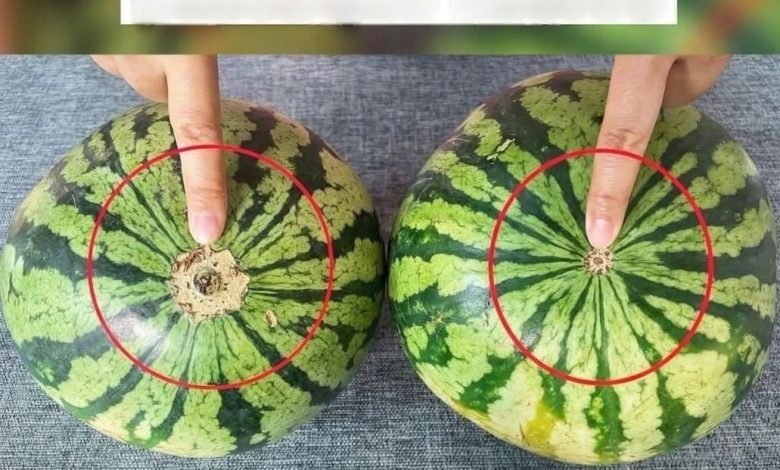
You can also look at the small circular area at the end of the watermelon, sometimes referred to as the navel. Many shoppers prefer a smaller navel, believing it is linked with thinner skin and better ripeness. A larger navel may be less desirable when choosing for sweetness.
Why This Matters
Picking better produce is not just about flavor. Watermelon can take up space in the refrigerator, feed several people, and cost more than smaller fruits, especially during peak summer demand. Choosing carefully can help reduce food waste and make your grocery budget go further.
The best approach is to use several signs together: a darker dull rind, a yellow field spot, healthy-looking markings, and a smaller navel. None of these is perfect on its own, but together they can improve your odds of bringing home a sweet, refreshing watermelon.
Next time you are standing in front of a pile of watermelons, take a few extra seconds to inspect before you buy. That small pause may be the difference between a forgettable slice and the best fruit of the week.